


Commissary Kitchens: Benefits, Types, and How to Choose One
 Mika Takahashi
Last updated Feb 11, 2026
 Mika Takahashi
A commissary kitchen is a licensed commercial kitchen area that food firms can hire to use for cooking, preparing, storing, and distributing food. These commercial kitchens give food business owners the basic tools they need to run their businesses legally and efficiently without having to spend a lot of money on building their own kitchens.
This article tells you all you need to know about commissary kitchens, including how they work, the numerous types that are available, the rules you need to follow, the cost benefits, and how to choose the best one for your business. This book covers the most important practical issues for your success, whether you're starting a food truck, expanding a catering business, running a ghost kitchen, or managing hotel food and beverage operations.
A commissary kitchen is a commercial-grade area that food firms hire to prepare food in accordance with health department rules. It can be shared or dedicated.
At the end of this guide, you will know more about commercial kitchens and commissary kitchens, as well as:
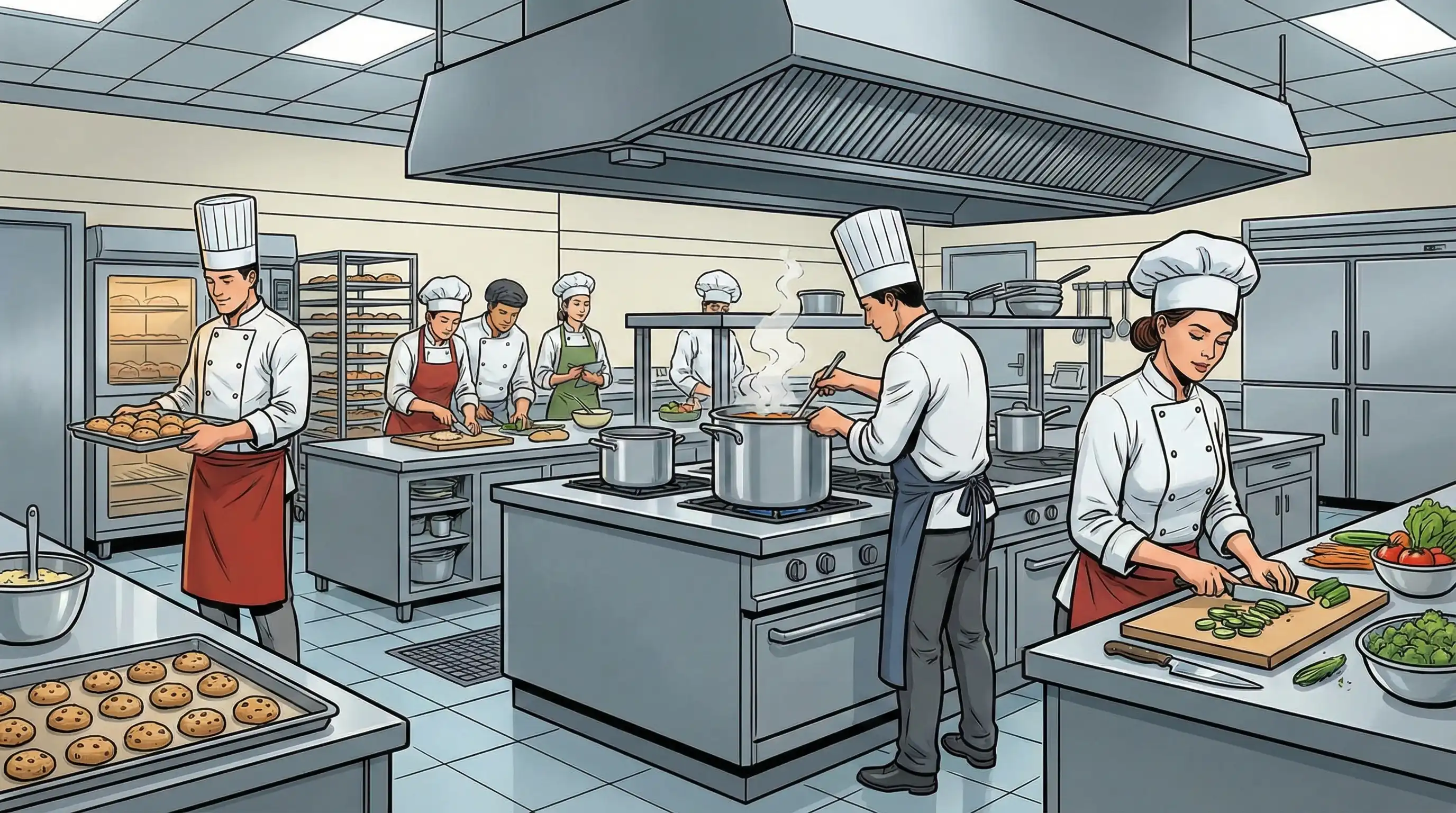
Food enterprises can rent a commissary kitchen by the hour, day, or month. It is a licensed, fully-equipped commercial kitchen area. Most places don't allow food to be made for sale in residential kitchens or on food trucks, thus these facilities are necessary for legal operation.
The most important thing about designing a commissary kitchen is making sure it meets health department rules. These places must keep the kitchen running well, from the reception areas to the prep stations, cold storage, cooking zones, and distribution areas, all while following stringent rules for cleaning, preventing cross-contamination, and washing dishes.
Shared use kitchen facilities work like this: several food enterprises utilize the same commercial kitchen at different times. Caterers, bakers, food truck proprietors, and ghost kitchen operators usually share the area by renting it by the hour or by the month.
This shared kitchen model is the cheapest way for food companies to get started. Depending on where you live, monthly charges usually vary from $2,000 to $5,000, and hourly rates range from $20 to $50. Shared commissary kitchens often have 24-hour access and expert cleaning services who keep things clean between usage.
The community aspect has some surprising benefits: chefs and other businesses regularly share resources, ideas, and even customers, which helps them form networks that make their businesses stronger.
If you rent a dedicated commissary kitchen, you will have exclusive access to a private commercial kitchen space for the whole time you rent it. These arrangements work well for businesses that serve a lot of people, such big caterers, multi-unit ghost kitchens, or meal prep firms, because they need constant, unrestricted access to equipment and storage.
Long-term leases for dedicated spaces usually cost between $5,000 and $10,000 a month or more. The higher prices are because it's convenient to have your own commercial-grade equipment available anytime you need it. You have more room for inventory, more ways to customize your equipment, and no scheduling problems.
Dedicated offices are the best choice when your delivery or catering business gets so busy that scheduling conflicts cause you to lose money. When you book 30 or more hours a week in a shared kitchen, this change usually makes sense.
Knowing these basic choices will help you figure out what each model can do for your food business.
Commissary kitchens have benefits that go beyond just the financial, regulatory, and operational ones. Each advantage helps food entrepreneurs who want to start or grow their enterprises by addressing various problems they have.
You need between $50,000 to $250,000 or more for equipment, permits, and building fees to build a private commercial kitchen. Commissary kitchens get rid of this barrier to capital completely. You just pay for the space and access you really need, which turns big fixed costs into small variable costs.
When you don't have to worry about maintaining your equipment, paying your power bills, getting property insurance, or hiring a janitor, your overhead costs go down a lot. A shared commercial kitchen spreads these costs out across several tenants, making them easier to bear. People who own food trucks and ghost kitchens say that their costs are always 20% to 50% lower than those of people who own traditional kitchens.
More than 90% of U.S. jurisdictions require food trucks and other mobile food sellers to work out of a certified commissary kitchen. Your commissary gives your food business the legal, inspected space it needs to operate, and you can renew your permit with recorded commissary agreements.
This compliance benefit goes beyond just getting a license. Commissary kitchens have the right architecture for food corridors, three-compartment sinks for washing dishes, handwashing stations, grease traps, and waste disposal systems. These are all things that would need a lot of money and regular care to keep up on their own.
Instead of set capacity, commissary kitchens enable you change the size of your business based on actual demand. During slow times, rent for fewer hours. When parties and events make your catering business busier, reserve more time slots. This method of doing things as needed maintains your business model lean and flexible.
You may test out new markets with less risk if you can rent commercial kitchen space in multiple places without having to sign a long-term lease. Many food business owners use commissary access to test their ideas before committing to permanent locations.
Key benefits summary: Commissary kitchens lower the amount of money needed to start a business, make sure that the business follows the rules, and provide the firm more operational flexibility. These are three things that decide whether a food business will be successful and grow in a sustainable way.
You can only get these benefits in real life if you choose the proper commissary for your business.
When choosing a commissary kitchen, you need to carefully look at the location, equipment, prices, and compliance issues. The proper option helps you grow, while the bad one causes problems that waste time and money.
When businesses need access to a commissary, you should think about the following things when you evaluate them:
| Criterion | Shared Kitchen Space | Dedicated Kitchen Space |
|---|---|---|
| Cost per hour | $20-50 | N/A (monthly lease) |
| Monthly cost | $2,000-5,000 | $5,000-10,000+ |
| Equipment access | Scheduled time slots | Unlimited during lease |
| Storage space | Limited, shared | Dedicated areas |
| Scheduling flexibility | Constrained by availability | Complete control |
| Best for | Startups, limited-volume operations | High-volume, scaling businesses |
Food entrepreneurs that are exploring new ideas, bakers who sell at farmers markets, or food trucks with regular low-volume schedules can all use shared cooking spaces. Dedicated areas make sense when schedule difficulties cost you money or when your business needs space to set up particular equipment.
The economics behind how much you use the space often determines the decision: if you expect to use it more than 30–40 hours a week, dedicated space is usually a better deal, even though it costs more to set up.

Even when you pick the right commissary kitchens, they can still be hard to run. Thinking ahead about these problems and coming up with solutions lets you focus on the quality of the cuisine and the service.
In popular shared commissaries, the best times to book are early mornings for bakers, before lunch for food trucks, and before events for caterers. The answer is to set up booking connections early, book regular time slots when they are available, and be flexible with your schedule so you may work during off-peak hours when you can. Some operators choose early dawn or late-night openings on purpose to make sure they can get in.
Shared facilities restrict how much you can store. To make the most of this limitation, keep your inventory low by buying things just in time, using containers that can be collapsed or stacked, and organizing prep schedules so that you don't have to keep as much food cold between sessions. Make friends with local eateries or suppliers who might be able to help you store extra items during busy times.
When commercial-grade equipment is used by more than one tenant, problems with maintenance and unexpected breakdowns harm everyone. Set up explicit ways to talk to facility management about problems with equipment. To protect against key equipment failures, learn backup plans, such as how to cook in different ways, where to find nearby facilities, or how to rent equipment. To keep your professional status with the commissary owner, write down any problems right away.
Taking care of these problems ahead of time can help your business get the most out of its commissary resources.
Commissary kitchens provide the basic facilities that food enterprises need to start, run lawfully, and grow quickly. Commissaries are now essential to modern food service enterprises, from food trucks and ghost kitchens to caterers and local restaurants. They do this by removing the need for capital investment, making sure that rules are followed, and giving professionals easy access to facilities.
Immediate actionable steps:
Some other subjects that would be interesting to look into are how ghost kitchens work and how to use virtual brands, the rules and permits that food trucks must follow in your area, and the basic rules for designing a commercial kitchen when you move into your own location.
Our sales, marketing and custom support stand ready 24/7 worldwide.