


FIFO Meaning: First In, First Out Inventory Management
 Mika Takahashi
Last updated Feb 12, 2026
 Mika Takahashi
FIFO meaning? FIFO which stands for "First In, First Out," is a way to manage restaurant inventory in which the oldest product is sold or used before fresh material enters the sales cycle. This method makes sure that enterprises that sell tangible things keep their inventory moving and their financial reports correct.
This tutorial goes into great detail about the FIFO system, covering everything from how to value inventory to how to use it in real life in different businesses. The content is for business owners, inventory managers, accountants, and hotel operators who deal with perishable commodities and need dependable techniques for keeping track of inventory prices.
FIFO stands for "first in, first out," which means selling the oldest products first to reduce waste, keep product quality high, and make sure that financial records show the right costs. That is the absolute meaning and role of the FIFO inventory method.
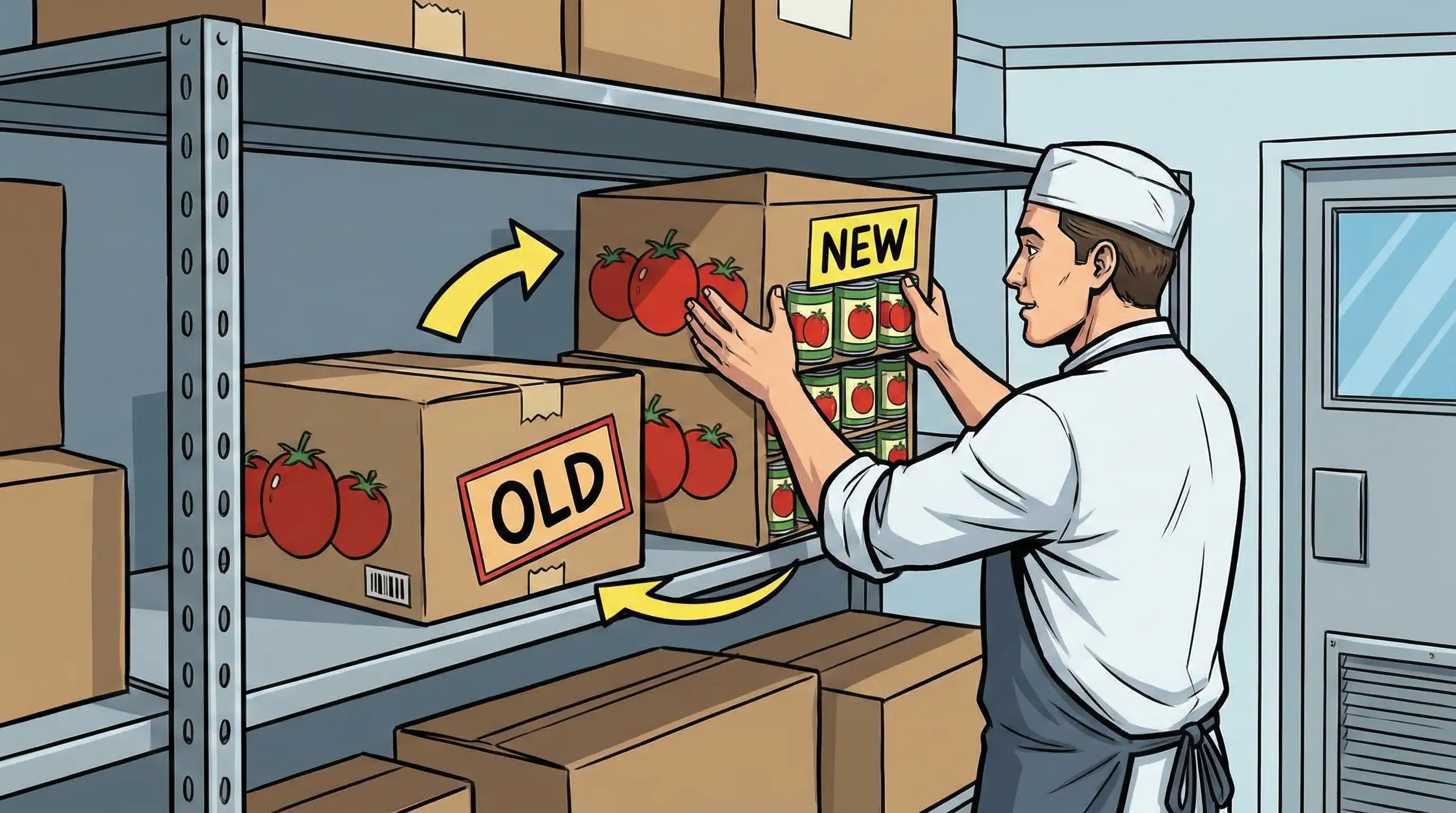
Before using any inventory accounting system, it's important to know the basic ideas so that your firm may choose the best one for its needs for operations and financial reporting.
The first-in, first-out (FIFO) approach of inventory assumes that the oldest products are sold first. In this method, fifo assumes that the oldest things in inventory leave before the newest ones, no matter which items actually ship to customers.
This predicted cost flow fits with how most firms work. This is especially true for enterprises that offer perishable commodities, as older stock must move before expiration dates pass. The technique gives a precise picture of the worth of the current inventory because the remaining inventory shows recent purchases at current market pricing.
There is a big difference between accounting systems and the real flow of physical inventory. The fifo assumption is used to allocate costs for valuing inventory, although it doesn't have to do with which specific products depart the warehouse.
But for businesses that sell things that go bad quickly, the fifo flow usually looks like how the inventory is actually rotated. Grocery businesses fill their shelves from the back, hotels rotate their food supplies by receipt date, and pharmaceutical distributors ship the oldest batches first. Because of this match between accounting method and actual movement, FIFO is the most accurate way for many tasks.
The fifo method proves particularly valuable across several sectors:
Knowing how these apps work is the first step in looking at how FIFO works in the real world.
When put into practice, the fifo method shows evident benefits for valuing goods and running everyday operations.
FIFO indicates the older costs of inventory that was bought first in the cost of goods sold, whereas the balance sheet shows the ending inventory at more recent prices. This has different effects on finances depending on how the market is doing.
During periods of rising prices (inflationary markets), FIFO produces higher net income because cheaper items purchased earlier are assigned to goods sold. The final inventory balance looks higher since the remaining inventory costs more because it was bought more recently. This gives an accurate representation of the value of the current inventory, but it also makes the tax bill greater because reported earnings go up.
FIFO is important for hotels, restaurants, and healthcare institutions that have products with short shelf lives. The strategy makes sure that older stock moves before the expiration dates, which cuts down on waste and keeps the quality of the products for buyers.
A restaurant that uses the proper FIFO flow moves produce around every day, puts older stock at the front of refrigerators, and teaches kitchen personnel to take food from the right places. This methodical way of doing things cuts down on spoiling losses by a lot. Data from the industry shows that using FIFO correctly may cut waste in food service operations by 20–30%.
Consider a business that makes the following purchases of an inventory item:
Total inventory: 350 units, total inventory costs = $4,200
If the business sells 180 units during January, FIFO assigns costs as follows:
Ending inventory calculation:
This example shows how to figure out fifo and get the right cost numbers for financial statements.

Based on these numbers, firms need to set up regular ways to keep track of their inventory levels and make sure that FIFO rules are followed in all of their operations.
When inventory costs change, products have expiration dates, or generally accepted accounting standards say that inventory should be valued consistently, organizations should use FIFO systems:
| Criterion | FIFO Method | LIFO Method | Weighted Average |
|---|---|---|---|
| Cost Assignment | Oldest costs to goods sold first | Newest inventory costs assigned first | Average all costs across total inventory |
| Inflation Impact | Higher profits, higher current inventory value | Lower taxable income, lower profit margins | Moderate impact on both metrics |
| Tax Implications | Higher tax liability during rising prices | Lower taxes (not permitted under international financial reporting standards) | Moderate tax position |
| Best For | Perishable goods, businesses wanting accurate picture of inventory | Companies prioritizing cash flow in inflationary markets | Commodities, businesses with similar items |
The lifo system gives the newest inventory costs to items sold, which has the opposite impact of FIFO. LIFO lowers taxes during times of inflation, but international financial reporting requirements don't allow it. This is why the FIFO system is preferred around the world. For tax purposes in the United States, the Internal Revenue Service accepts both techniques.
FIFO is the most accurate way to report on a balance sheet since it shows how commodities actually move.
It is hard to employ FIFO in both warehouse operations and accounting software, so systematic solutions are needed.
Put in flow racks that automatically shift older product to the front, use color-coded labels based on receipt date, and set aside certain areas for older merchandise that needs to be picked first. Warehouse management systems can make pick lists that tell workers to pick the oldest items first.
Create regular training sessions that explain why FIFO is important for keeping the quality of products and the accuracy of financial reports. Put up visual guidance at picking stations, check to see whether people are following the rules through inventory audits, and include FIFO compliance in performance reviews.
Select accounting software with automated FIFO tracking that calculates cost of goods sold and ending inventory value without manual intervention. Look for systems that let you track lots, report in real time, and work with your current warehouse management systems.
Plan for increased tax obligations that result from higher reported profits during periods of rising prices. Talk to tax experts on how to keep FIFO benefits for financial reporting while dealing with the effects of increasing taxes on cash flow.
FIFO is an important way to value inventory that cuts down on waste for perishable goods and gives accurate financial reports under both generally accepted accounting principles and international financial reporting standards. The strategy gives stakeholders a realistic image of how well the business is doing by assigning older expenses to goods sold and keeping ending inventory at current levels.
Immediate next steps:
Some related subjects that are worth looking into are strategies for optimizing inventory turnover, complex warehouse management systems for operations with a lot of volume, and the rules for financial statements that must be followed under different accounting standards.
Our sales, marketing and custom support stand ready 24/7 worldwide.