


How to Open a Pizza Restaurant: From Planning to Launch
 Mika Takahashi
Last updated Feb 27, 2026
 Mika Takahashi
To open a pizza restaurant, you need to carefully plan, get a lot of money to start, and make sure that everything works well in all parts of the business. If you want to create a successful pizza shop, you need to know everything about the process, from coming up with the idea to opening day. This is true whether you want a small neighborhood pizzeria or a large delivery service.
This blog article goes over everything, from doing market research and writing a business strategy to buying equipment, hiring workers, and serving pizza to clients on your first day. The content is for anyone who want to open a restaurant and want clear, useful procedures to follow, whether they have worked in the restaurant sector before or are just starting out in the pizza business.
There are eight main steps to opening a pizza shop: validating your pizza shop business plan through market research, writing a complete business plan for your pizza shop, getting the money you need to start your pizza shop, choosing and securing a location, getting the necessary permits and following the law, getting pizza equipment and designing your kitchen, hiring and training staff, and putting together a marketing plan that leads to your grand opening.
You will know by the end of this guide:
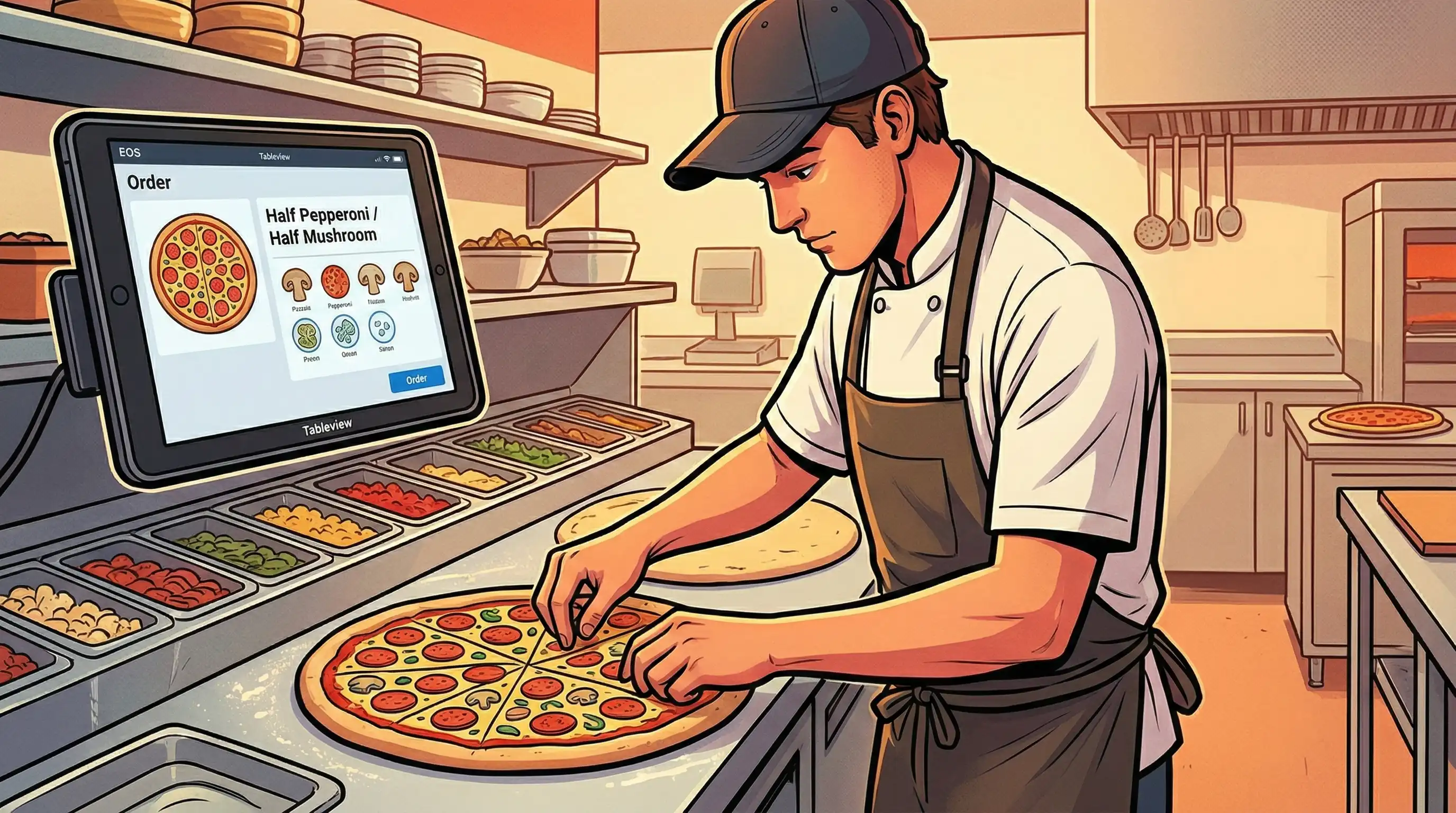
The type of pizza business you choose will effect almost every decision you make after that, including how much money you need to start out, what equipment you need, how many employees you need, and how much money you expect to make. Before you start developing your pizza shop business plan, make sure you know which model fits your budget, abilities, and target market.
A pizza store that only does delivery and takeout has far lower overhead than a full-service restaurant. This model needs less space (usually 800 to 1,200 square feet), fewer personnel in the front of the home, and little to no investment in dining room furniture or decorations.
This model has a direct effect on your launch costs, expect to pay $150,000 to $300,000 instead of $500,000 or more for complete service, and it also affects the equipment you need first. Instead of making the dining experience better, you'll spend a lot of money on your pizza oven, restaurant online ordering systems, and delivery infrastructure. Your delivery radius, which is usually 3–5 miles in cities, becomes an important operational metric. This means you need reliable delivery drivers and good order management.
Sit-down pizzerias cost more to start up, but they can make more money by having larger check averages, selling alcohol, and hosting special events. To make a space feel pleasant or welcoming and keep consumers there longer, you need to spend money on furnishings, interior design, and usually a bigger space (1,500 to 3,000 square feet or more).
The full-service model needs more staff than only culinary staff, such as waiters, hosts, and sometimes bartenders. But this arrangement makes it less necessary to employ delivery applications that charge 15–30% commission fees, which keeps more money in the company. Many successful pizza restaurant owners use hybrid models, which are mostly dine-in but also provide takeaway and delivery to meet the demands of different customers.
Knowing these models is the basis for every planning choice you make in the future, such as how much space to rent, what pizza equipment to buy, and how many workers to hire.
With your operational model set, pizza restaurant business planning turns your pizza shop idea into a written plan that helps you make decisions and draws in investors or lenders.
A full business plan for your pizza restaurant is both a guide for how to run your firm and a way to get money. These important parts should be included:
Your financial estimates should show that you have a good grasp of how the pizza business works. For well-run pizzerias, food expenditures usually make up 25–35% of sales, while labor costs make up another 25–30%. Showing these ratios in a financial analysis develops trust with creditors and helps you figure out when to hire based on how much you sell.
Before doing any business, you must follow the law. Choose your business structure first. An LLC protects your personal assets and keeps taxes simple for most small restaurant operators.
Most of the time, the paperwork you need is:
You need to get your pizza kitchen equipment inspected for health and safety permits, so make sure your buildout schedule matches up with the inspection schedule. If you run a business without the right permits, you could get fined, have to close down, and hurt your reputation.
More than anything else, where your pizza restaurant is located will affect how many customers it can get each day. Put these things in order of importance:
Foot traffic analysis: Go to possible areas at different times, like during lunch, dinner, and on weekends, and count how many people and cars are there. Areas near commercial malls, business buildings, or groups of homes with families always have a lot of people who want to live there.
Demographic research: Neighborhoods with families with moderate incomes generally place constant, repeat pizza orders that keep the business profitable.
Competitive assessment: Use Google Maps to find competitors within a mile of your business. Check Yelp for their prices, hours, and reviews from other customers. Find the gaps, like maybe there isn't a delivery option nearby or there aren't any pizzerias that use high-quality ingredients or provide unique styles.
Lease economics: Take into account rent costs while weighing visibility and ease of access. Pizza does better with a lot of customers who come back again and again than with expensive real estate. A prime corner spot may have more rent, but a less visible location with lesser rent often has better margins.
You may now turn your plans into real operations now that you have made plans and set up the legal groundwork.
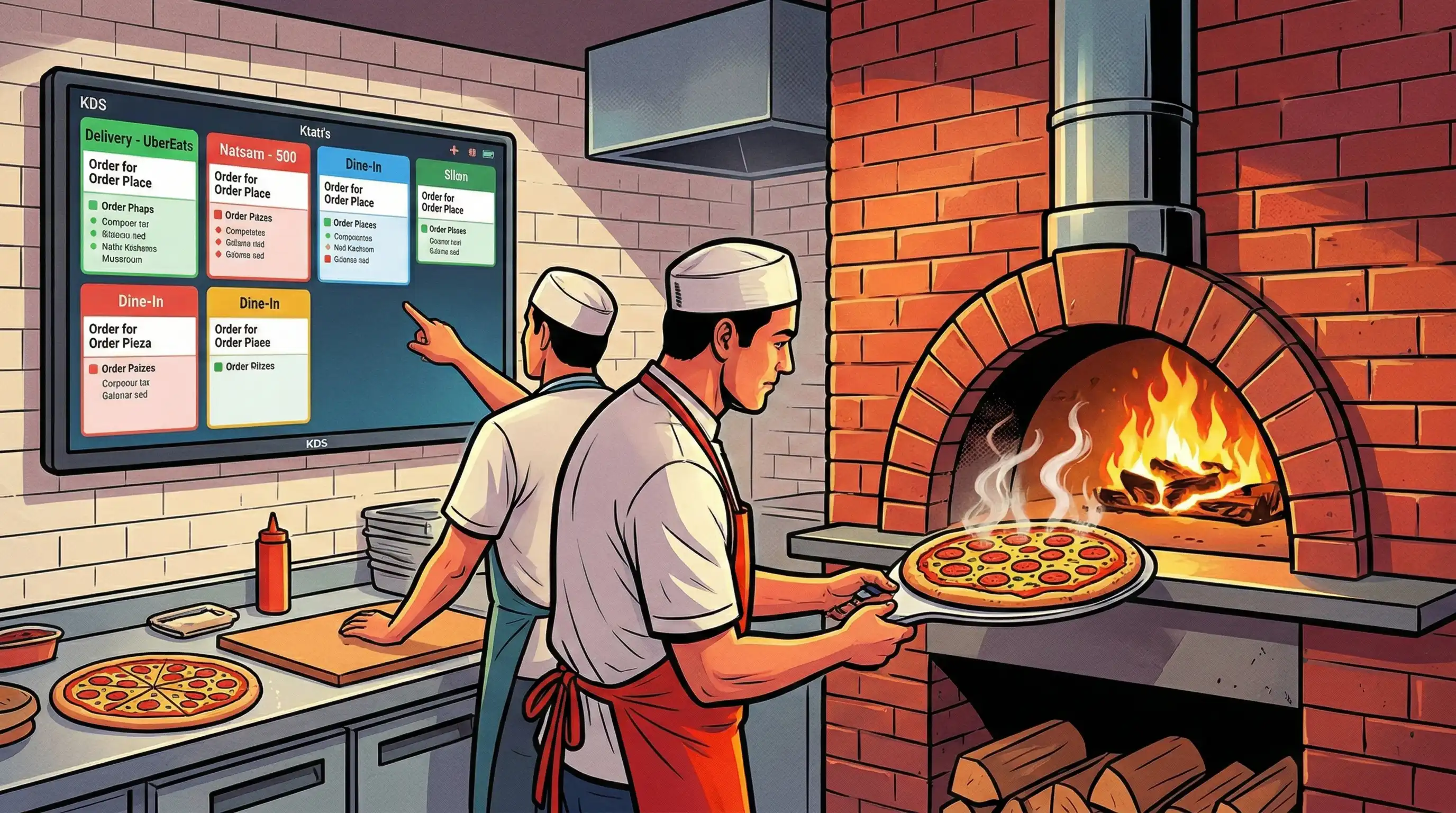
This step turns your business strategy into a real pizza restaurant. During your buildout period, you will mostly be working on getting the right equipment, designing the kitchen, hiring people, and making the menu at the same time.
The operating engine is your pizza oven. This choice influences how many pizzas you can make, how well they taste, how much energy they need, and how you set up your workflow. Choose the right oven for your business: deck ovens are great for typical pizzerias because they are versatile and make high-quality pizzas. Conveyor ovens are best for delivery companies that need to make a lot of pizzas quickly. Wood-fired ovens are more artisanal but need special training to use.
Equipment procurement steps:
Choosing a pizza restaurant POS system has a direct effect on how well your business runs. Pick systems that can keep track of inventory, let you order online, and show what's cooking in the kitchen. Toast, Square for Restaurants, and Upserve all have capabilities that make it easier to take pizza orders and give you useful sales statistics.
Build your team based on projected sales volume and operational complexity:
| Position | Delivery/Takeout Model | Full-Service Model | Primary Responsibilities |
|---|---|---|---|
| Pizzaiolo/Pizza Maker | 2-3 | 3-5 | Dough preparation, pizza assembly, oven operation |
| Prep Cook | 1-2 | 2-3 | Ingredient preparation, sauce making, station stocking |
| Front Counter/Cashier | 1-2 | 0-1 | Order taking, customer service, phone management |
| Server | 0 | 3-5 | Table service, customer experience, upselling |
| Delivery Driver | 2-4 | 1-3 | Order delivery, vehicle maintenance, customer interaction |
| Manager | 1 | 1-2 | Operations oversight, scheduling, quality control |
Training is what makes things consistent, which is what makes people devoted to a community. Make recipes that are the same every time, with exact weights for each item (cheese should be measured in ounces, not handfuls). Make sure that every pizza that leaves your kitchen meets your standards. Think about going to a professional training program. Schools like Pizza School of New York teach proven dough systems, how to keep costs down, and how to run a business more efficiently, which saves you money on trial-and-error learning.
Instead than giving clients too many choices, start with a small, successful menu. Start with 1 or 2 basic dough recipes that you know by heart, and then add more.
| Menu Category | Recommended Items | Pricing Strategy | Food Cost Target |
|---|---|---|---|
| Signature Pizzas | 5-7 hero pizzas | Premium pricing; showcase unique toppings | 25-30% |
| Classic Pizzas | 3-5 traditional options | Competitive with local market | 28-32% |
| Specialty Slices | 2-3 rotating options | Impulse purchase pricing | 25-28% |
| Sides | Garlic knots, wings, salads | High margin; encourage bundling | 20-25% |
| Desserts | 2-3 simple options | Modest offerings; upsell opportunity | 22-28% |
| Beverages | Fountain drinks, bottled options | Standard markup; pair suggestions | 15-20% |
First, figure out how much each item on your menu costs. Keep track of the prices of your ingredients in spreadsheets, taking into account changes in suppliers and the seasons. Check your prices against those of your competitors. If they are very different, you need to explain why by showing that your food is better, your portions are bigger, or you have unique menu items.
As a main point, use fresh items to make your food. You stand out from chains because you make fresh dough every day and use high-quality ingredients in your sauce. This also justifies your high prices.
All new pizza shops have to deal with the same problems especially around restaurant pizza equipment. If you plan for these problems and have remedies ready, they won't stop your launch.
Startup costs ranging from $150,000 to over $1 million create significant barriers. To lower your initial capital needs, focus on getting the most important equipment first. Put off getting nice-to-have products until your cash flow is stable. Buying old commercial equipment, especially refrigeration and prep tables, can save you 40–60% on equipment expenses without losing any functionality.
Think about expanding in stages: start with delivery and takeout, which need less space and equipment, and then add dine-in as your business grows. Look into several ways to get money to start a business, such as SBA loans, equipment financing, and investors who will see polished financial projections that show how you plan to make money.
To compete with pizzerias that already have a lot of customers and a well-known brand, you need to be really different. Create your unique selling proposition. This could be specialty doughs, toppings from local sources, styles of pizza that aren't available nearby, or very fast delivery.
Before you open, get to know people in your town. Join in on local events, work with businesses in your area, and talk to people on social media. Use pre-opening promotions that offer launch discounts to customers who are eager about your opening to build email marketing lists. Your goal is to get people excited and aware so that your grand opening brings crowds instead of crickets.
The pizza restaurant business always has trouble finding workers. Offer competitive pay, regular hours, and clear avenues for promotion to attract good workers. Make the workplace a good place to be, people stay where they feel valued.
Make sure that your training programs are thorough and help new employees get up to speed quickly. Write down every step of the process; don't depend on verbal instructions that get worse as they go from one employee to the next. Cross-train employees so that operations can keep going when someone calls in sick.
Retention is more important than hiring. Figure out how much it costs to lose an employee, hiring, training, and lost productivity, and then use some of those savings to give employees benefits or pay that make them less likely to leave.
To open a pizza shop successfully, you need to prepare, follow the law, set up operations, and market the business. You can't just hope that your passion will make up for any holes in your preparation. There are real opportunities in the pizza business: there is always a large demand for pizza, high volume operations make more money, and customization possibilities make sure that different consumer groups are happy.
Your first 30 days should follow this sequence:
After your pizza shop gets off the ground, you need to focus on managing your money with accounting software that lets you see how your actual performance compares to your projections. You also need to market your business to bring in new customers and keep improving the quality of your food so that first-time visitors become regulars who come back every week.
Equipment and Supplies:
Planning and Compliance:
Ongoing Operations:
Professional Development:
Our sales, marketing and custom support stand ready 24/7 worldwide.