


How to Open a Pizza Shop: 15 Steps Pizzeria Guide
 Mika Takahashi
Last updated Apr 8, 2026
 Mika Takahashi
Opening a pizza shop sounds simple until you try it. Pizza is familiar, affordable, and loved almost everywhere, which is exactly why competition is brutal and margins can be thin. If you are researching how to open a pizza shop because you love making dough on a Saturday night, that passion helps, but passion does not negotiate a lease, pass a health inspection, or fix a Friday rush when tickets stack and drivers are late.
This guide is written for first time operators who want a clear roadmap for starting a pizza business without pretending success is guaranteed. You will see how starting a pizzeria restaurant differs from running a food truck, why a pizza delivery business changes your entire operation, and what belongs in a real pizza business plan beyond a menu mockup and a dream logo.
We will also talk about money honestly. How much does it cost to open a pizza shop depends on your city, your buildout, your equipment choices, and whether you buy an existing shop or start from a blank space. You will get a realistic framework for budgeting, not a fake universal number.
Finally, because a modern pizza shop runs on speed, accuracy, and repeat orders, we will cover the systems that keep the line moving. Tableview is built for hospitality operators who need a dependable POS system and operational backbone, whether you run a slice window, a full dining room, or a pizza delivery business that never stops ringing.
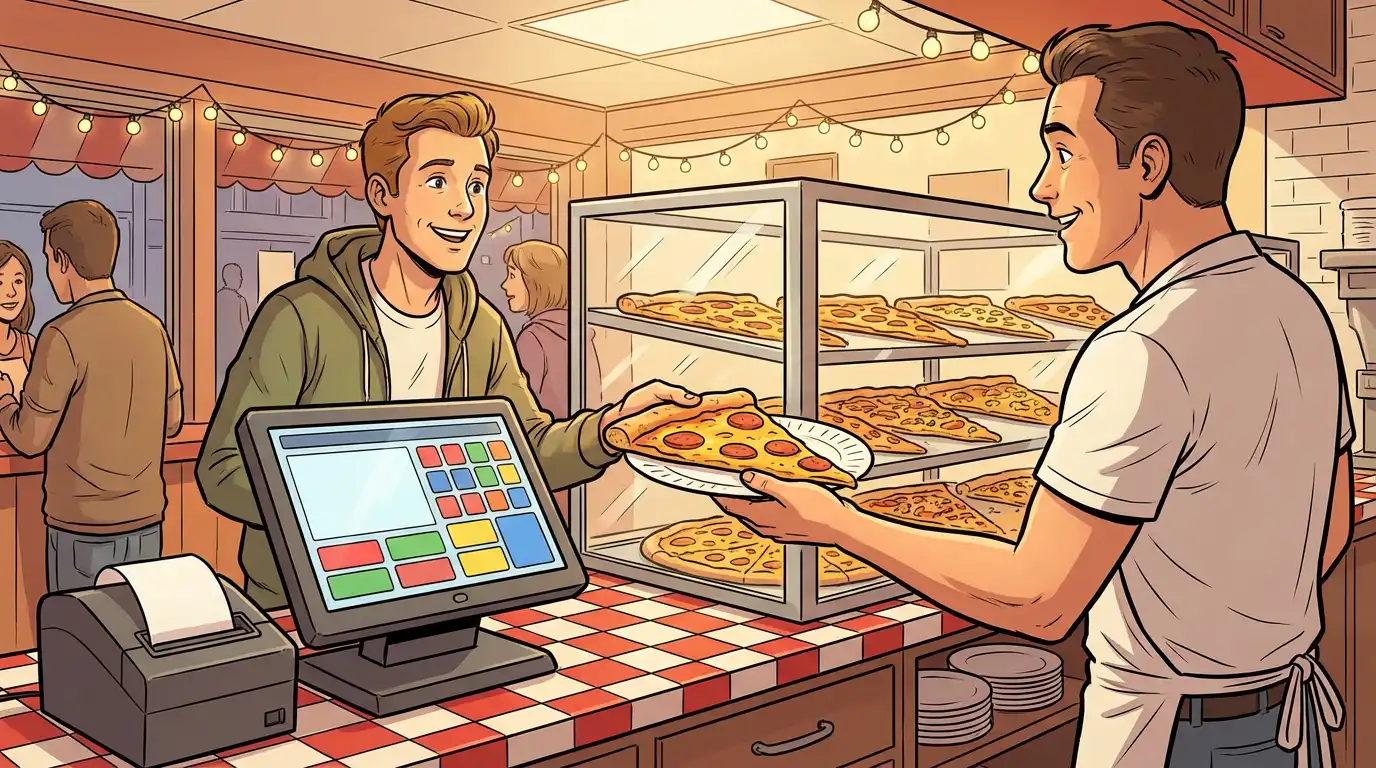
“Pizza shop” can mean at least six different businesses wearing the same hat. Before you sign anything, pick one primary model and design around it.
High volume, small menu, fast turns, often lunch and late night. The skill is throughput and consistency, not a 40 item menu.
Guests stay longer, you may sell appetizers and drinks, and service style matters. Your labour model looks more like a restaurant than a counter.
The phone and pizza online orders drive everything. Dining room is optional. Your world is drivers, packaging, heat retention, and refund risk from late drops.
Guests move down a line, toppings are visible, and customization is the product. Operations are closer to manufacturing discipline.
Lower upfront buildout, but different constraints on equipment and storage. Good for testing recipes and neighbourhoods before committing to a lease.
Higher fees and rules, but less guesswork on systems. If you want owning a pizza shop with training wheels, franchises exist for a reason.
Your choice affects rent, staffing, equipment, marketing, and whether starting a pizza shop feels like a kitchen business or a logistics business.
Investors, landlords, and future employees do not need poetry. They need clarity.
A useful format:
We sell [style of pizza] to [who] in [area] using [what makes you different].
Examples:
If you cannot say it simply, your menu will balloon and your kitchen will suffer.
Competition is not automatically bad. A busy pizza street can mean demand exists. What you need to learn is why people choose certain spots.
Do the boring work:
You are looking for gaps:
Also study delivery radius realities. A pizza delivery business competes on speed and reliability as much as taste.
Rent is not your only location cost. Think utilities, hood requirements, grease trap rules, parking for drivers, and whether your street has foot traffic or only car traffic.
Slice shops love foot traffic. Delivery first shops can survive in cheaper pockets if the kitchen works and drivers can exit fast.
Pizza ovens produce heat and grease. Landlords and municipalities vary wildly. A space that looks cheap can become expensive once ventilation requirements appear.
If you plan a pizza delivery business, you need a staging area for bags, a driver handoff flow, and a clear policy for crowded parking.
Odour and late night noise can create complaints. Talk honestly with nearby businesses and residents when possible.
If you want lenders, partners, or even a skeptical spouse to take you seriously, write a pizza business plan that answers numbers and operations, not only romance.
What you sell, where, why it wins, and what you need.
Keep the first menu tight. Complexity kills new kitchens.
Who pays, how often, and what they compare you to.
Name real competitors and your edge.
Opening promotions, local partnerships, Google Business Profile, social content, loyalty ideas.
Hours, staffing tiers, supplier approach, food safety system.
Website, online ordering, POS, delivery dispatch if applicable. This is where Tableview fits naturally, a modern POS keeps your menu, modifiers, and tickets aligned so the kitchen does not improvise pricing during rush hour.
Sales assumptions, cost of goods, labour, fixed costs, break even target.
Labour shortages, ingredient price spikes, delivery app economics, equipment downtime.
A plan is not a prediction. It is a set of assumptions you can test and update.
How much does it cost to open a pizza shop is the question every new operator asks first, and the honest answer is: it depends on whether you are painting an old kitchen or building a full restaurant from shell space.
Think in buckets:
Deposit, tenant improvements, signage, seating, bathrooms, counters, lighting. This is often the biggest variable.
Ovens define your pizza identity and your budget. Deck ovens, conveyor ovens, wood fired ovens, and high speed ovens sit at different price worlds. Mixers, prep tables, refrigeration, dough sheeters, and smallwares add fast.
Health permits, business registration, architectural plans in some cases, legal review of a lease. Do not skip professional help on a lease. One bad clause can cost more than lawyer fees.
POS, online ordering, printers, network, backup internet for card payments.
Ingredients, packaging, uniforms, and paid training days before revenue.
Photography, soft opening, local ads, opening offers.
This is the part beginners underestimate. You need cash to survive slow weeks and unexpected repairs.
If you want a broad industry style range for planning conversations only, many independent shop projects often land from the mid five figures for a very small conversion up through six figures and beyond for a full buildout in expensive cities. Do not anchor your life to a stranger’s number on a forum. Build your budget line by line.
Rules vary by country, state, and city, so you will need local guidance. Still, the categories repeat everywhere.
Many small operators choose an LLC or equivalent structure for liability separation and clarity. A tax professional should advise you.
Expect inspections. Build a culture where cleanliness is default, not panic cleaning the night before.
General liability, property coverage, workers compensation where required. Delivery adds exposure.
Wage rules, overtime, scheduling, and tip policies if applicable.
If you treat compliance as part of quality, you sleep better.
Your menu is a production plan. Too many items means too many inventory lines, more waste, and slower service.
Pick dough styles you can hold consistently. Pick sauces you can batch. Pick toppings with overlapping uses across pies.
Every extra step on the make line adds seconds, and seconds add up on Friday night.
Cheese and flour move. Build a habit of reviewing food cost monthly.
If you offer gluten free, decide whether it is truly safe or simply “gluten friendly,” and communicate clearly. Confusion creates trust issues.
Pizza has a hidden secret. It looks simple, but waste shows up in dough trim, sauce over portioning, cheese inconsistency, and toppings that dry out in prep pans.
Your kitchen should not measure cheese by vibe.
A great pie that arrives steam soggy creates refunds and one star reviews.
If your main supplier misses a delivery on Saturday, what is plan B?
Wood fired can be magical and also demanding. Conveyor ovens can be consistent for delivery heavy shops. Deck ovens are a classic middle path. Your oven choice influences training, timing, and even hiring.
Will you cold ferment, room ferment, ball dough daily, buy dough initially? Each path has labour implications.
Enough cold storage reduces panic buying and improves safety.
This is not optional decoration. A bad ticket system creates wrong pizzas, wrong modifiers, and angry guests.
Tableview helps operators run a tight front counter and kitchen handoff with a system designed for hospitality speed. When modifiers like “extra cheese” or “half half” are clear on the ticket, you reduce remakes, and remakes are one of the quietest profit killers in pizza.
Pizza shops often run on young staff, part time staff, and people who will leave in a year. That is normal. What matters is training that survives turnover.
Two cooks should produce the same pie.
Cutting corners on sanitation is how you get shutdowns and reputational damage.
Even takeaway shops need calm communication when orders run late.
People think POS is about taking money. In pizza, POS is about order truth.
Tableview is built for restaurants, bars, and hotel food operations where complexity shows up fast. For a small pizza business, that clarity matters because you do not have extra managers to fix chaos.
If you depend on third party apps, watch commissions carefully. Many shops push toward direct ordering over time because the math improves.
Accurate hours, photos, menu link, and fast responses to reviews.
School nights, sports clubs, office lunch programs.
Short videos beat polished posters if the pizza looks real.
Punch cards, app free points systems, or a simple “every 10th pizza” approach can work if it is easy for staff to apply.
Invite friends and neighbours, limit menu, test systems.
If the oven queue is the choke point, address workflow before you advertise harder.
What happens if the oven goes down, if your POS internet drops, if a driver no shows?
Food and labour as a percentage of sales tell you if you are drifting.
Rent and payroll do not care about your feelings.
Basic discipline prevents painful surprises.
You will run out of everything at the worst time.
Cold pizza creates refunds and bad reviews.
Equipment mismatch shows up immediately.
Inconsistent pizza kills repeat customers.
Pizza is habitual. You want weekly reasons to return.
If you want pizza business ideas that are more than a novelty topping, think in terms of systems:
Differentiation does not have to be weird. It has to be dependable.
Owning a pizza shop is less about making one perfect pie and more about making five hundred acceptable pies while staff show up late, suppliers short you on boxes, and someone orders a modification that barely fits on the peel.
The operators who last develop routines:
You can run a pizza shop with paper tickets. Many places did for decades. The question is whether you can afford errors when channels multiply, online ordering grows, and guests expect speed.
Tableview supports hospitality businesses that need a dependable POS foundation, clear menu and modifier handling, and operational clarity across service styles. For starting a pizza shop with ambition to scale to more than one location someday, building clean operational habits early is cheaper than fixing chaos later.
Learning how to open a pizza shop is not a single decision. It is a series of boring, important decisions where the reward is a community place people rely on for comfort food and predictable quality.
Start narrow, plan with numbers, train for consistency, and build systems that survive Friday night. If you do those things, you give your small pizza business a real chance to become the kind of local spot people recommend without thinking.
Our sales, marketing and custom support stand ready 24/7 worldwide.