


How to Write a Restaurant Business Plan: Guide + Free Template
 Mika Takahashi
Last updated Mar 8, 2026
 Mika Takahashi
Opening a restaurant is exciting, but it’s also risky. Around 60% of restaurants close within their first three years, often because of poor planning rather than bad food. A solid restaurant business plan helps you think through every part of the venture, from concept and finances to operations and growth.
This guide explains why a restaurant business plan matters, how to write one step by step, and includes a practical restaurant business plan template you can adapt for your own project.
A restaurant business plan is more than a document for lenders or investors. It’s a roadmap that forces you to answer hard questions before you spend money or sign a lease.
Clarifies your concept. Writing down your concept, target market, and positioning helps you see whether your idea is clear and consistent. Many owners discover gaps or contradictions only when they put their plan on paper.
Supports funding. Banks, investors, and partners expect a professional plan. A well-structured document shows you’ve thought through risks, costs, and revenue, which builds confidence and improves your chances of approval.
Guides operations. Once you’re open, the plan becomes a reference for hiring, marketing, and financial decisions. It keeps you aligned with your original vision and goals.
Reduces risk. By forecasting costs, revenue, and cash flow, you can spot problems early and adjust before they become critical.

A strong restaurant business plan writing usually includes these sections:
Start with a clear concept. Are you a fast-casual taco spot, a fine-dining steakhouse, or a neighborhood café? Your concept drives menu, pricing, design, and marketing.
Define your unique selling proposition (USP). What makes you different from competitors? It could be cuisine, sourcing, atmosphere, price, or service style.
Research your target market and competition:
Use census data, local business directories, and site visits to validate your assumptions.
Your menu shapes food costs, labor, and equipment. For each item, estimate:
Use a mix of high-margin and signature items to balance profitability and appeal.
Build a financial model that includes:
Be realistic. Many new restaurants overestimate revenue and underestimate costs.
Describe how you’ll attract customers before and after opening:
Include a simple marketing budget and timeline.
Detail how the restaurant will run day to day:
Write the executive summary after you’ve completed the rest of the plan. It should summarize the concept, market opportunity, financial highlights, and funding request in one to two pages.

Use this template as a starting point. Replace bracketed sections with your own information.
Business Name: [Your Restaurant Name]
Date: [Date]
Prepared By: [Your Name]
Concept:
[2–3 sentences describing your restaurant concept, cuisine, and atmosphere. Example: "A farm-to-table Italian trattoria serving seasonal pasta and wood-fired pizzas in a casual, rustic setting."]
Target Market:
[Who are your primary customers? Age, income, location, dining preferences.]
Location:
[Address or area, type of space (standalone, strip mall, food hall), square footage.]
Funding Request:
[Total amount needed: ________] [Use of funds: build-out , equipment ______, inventory , working capital ______, other ______]
Key Financial Highlights:
Legal Structure:
[ ] Sole Proprietorship [ ] Partnership [ ] LLC [ ] Corporation
Business Name: [Legal name]
DBA (if applicable): [Trade name]
Address: [Full address]
Phone: [Phone number]
Email: [Email address]
Mission Statement:
[1–2 sentences on your purpose and values. Example: "To create memorable dining experiences using locally sourced ingredients and warm, attentive service."]
Concept Summary:
[Detailed description of cuisine, service style, ambiance, and what makes the experience unique.]
Hours of Operation:
[Days and hours for each daypart: breakfast, lunch, dinner, late night.]
Industry Overview:
[Brief overview of the local restaurant industry, growth trends, and relevant factors such as tourism, population growth, or economic conditions.]
Target Market:
Market Size:
[Estimated number of potential customers in your trade area and total addressable market.]
Competitive Analysis:
| Competitor | Concept | Strengths | Weaknesses | Our Differentiation |
|---|---|---|---|---|
| [Competitor 1] | [Brief description] | [Key strengths] | [Key weaknesses] | [How we differ] |
| [Competitor 2] | [Brief description] | [Key strengths] | [Key weaknesses] | [How we differ] |
| [Competitor 3] | [Brief description] | [Key strengths] | [Key weaknesses] | [How we differ] |
Market Trends:
[Relevant trends: delivery, sustainability, dietary preferences, technology, etc., and how you’ll respond.]
Ownership Structure:
| Name | Role | Ownership % | Background |
|---|---|---|---|
| [Name] | [Title] | [%] | [Relevant experience] |
| [Name] | [Title] | [%] | [Relevant experience] |
Key Personnel:
| Position | Name | Responsibilities | Compensation |
|---|---|---|---|
| General Manager | [Name] | [Key duties] | [Salary/terms] |
| Head Chef | [Name] | [Key duties] | [Salary/terms] |
| [Other key roles] | [Name] | [Key duties] | [Salary/terms] |
Advisors:
[Accountant, lawyer, mentor, or other advisors and their roles.]
Menu Concept:
[Type of cuisine, style of service, and how the menu supports your concept.]
Sample Menu Structure:
| Category | # of Items | Price Range | Food Cost Target |
|---|---|---|---|
| Appetizers | [#] | ___ - ___ | ___% |
| Mains | [#] | ___ - ___ | ___% |
| Sides | [#] | ___ - ___ | ___% |
| Desserts | [#] | ___ - ___ | ___% |
| Beverages | [#] | ___ - ___ | ___% |
Signature Items:
[List 3–5 signature dishes and why they’re important.]
Service Model:
[ ] Full table service [ ] Counter service [ ] Hybrid [ ] Delivery/takeout focused
Average Check Target:
Lunch: ________ | Dinner: ________ | Overall: $________
Brand Positioning:
[How you want to be perceived: e.g., "The neighborhood spot for authentic Thai in a modern setting."]
Pre-Opening Marketing:
Opening Launch:
[Launch events, promotions, influencers, and partnerships.]
Ongoing Marketing:
Marketing Budget (Year 1):
________ total | ________ per month average
Startup Costs (One-Time):
| Category | Amount |
|---|---|
| Lease deposit / first month | $________ |
| Build-out / renovation | $________ |
| Kitchen equipment | $________ |
| Front-of-house equipment | $________ |
| POS and technology | $________ |
| Initial inventory | $________ |
| Licenses and permits | $________ |
| Pre-opening marketing | $________ |
| Professional fees (legal, accounting) | $________ |
| Contingency (10–15%) | $________ |
| Total Startup Costs | $________ |
Monthly Operating Costs (Fixed):
| Category | Amount |
|---|---|
| Rent | $________ |
| Salaries and wages | $________ |
| Insurance | $________ |
| Utilities | $________ |
| Marketing | $________ |
| Loan payments | $________ |
| Other fixed costs | $________ |
| Total Fixed Costs | $________ |
Variable Cost Assumptions:
Revenue Projections (Year 1):
| Month | Covers | Avg Check | Monthly Revenue | Cumulative |
|---|---|---|---|---|
| 1 | [#] | $___ | $________ | $________ |
| 2 | [#] | $___ | $________ | $________ |
| 3 | [#] | $___ | $________ | $________ |
| 4 | [#] | $___ | $________ | $________ |
| 5 | [#] | $___ | $________ | $________ |
| 6 | [#] | $___ | $________ | $________ |
| 7 | [#] | $___ | $________ | $________ |
| 8 | [#] | $___ | $________ | $________ |
| 9 | [#] | $___ | $________ | $________ |
| 10 | [#] | $___ | $________ | $________ |
| 11 | [#] | $___ | $________ | $________ |
| 12 | [#] | $___ | $________ | $________ |
| Year 1 Total | $________ |
Break-Even Analysis:
Break-even monthly revenue: ________ Break-even covers (at ___ avg check): ________ per month
Projected break-even month: Month ______
Total Funding Required: $________
Use of Funds:
| Purpose | Amount |
|---|---|
| [Category 1] | $________ |
| [Category 2] | $________ |
| [Category 3] | $________ |
| Total | $________ |
Funding Structure:
[ ] Bank loan [ ] SBA loan [ ] Investor equity [ ] Personal savings [ ] Combination: __________
Repayment Plan (if loan):
[Term, interest rate, monthly payment, and collateral if applicable.]
Exit Strategy (if investor):
[How and when investors can expect a return: sale, dividend, buyback, etc.]
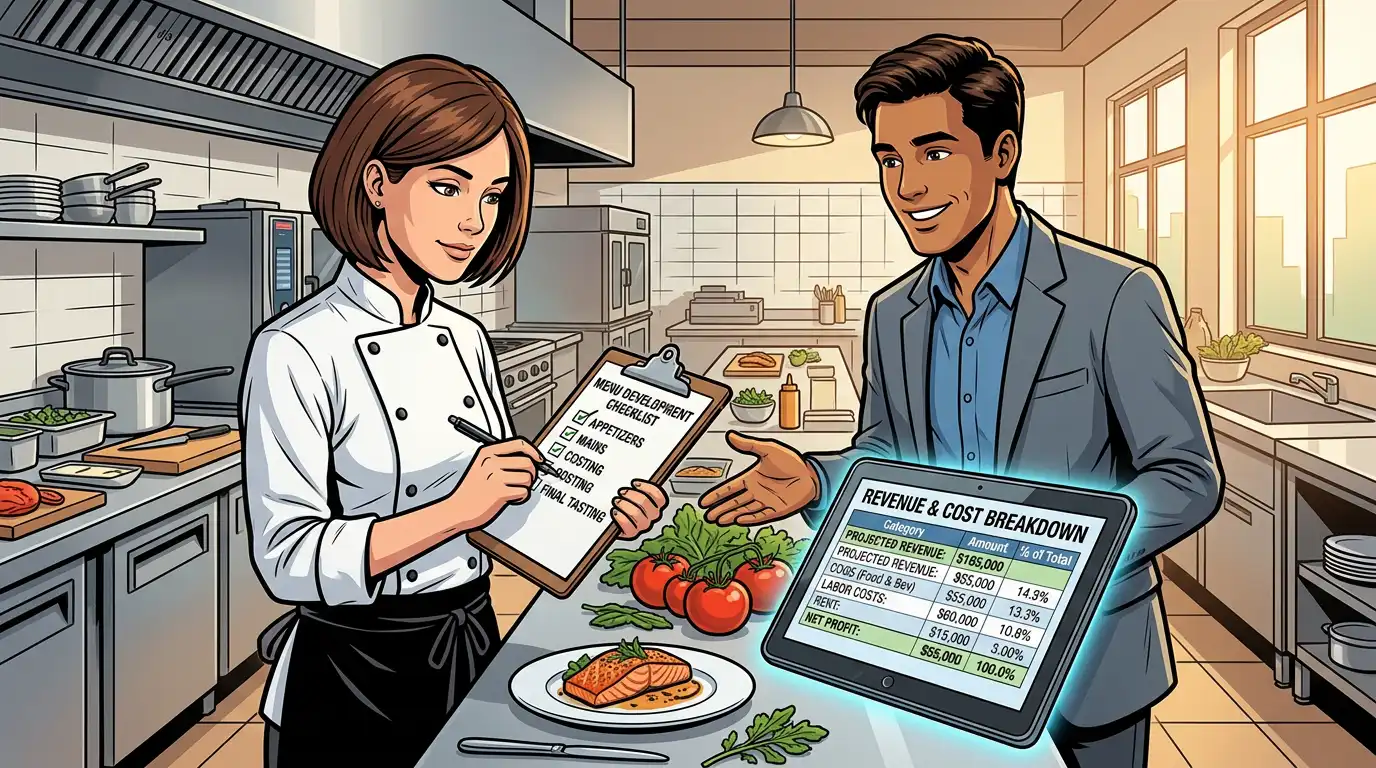
Overestimating revenue. New restaurants often take 6–12 months to reach steady traffic. Use conservative covers and average checks, especially for the first year.
Underestimating costs. Build-out, equipment, and labor usually cost more than expected. Add a 10–15% contingency to startup costs.
Skipping market research. Assumptions about demand and competition can be wrong. Validate your concept with real data and site visits.
Ignoring cash flow. Profit and cash flow are different. Plan for seasonal dips, slow weeks, and delayed payments from delivery platforms.
Writing a plan you won’t use. Treat the plan as a living document. Update it as you learn and as conditions change.
A restaurant business plan is one of the most important tools you’ll create before opening. It clarifies your concept, supports funding, and guides decisions. Use this guide and template to build a plan that fits your restaurant and your market. Revise it regularly and use it to stay on track as you grow.
Our sales, marketing and custom support stand ready 24/7 worldwide.