


Master Your Margins: 2026 Guide to Intelligent Menu Management System
 Mika Takahashi
Last updated Feb 25, 2026
 Mika Takahashi
A menu management system is a type of software that lets restaurant owners make, change, and share menus on all digital and physical channels from one central location. This digital platform replaces broken manual procedures with a single point of control for all menu items, prices, availability, and promotions at all points of contact in your foodservice business.
This blog post talks about the most important elements of restaurant menu management software, the benefits of using it in both single-location and multi-location restaurants, how to make it work with other technologies, and how to successfully deploy it. Instead of comparing prices or brands, we look at operational capabilities and decision-making criteria. This is useful information for restaurant owners, managers, and operations directors who want to make menu operations more efficient and get rid of the stress of handling several menus at different locations.
A menu management system is a piece of software that lets restaurants make, change, and keep track of their menus across all digital channels from one place. This makes sure that the menu data is the same whether customers order in-store, through your website, or through a third-party delivery service.
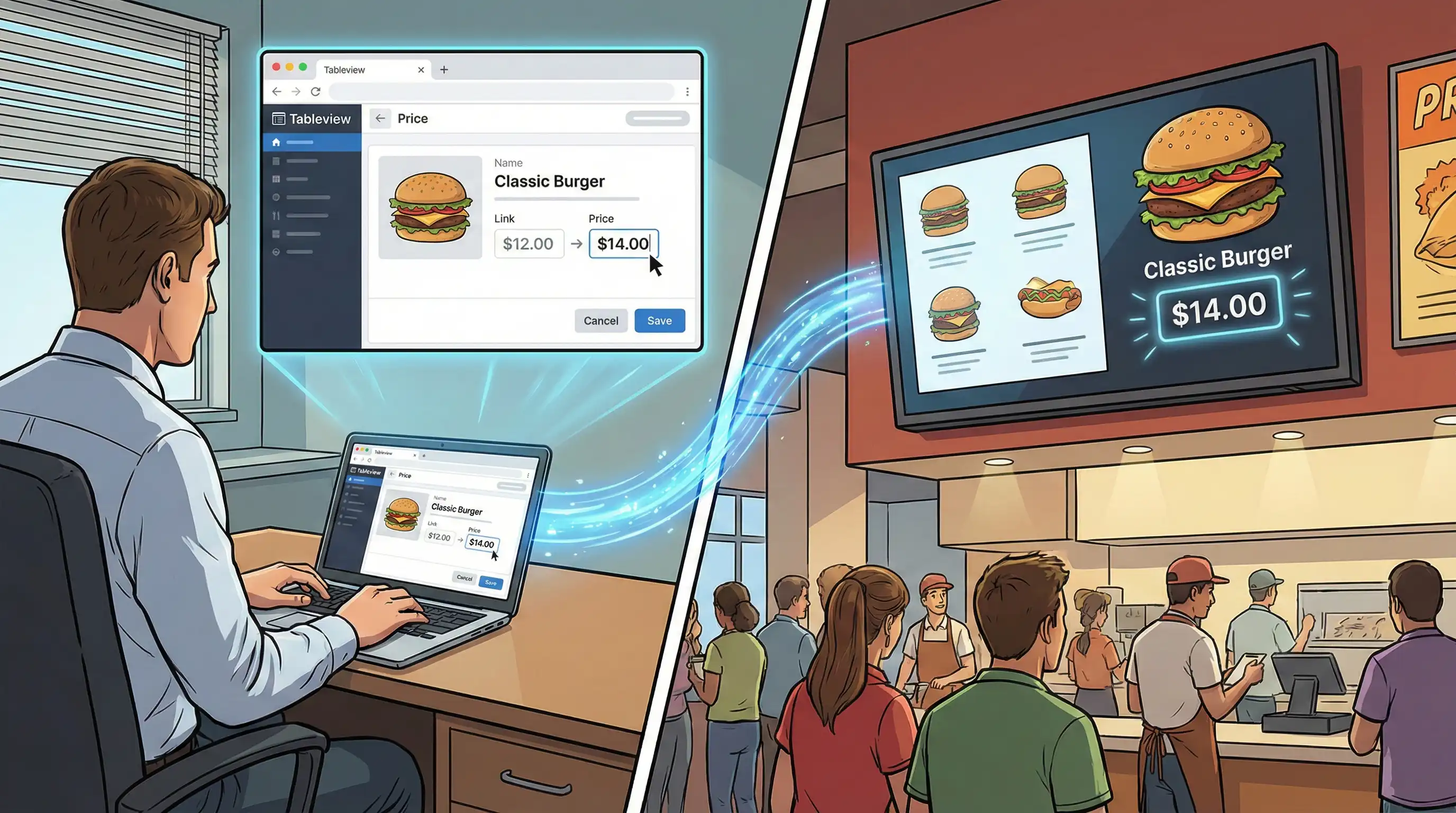
Menu management systems are the next step from manual menu operations, where changes meant reprinting physical menus and updating each platform by hand. Now, with digital tools, menu updates are synced in real time across your whole business. As restaurant owners had to deal with more complicated online ordering, delivery applications, kiosks, and catering services that needed to be synced right away to avoid mistakes and unhappy customers, these platforms came about.
The main purpose of restaurant menu management software is to give you complete control over all the parts of your menu, including items, descriptions, prices, availability windows, modifiers, taxes, and service charges. The system works with a single database, so any changes you make to one menu automatically affect all of your menus. This includes changing daily specials, eliminating an item that is out of stock, or starting seasonal cycle menus.
This centralized control gets rid of the need to have separate menu data on different platforms. Operators may make the same modification over and over again without having to log into numerous platforms. They can do everything from one interface with only a few clicks.
Modern restaurants use a growing number of ways to show their menus, such as POS system terminals, digital menus on websites, third-party delivery services like Uber Eats and DoorDash, self-service kiosks, digital menu boards, and catering portals. Before, each channel had to be managed separately, which led to discrepancies that annoyed customers and hurt the brand's reputation.
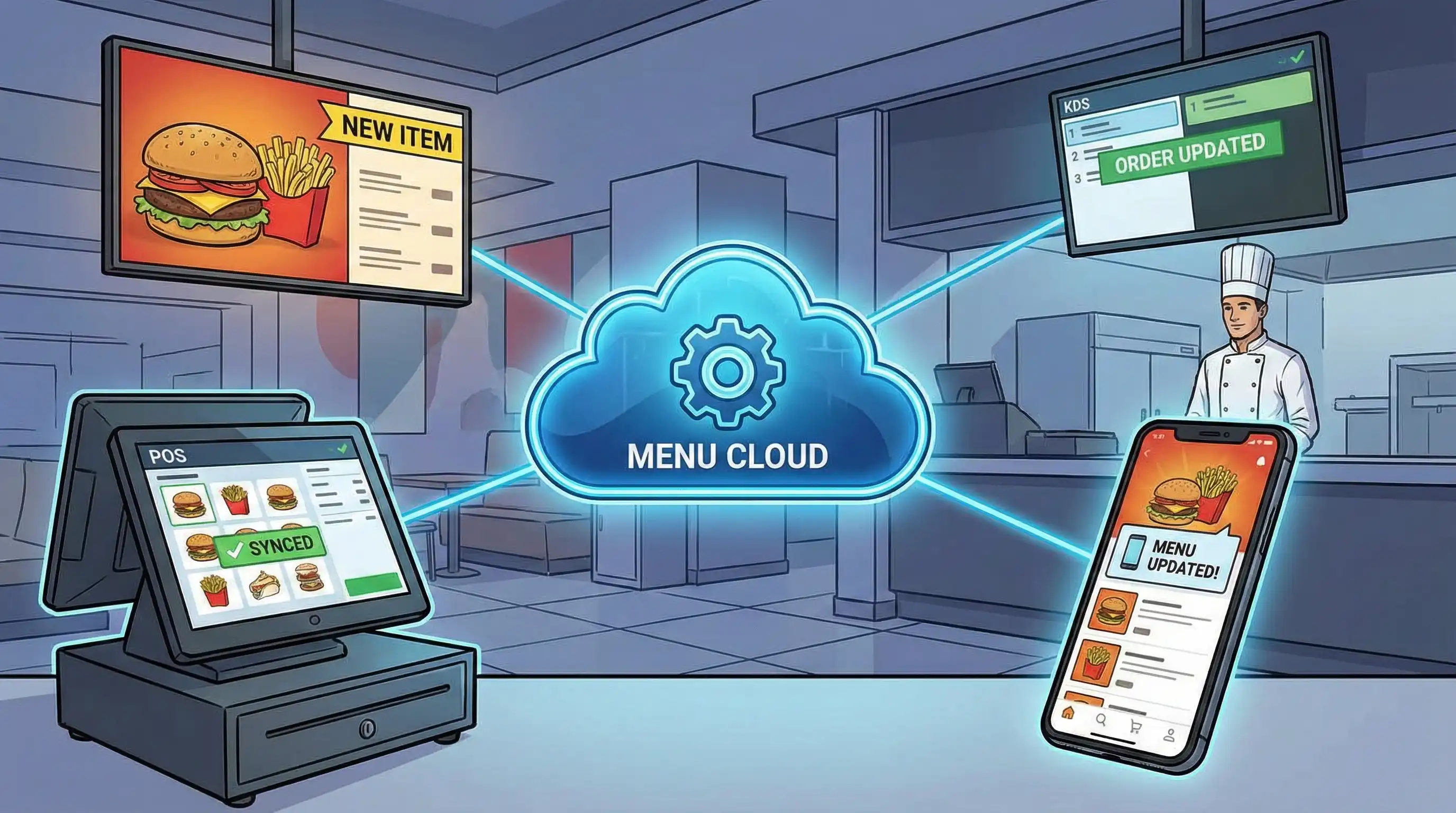
A strong management system links various touchpoints through one processing engine. When you alter prices at different locations or add new nutritional information, the change happens at all locations at the same time. The link between centralized control and a consistent customer experience has a direct effect on the value of an order. Customers who trust that your menu is accurate will order with confidence.
Knowing these basic parts will help you look at the unique features that set basic menu tools apart from full solutions made for large businesses.
Building on the centralized architecture outlined above, good restaurant menu management software gives restaurant owners the tools they need to deal with the problems they face every day. These elements decide if a system only turns your menus into digital files or really changes how your team runs food service.
Real-time synchronization makes sure that menu updates spread across all platforms right away, without anyone having to do anything. When you mark anything as unavailable because you don't have enough of it in stock, the change shows up on your online menu, delivery apps, and in-store displays in just a few seconds. This feature depends on strong API connections and cloud replication that keeps everything in sync even when connections drop. Newer systems save data locally and automatically reconcile when connections are restored.
The practical effect goes beyond just being easy. Restaurant owners say they have cut the time it takes to make updates from days to minutes. This has led to fewer customer complaints about things being out of stock and greater retention rates.
Centralized menu management is important for multi-location restaurants that operate in multiple places since it helps keep the brand consistent while allowing for local differences. Enterprise-grade solutions let operators control base menus at the corporate level while also letting prices, regional cuisine, or market-driven promotions vary by location.
These solutions let companies set up permission hierarchies, where corporate teams control the main menu items and store managers change their availability based on local supply and demand. A single database core, like the ones that power solutions for 20 to 2,000 sites, makes sure that changes happen without the data translation mistakes that old systems have.
In many markets, it is now necessary to follow rules about nutritional information and allergen labeling. At the item level, menu management systems keep track of this information and automatically create menu layouts that follow the rules for both print and digital channels.
In addition to being compliant, clear nutritional information builds confidence with customers and makes customizing possible. Dynamic tagging systems can advise high-protein options to consumers who are interested in fitness or highlight vegan foods based on their past orders. This could lead to higher order values through more relevant suggestions.
These characteristics work together to make restaurant operations function more smoothly and consistently, which builds customer loyalty.
Once the feature needs are clear, a successful rollout hinges on careful planning that keeps everyday operations running smoothly. The integration process is different for each restaurant, but it follows a set of steps that restaurant owners can plan around.
Restaurants should use menu management systems when broken processes make things obviously less efficient, as when prices are different across channels, changes take too long, customers complain a lot about menu accuracy, or plans to grow that present technologies can't handle. These are the steps that usually happen throughout the migrating process:
| Criterion | POS Integration | Delivery Platform Connection | Website Synchronization |
|---|---|---|---|
| Setup Complexity | Moderate—requires API configuration and menu mapping | Variable—depends on platform API maturity | Low—typically standard embed or plugin |
| Update Speed | Real time with direct database connection | Near real time, occasional platform delays | Real time with proper integration |
| Maintenance Requirements | Periodic sync verification, software updates | Ongoing monitoring for platform API changes | Minimal after initial setup |
| Data Depth | Full menu data including modifiers and timing | Often limited modifier support | Full control over display and layout |
Your business goals will determine the best way to integrate. Businesses that rely on delivery sales should focus on strong links to third-party delivery platforms. On the other hand, restaurants that focus on direct online ordering may want to focus on integrating their websites and point-of-sale systems.
These technological issues naturally lead to the operational problems that teams face during and after implementation.
Even well-planned deployments run into problems. Restaurant owners can make plans to deal with these problems ahead of time so that projects stay on track.
When menu data doesn't match up between platforms, such when your website and delivery apps show different pricing or some items are absent from some channels, customers lose faith quickly. The answer is to make the centralized database the only place where information is stored, and to use automated sync mechanisms to push changes out instead of having to update each platform by hand. Regular audits with reporting tools help find sync problems before customers do.
People who are used to how things are done generally don't want to use new tools, especially when they have to learn how to use them on the job. Effective adoption techniques include gradual rollouts that start with eager early adopters, hands-on training sessions that emphasize on how to save time instead of abstract benefits, and clear documentation that staff can use on their own. Showing them how the system helps them save time on boring chores like manually updating menus gets them to really buy in.
Sometimes, restaurants with established technology stacks find that their point of sale (POS) system, inventory management system, and new menu management software don't work well together. To solve this, make sure to thoroughly screen vendors to make sure their APIs are compatible before you buy, use phased integration to connect one system at a time, and have fallback processes in place during the transition. Open APIs lower the risk of being stuck with a vendor and make it possible to grow in the future.
Restaurants that can handle these problems are ready for the operational benefits that make investing in a system worthwhile.
Menu management systems are now an important part of running a modern foodservice business. They let restaurant owners keep their menus the same across many locations and channels while cutting down on the administrative work that used to take up management time and money. Moving from manual procedures to centralized digital platforms has a direct effect on customer satisfaction, the efficiency of operations, and the bottom line.
Immediate actionable steps:
Restaurants that want to improve their digital capabilities should look into things like optimizing their point-of-sale (POS) systems for unified reporting, using digital marketing tools that use menu data to target promotions, and integrating inventory management so that recipes are linked to buying decisions.
Menu management system vendor evaluation checklist:
ROI calculation framework:
Integration planning considerations:
Our sales, marketing and custom support stand ready 24/7 worldwide.