


Restaurant Floor Plan Layouts And Seating Plans for Restaurants
 Mika Takahashi
Last updated Feb 18, 2026
 Mika Takahashi
The layout of your restaurant's floor plan affects how every square foot of the space works, from the time visitors walk in the door until the staff brings food to their tables. These smart spatial arrangements have a direct effect on your revenue, how well your business runs, and the overall experience your guests have at your facility.
Restaurant seating designs are very important for the overall dining experience, the efficiency of your business, and its potential to make money. A good seating arrangement puts tables, booths, and chairs in the right places to get the most people in while still leaving enough room for people to move about comfortably and for service to flow. A well-thought-out seating plan will make your customers feel comfortable and your team work more efficiently, whether you own a small café, a busy casual dining spot, or an upmarket fine dining restaurant. This will help create an inviting ambiance that makes people want to come back.
For restaurant owners, managers, and hospitality professionals who are developing a new restaurant or revamping an existing space, this article covers the basics of layout design, space optimization, and following the rules. We focus on realistic restaurant floor plans and seating designs that work for all types of restaurants, from casual cafés to fine dining, and that take into account both the dining spaces in front of the house and how they relate to the kitchen.
Restaurant floor plans and seating plans are carefully planned arrangements of furniture, service stations, and circulation paths that make the most of your dining room, improve workflow, and enhance the guest experience. They do this by maximizing seating capacity while keeping enough space for smooth operation.
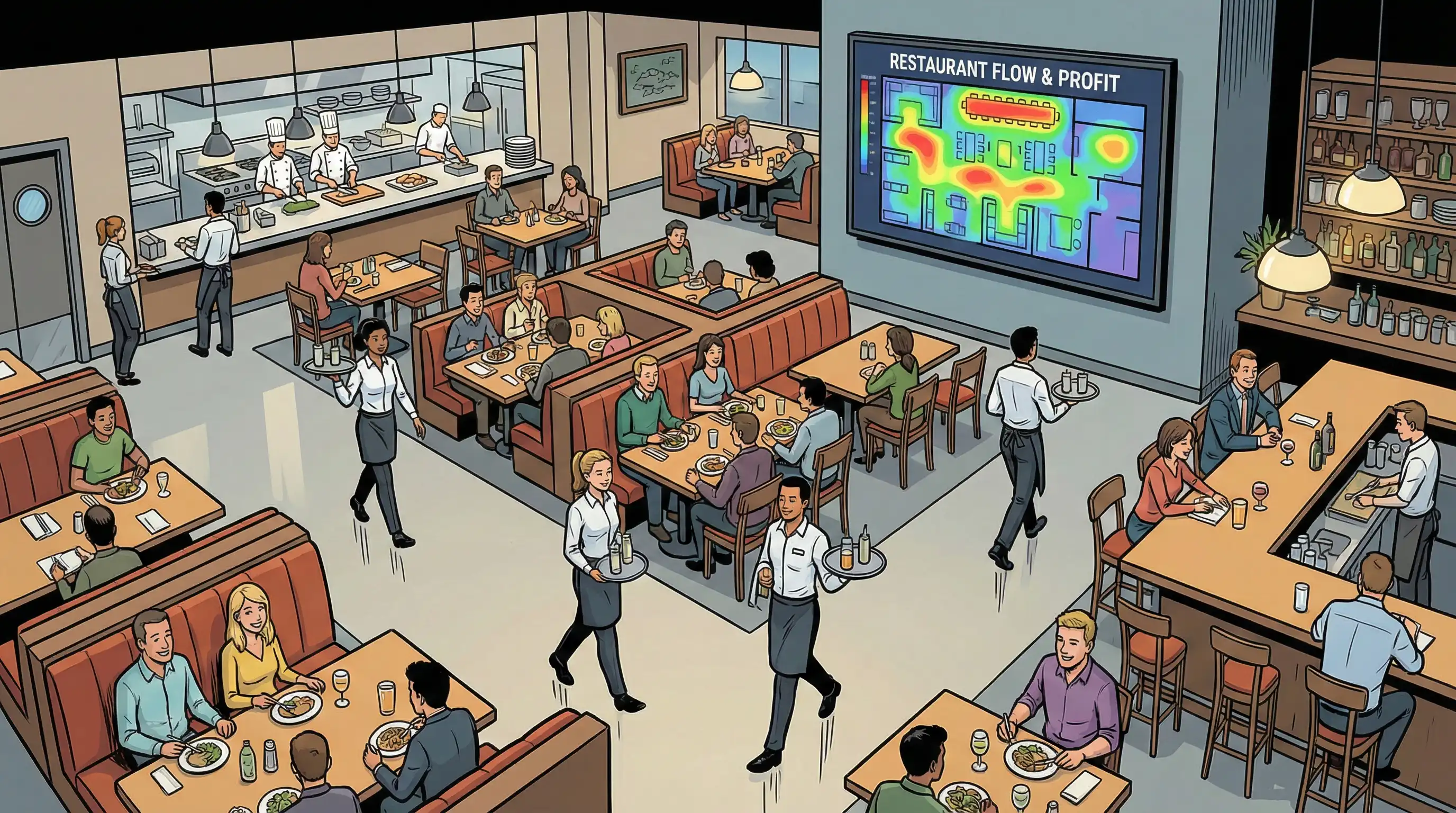
A restaurant floor plan is a detailed architectural drawing that shows how all the functional parts of your business, such as the dining area, kitchen, service stations, restrooms, storage, and entryways, are arranged in space. These blueprints provide the basis for how a restaurant is set up, including how people move around, where they sit, and how quickly they get their food.
The way your restaurant is set up affects more than just how it looks. A good floor plan can cut down on the distance servers have to walk by 20–30% during busy times, which directly affects how quickly tables turn and how comfortable personnel are. On the other hand, poorly designed layouts cause bottlenecks that cut down on guest stay time and repeat visits by 15 to 25%, according to research in the field.
There are four main parts to every restaurant floor layout that work together to make the restaurant run smoothly:
Dining areas include all the places where customers can eat, such as tables, booths, bar seating, and outdoor areas. These areas usually take up 55–60% of the restaurant's overall space.
During busy dinner times, service stations help personnel by providing wait stations, host stand positions, POS terminals, and beverage stations. Strategic positioning cuts down on server trip time and keeps an eye on the dining area.
The invisible highways that connect the entryway, seating area, kitchen, restrooms, and exit are called circulation routes. To make sure that wheelchairs and server trays can both fit through, the main paths need to be 36 to 48 inches wide.
Support zones include the kitchen layout, storage areas, bathrooms, and personnel areas. These parts of the back of the home need 30–35% of your overall space, but they should be easy for staff to get to and out of sight of guests.
For a typical 1,600-square-foot restaurant, the standard ratios divide the space like this:
These ratios can change depending on your idea. Quick-service restaurants might give greater space to the kitchen, whereas fine dining restaurants might give additional space to the dining area to improve the atmosphere and spacing between tables.
There is a clear link between how space is used and how efficient it is. For example, tight seating arrangements with tables that don't have adequate room between them (at least 36 inches between edges) lead people to bump into each other and make it less comfortable, which drives repeat business.
If you know these basics, you can choose specific sorts of restaurant layouts that fit your business idea and target audience.
Seating arrangements are an important part of restaurant floor plans since they affect the flow, comfort, and overall experience of guests. A good seating plan puts tables, chairs, booths, and other seating options in the best places to fit as many people as possible while yet leaving enough room for customers and staff to walk around. It strikes a good balance between making operations run well and making customers feel comfortable, so they can enjoy their meals without feeling rushed or cramped.
When making seating designs, it's important to think about the types of seating used (including rectangular tables, booths, bar stools, and communal tables) and where they will go in the dining area to fit varied group sizes and eating styles. To follow safety rules and municipal requirements, tables need to be spaced correctly. This usually means that there needs to be at least 36 inches between the edges of the tables so that waiters and guests can move around easily.
Seating layouts also make sure that places are easy for guests with disabilities to get to and meet ADA standards. Also, the seating plan should make it easier for personnel to serve customers by cutting down on the distance they have to traverse between the kitchen, wait stations, and dining tables.
Restaurant owners and managers can make dining areas more appealing by learning about how seating designs work. This can make guests happier, increase sitting capacity, and improve the restaurant's overall performance.
Based on these basic ideas, restaurant floor plan templates may be divided into three main groups, each with its own benefits for different types of dining and business purposes.
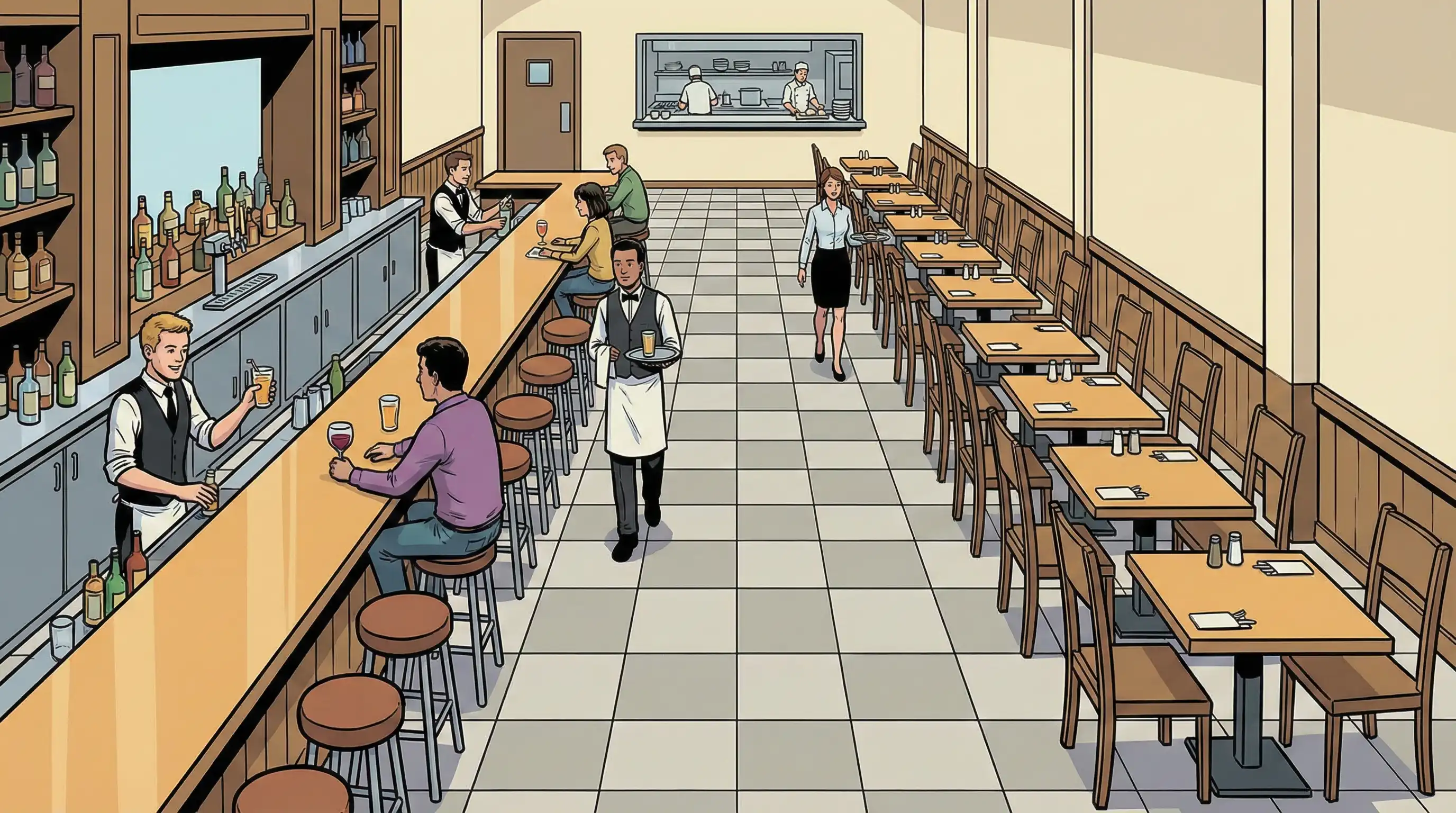
Linear layouts put seats in a simple grid design, usually with rectangular tables in rows that are parallel to each other. This setup works best for quick-service restaurants, cafeterias, and counter-service businesses.
The assembly-line method makes it easier for guests to go from ordering to sitting down to leaving, which is great for places that want to serve a lot of people at busy times. This sort of restaurant often gets people to leave their tables faster, but it loses the cozy atmosphere that gourmet dining needs.
Linear designs are great when your idea focuses on speed, your area is small, or your menu doesn't allow for changes that might slow down kitchen output.
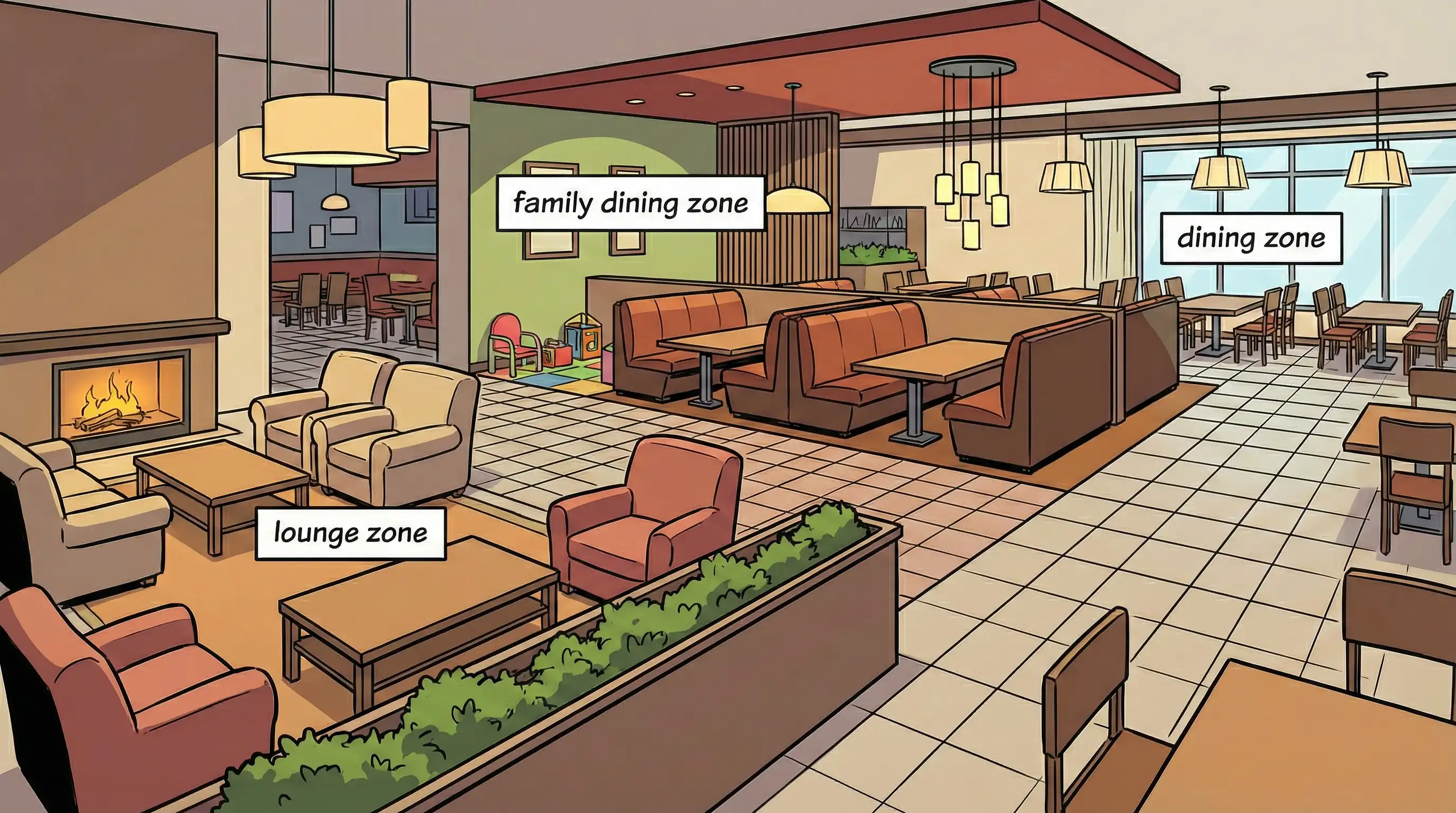
Zoned plans break up the dining room into smaller areas, each of which is meant for a certain type of guest or party size. A common setup would have a small booth area on the left, large rectangular tables in the middle for everyone to sit at, and bar seats near the drink service.
This method works for big places and businesses with more than one theme, like a restaurant that hosts business lunches, romantic evenings, and group parties. Fire codes and safety rules affect where zones are placed. For example, there must be clear paths for people to leave and limits on how many people can be in each part.
Managers can open or close portions based on foot traffic with zoned layouts. This keeps service quality high in busy areas while lowering labor expenses.
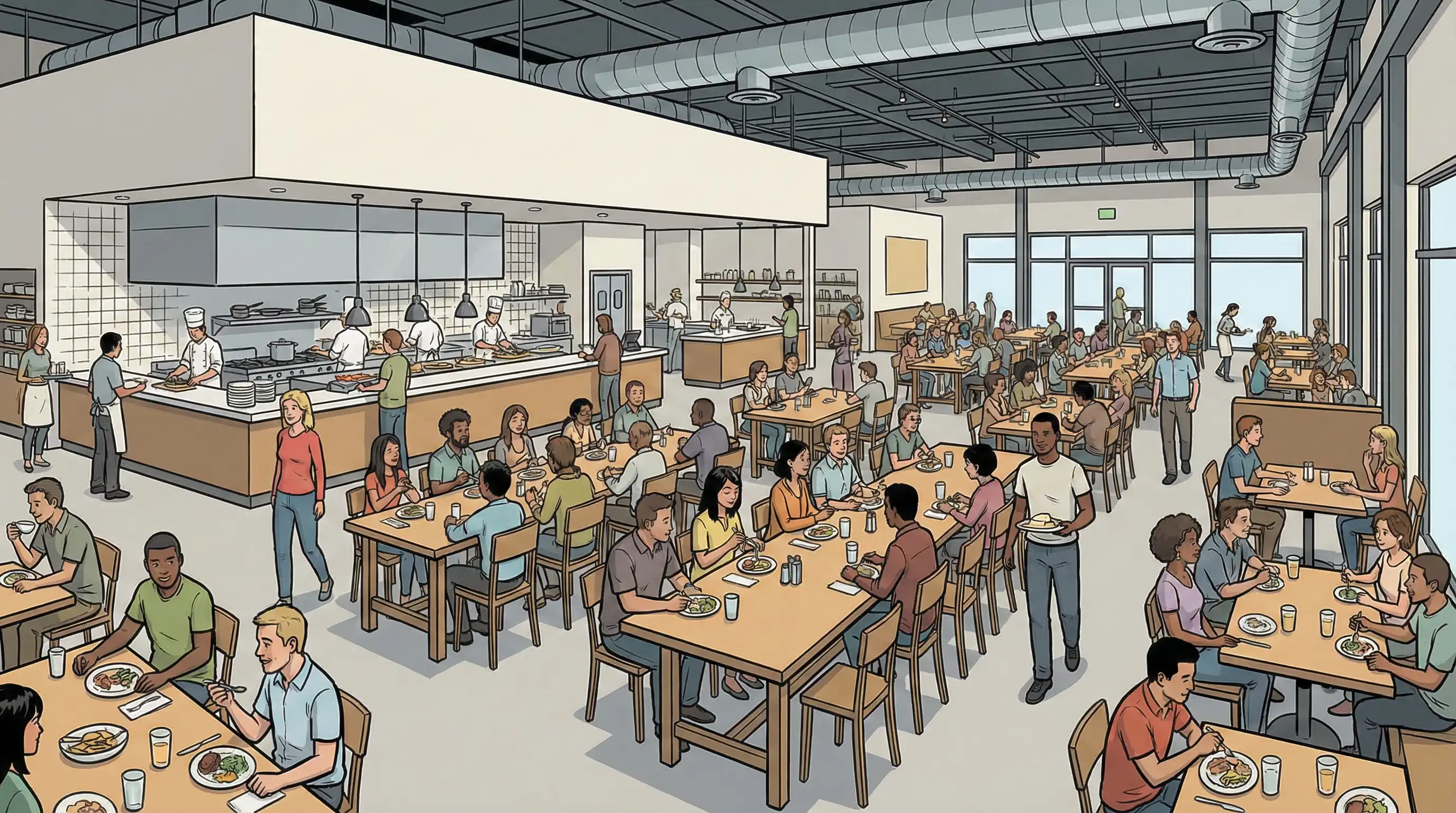
Open concept floor plans get rid of walls between the dining and kitchen spaces, which makes the space feel more open, something many modern diners like. Kitchen visibility is a design feature in and of itself, with raised cooking stations providing entertainment during meals.
This sort of layout fits well with other trends in interior design that like natural light, communal spaces, and cooking that feels real. However, open layouts run the possibility of noise bleed from kitchen activities, thus acoustic planning is needed to keep dining decibels below 70 dB.
Compared to partitioned designs, open layouts cut capacity by 10–20%. However, if done well, they can make the place seem more valuable and raise the average check size by 10–15%.
Now that you know about these types of layouts, the next step is to come up with practical ways to put ideas into useful restaurant designs.
Seating arrangements are an important part of restaurant floor plans because they affect how well the restaurant runs, how comfortable guests are, and how much money it makes. A good seating plan strikes a balance between getting as many people as possible seated and leaving enough space for service to run smoothly and visitors to have a pleasant meal.
Types of Seating: Most restaurants include a combination of seating options so that they can meet the needs of different customers and groups. There are rectangular tables, booths, bar stools, community tables, and outdoor seating places, among other things. You may set up rectangular tables in numerous ways to fit different sizes of groups. Booths are sometimes put along the walls or in corners to give people solitude and comfort. Bar stools are a casual way to sit at counters or bars, and communal tables make dining more social.
Spacing and Comfort: To follow safety rules and make guests more comfortable, there must be enough space between tables. Industry rules say that there should be at least 36 inches of space between the edges of tables and 18 inches of space for occupied chairs. This spacing lets servers move about easily while giving visitors enough room to feel comfortable. Too many people can make the guest experience worse, which can lead to shorter stays and fewer repeat visits.
Accessibility: Seating arrangements must follow the Americans with Disabilities Act (ADA) and other municipal rules about making things easier to get to. This means making sure there is enough space between the aisles (usually 36 to 48 inches), setting aside a certain number of tables that meet ADA standards, and making sure that paths to facilities and exits are clear. Taking accessibility into account makes things more welcoming and opens up the client base.
Seating Arrangement Strategies: Good seating arrangements take into account how people move about, how well they can see, and how to balance privacy with socializing. For instance, putting booths along walls makes little, cozy spaces, while having movable tables in the middle of the room lets you change the size of the gathering. To meet the changing needs of customers during service periods, designers generally use a mix of fixed and flexible seats.
A carefully thought-out seating plan cuts down on the distance servers have to walk, which makes them less tired and speeds up service. Putting wait stations and host stands in the right places near sitting areas makes it easier for workers to talk to and work with each other. Also, clean lanes for people to walk on help keep things moving during busy times, which makes the whole process go more smoothly.
It is very important to find a good balance between seating capacity and comfort. Adding more seats can help make more money, but it shouldn't come at the cost of visitor happiness. Comfortable seating arrangements encourage longer visits and higher average checks. Offering a variety of seating options, from single diners to large groups, makes the overall visitor experience better by meeting the needs of all types of customers.
Modern restaurants use reservation and table management systems to look at how people use their seating. Insights based on data assist find tables that aren't being used enough or times when demand is highest, which lets seating plans change on the fly. This method maximizes the rate at which tables turn over and makes the business more profitable.
In short, making seating designs for restaurants is a complex design problem that needs careful thought about space, operations, and the needs of customers. A good seating arrangement not only makes the most of the space that is available, but it also makes the dining experience better, which helps the restaurant succeed in the long run.
To turn layout ideas into usable floor plans, you need to carefully plan for your space, your idea, and the rules in your area.
When designing or redesigning your restaurant floor, follow these steps in order:
| Criterion | Linear Layout | Zoned Layout | Open Concept |
|---|---|---|---|
| Seating Capacity | Highest | Moderate | Lowest |
| Guest Experience | Efficient | Varied | Elevated |
| Staff Efficiency | Highest | Moderate | Moderate |
| Noise Control | Moderate | High | Challenging |
| Flexibility | Low | High | Moderate |
| Implementation Cost | Low | Moderate | High |
When deciding on your layout, think about what your target audience wants, how complicated your menu is, and how you want to serve your customers. Linear efficiency is good for fast-casual restaurants, whereas zoned layouts are good for full-service restaurants that host a variety of events since they can easily adapt to different party sizes and purposes during service.
These frameworks get you ready for the problems that often come up when you implement a layout and run your business.
Even the best-planned restaurant floor designs can cause problems when visitors and staff start using them. Taking care of these common problems before they happen stops guests from getting angry and losing money.
Problem: During dinner rushes, guests and servers run into each other near the host stand, the bathroom corridor, or the wait stations.
Solution: Whenever you can, make sure that guests and workers have distinct paths to walk on. Place wait stations away from the main paths that guests take, make sure the waiting area near the entry doesn't hinder the flow of people to seating, and arrange furniture so that it creates natural traffic channels. A lot of restaurants use variations in flooring or lighting to provide people visual clues that help them move about.
Problem: Tables stay unoccupied while the waiting list grows since the party sizes don't match.
Solution: Use rectangular tables that can be pushed together for bigger groups to make seating arrangements more flexible. Reserve booths for busy times when the premium vibe makes the space worth it. Reservation systems can show which table setups aren't working well, which can lead to changes that increase use by 12–18%.
Problem: The layout doesn't follow ADA or fire safety rules, which could lead to penalties and legal action.
Solution: Keep the aisles at least 36 inches wide throughout the facility, make sure the doors and paths to the restrooms are wide enough for mobility devices, and make sure that nothing is blocking the exits within 10 feet of them. Before you decide where to put the furniture, work with the local fire marshals to be sure you are following occupancy regulations.
By deliberately dealing with these problems, you may build a restaurant plan that will work effectively for your business for many years.
Strategic restaurant floor plans affect all aspect of a restaurant's profitability, including customer pleasure, staff productivity, revenue per square foot, and compliance with the law. The way you set up your dining room, service stations, and circulation patterns affects how well your business functions during busy dinner times and quiet afternoons.
Begin your layout planning with these immediate steps:
Some related issues that are worth looking into are how to make the kitchen layout work better for the back of the home, how to utilize technology to manage tables, and how to design for outside places that will let you seat more people when the weather is nice.
Spacing standards to reference:
Planning tools: Professional design software like Plan7Architect or SketchUp enables 2D precision layouts and 3D visualization that helps stakeholders understand ambiance before construction begins.
Professional consultation: For complex projects involving structural changes or multi-concept venues, restaurant design specialists provide expertise that prevents costly mistakes during implementation.
Our sales, marketing and custom support stand ready 24/7 worldwide.