


Restaurant Improvement Ideas: Food Quality, Service & Ops
 Mika Takahashi
Last updated Apr 10, 2026
 Mika Takahashi
Every restaurant reaches a point where the early momentum fades and the numbers flatten. Covers are steady but not growing. Reviews are decent but not glowing. The kitchen runs, the front of house functions, and the bills get paid, but the gap between where you are and where you know you could be starts to feel permanent. The temptation is to chase something dramatic, a new concept, a full rebrand, a menu overhaul. But the restaurants that actually improve year over year rarely do it through grand gestures. They do it through a relentless accumulation of small, practical changes to food quality, service delivery, and daily operations that compound over time.
This guide is built around restaurant improvement ideas that work in the real world, not theoretical frameworks designed for business school case studies, but specific, actionable changes that address the three pillars every guest experiences: food quality in a restaurant, restaurant service standards, and the operational backbone that makes both possible. Whether you are running a neighbourhood bistro, a fast-casual chain, or a hotel restaurant, the principles are the same. The execution is where most operators either succeed or lose interest.
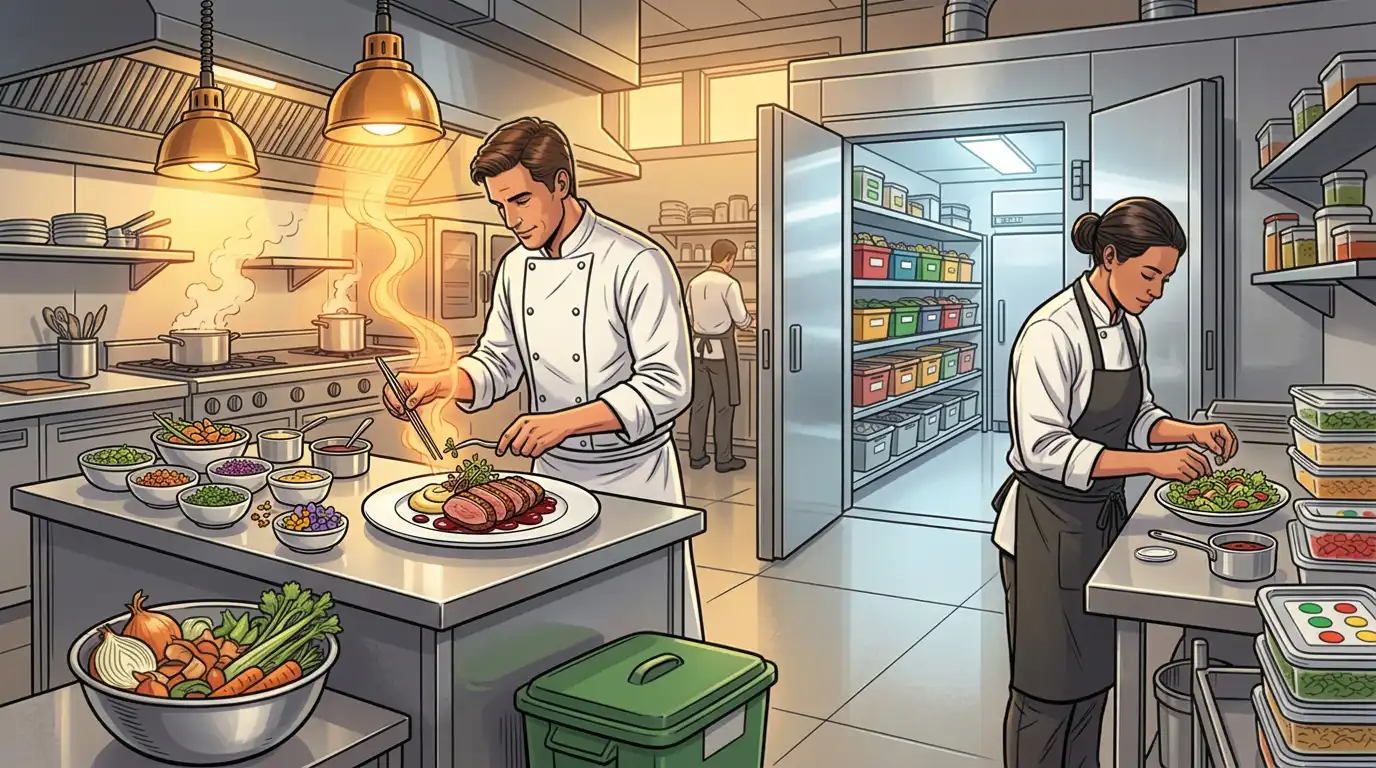
Before diving into specific ideas, it is worth understanding why improvement efforts stall. The pattern is predictable. A manager identifies a problem, announces a solution, implements it for two weeks, loses focus when a staffing crisis or supplier issue demands attention, and the initiative quietly dies. Three months later, the same problem reappears.
The issue is not a lack of good ideas. It is a lack of systems that make improvements stick. A chef who decides to improve food consistency by standardising portion sizes will fail if there are no portion guides posted at every station, no scales on the prep line, and no accountability mechanism built into the POS system that flags deviations. A front of house manager who wants to improve greeting standards will fail if the expectation is communicated verbally once and never measured again.
Sustainable restaurant strategies require three elements: a clear standard, a tool or process that enforces it, and a feedback loop that catches drift before it becomes a new bad habit. Every idea in this guide is built around that structure.
Food quality in a restaurant is the single factor that determines whether a guest returns. Atmosphere, service, and location matter, but they cannot overcome food that disappoints. Restaurant food quality is not just about using expensive ingredients or hiring a talented chef. It is about building systems that deliver the same quality plate after plate, shift after shift, whether the head chef is on the line or not.
The first step in learning how to improve food quality in a restaurant is defining what quality means in your specific context. A fine dining restaurant and a high-volume burger shop have different quality benchmarks, but both need their benchmarks to be explicit.
Quality in a restaurant typically covers four dimensions:
Write these standards down for every dish on your menu. Create reference photos. Establish temperature targets. This documentation is your quality bible, and without it, quality is just an opinion that changes depending on who is cooking.
You cannot optimize food quality without addressing what comes through the back door. Ingredient sourcing is the foundation. This does not mean you need to buy the most expensive products on the market. It means you need consistent suppliers who deliver consistent quality on a reliable schedule.
Build relationships with fewer, better suppliers rather than chasing the lowest price from a rotating cast. Inspect deliveries rigorously, every delivery, not just when you remember. Reject products that do not meet your standards and document the rejection so you have data when renegotiating supplier contracts.
Seasonal menu adjustments can improve quality while managing costs. A tomato in January is not the same product as a tomato in August. Menus that adapt to seasonal availability deliver better flavour without requiring premium pricing, and guests increasingly appreciate restaurants that acknowledge seasonality rather than pretending it does not exist.
Food consistency meaning in a restaurant context is simple: every guest receives the same quality experience regardless of when they visit, which chef is cooking, or how busy the kitchen is. It is arguably the most important element of food quality because it determines trust. A guest who has one great meal will return. A guest who has one great meal followed by a mediocre one will not.
Consistency is built through:
A modern POS system like Tableview supports consistency by tracking item sales in real time, generating data that informs prep lists, and providing the reporting needed to spot inconsistencies before they become patterns. When you can see that a specific dish has a higher return rate on certain shifts, you have a starting point for investigation.
The pass, the point where food leaves the kitchen and enters the dining room, is the last line of defence for food quality. Every plate should be checked at the pass for presentation, portion size, temperature, and accuracy against the ticket. In a well-run kitchen, nothing leaves the pass without the expeditor's approval.
This sounds basic, and it is. But in the middle of a busy service, the pass becomes a bottleneck that tempts people to rush. The restaurants that maintain quality under pressure are the ones where the pass check is non-negotiable, not a guideline that bends when the printer is firing.
Restaurant service standards are the human element that food quality alone cannot replace. A guest can forgive a five-minute wait for a table if the greeting is warm and the communication is clear. A guest will not forgive being ignored, even if the food is exceptional.
Restaurant standards of service need to be documented, trained, and measured, just like food quality standards. The common mistake is assuming that "good service" is understood intuitively. It is not. What one server considers attentive, another considers intrusive. What one manager calls professional, another calls cold.
Write down your service standards for every stage of the guest journey:
These standards should be specific enough that a new hire can read them and understand exactly what is expected without relying on tribal knowledge from longer-serving staff.
How to improve service in a restaurant almost always comes back to training, not the one-day onboarding session that new staff forget within a week, but ongoing, structured training that reinforces standards and builds skills.
Effective service training includes:
One of the most misunderstood aspects of how to improve a restaurant's service is the relationship between speed and experience. Guests do not want to be rushed, but they also do not want to wait. The goal is eliminating unnecessary delays while preserving the feeling of being looked after.
POS technology plays a direct role here. A system like Tableview that sends orders to the kitchen instantly, routes drink orders to the bar simultaneously, and allows servers to fire courses from a handheld device eliminates the physical delays of walking tickets to the kitchen and reduces the gap between ordering and receiving. When the technology handles the logistics, the server can focus on the guest.
Table turn time is another metric worth tracking, not to rush guests out but to identify bottlenecks. If the average table is waiting 12 minutes between finishing their main course and receiving the bill, that is a service gap, not a speed issue. The guest is ready to leave, and the delay is reducing their satisfaction and your revenue simultaneously.
Every restaurant receives complaints. The difference between a good restaurant and a great one is how those complaints are handled. A complaint resolved quickly, sincerely, and generously almost always creates a more loyal guest than one who never had a problem in the first place.
Train staff to follow a simple framework:
The worst response to a complaint is defensiveness. The second worst is indifference. Both are training problems, not personality problems.

Restaurant operations are the invisible engine that powers everything the guest sees. A kitchen can only deliver consistent food quality if inventory is managed, prep is planned, and equipment is maintained. A dining room can only deliver excellent service if scheduling is optimised, sections are balanced, and communication between restaurant front and back of house is seamless.
Improving restaurant operations is where the largest gains in profitability and guest satisfaction often hide, because operational inefficiencies cost money every day in ways that are difficult to see without the right data.
Best practices in restaurant operations start with knowing what you have, what you use, and what is your restaurant food waste. Inventory management is not glamorous, but it directly affects food cost, menu pricing, and profitability.
Effective inventory practices include:
A POS system that tracks item-level sales in real time, like Tableview, transforms inventory management from guesswork into data-driven decision-making. When you can see exactly how many portions of each dish you sold last week, broken down by day and daypart, calculating prep quantities and order volumes becomes arithmetic rather than estimation.
Restaurant efficiency is heavily influenced by how labour is scheduled. Overstaffing burns payroll. Understaffing burns guests and remaining staff. The goal is matching labour to demand as precisely as possible.
Use historical sales data to forecast covers by day of week and daypart. Schedule staff against the forecast, not against a fixed template that never changes. Build in flexibility for call-offs and unexpected surges. Cross-train staff so a server can support the host stand during a rush, or a line cook can shift to prep when service slows.
Labour cost as a percentage of revenue is the metric to watch. If it is climbing without a corresponding increase in service quality or covers, something in the schedule is wrong. If it is dropping while complaint frequency rises, you have cut too deep.
Tableview's reporting capabilities allow managers to overlay labour hours against revenue by hour, identifying periods where staffing does not match demand. That data turns scheduling from a weekly headache into a strategic tool.
Kitchen efficiency drives both food quality and service speed. A disorganised kitchen produces inconsistent food slowly. An organised kitchen produces consistent food on time.
Key practices for improving restaurant operations in the kitchen:
The single most impactful tool for how to improve restaurant operations in a modern environment is a POS system that does more than process payments. A comprehensive platform like Tableview integrates order management, inventory tracking, sales reporting, kitchen display, and staff management into one system, eliminating the data silos that force managers to piece together information from multiple sources.
When the POS system shows you real-time sales by item, you can adjust prep mid-shift. When it tracks modifiers and special requests, the kitchen receives clear, complete tickets that reduce errors. When it generates end-of-day reports that break revenue down by category, daypart, and payment method, you have the information needed to make strategic decisions rather than reactive ones.
Technology does not replace good management. It gives good managers better information, faster.
Short-term fixes address immediate problems. Restaurant strategies for lasting improvement require a longer view and a willingness to invest in changes that may not show returns for weeks or months.
Your menu is not just a list of dishes. It is a sales tool, a restaurant margin management instrument, and a statement of identity. Menu engineering, the process of analysing each item's profitability and popularity, reveals which dishes are carrying the business and which are dragging it down.
Categorise every menu item into four groups:
POS data makes this analysis straightforward. Tableview's item-level sales reporting shows exactly how many of each dish you sell and, when combined with recipe costing, reveals the margin on every plate. Without this data, menu engineering is guesswork.
Improvement requires knowing what guests actually think, not what you assume they think. Build multiple feedback channels:
The most important restaurant improvement idea is not a specific tactic. It is an operating philosophy. Restaurants that improve continuously treat every shift as a learning opportunity. Pre-shift meetings review the previous service's successes and failures. Post-shift debriefs capture what went wrong and what went right. Managers walk the floor with eyes open for small deviations from standards before they become large ones.
This culture cannot be mandated from a corporate office or installed by a consultant. It is built daily by leaders who model the behaviour they expect, who fix problems instead of assigning blame, and who celebrate improvements publicly so the team understands that getting better is the job, not an extra task on top of the job.
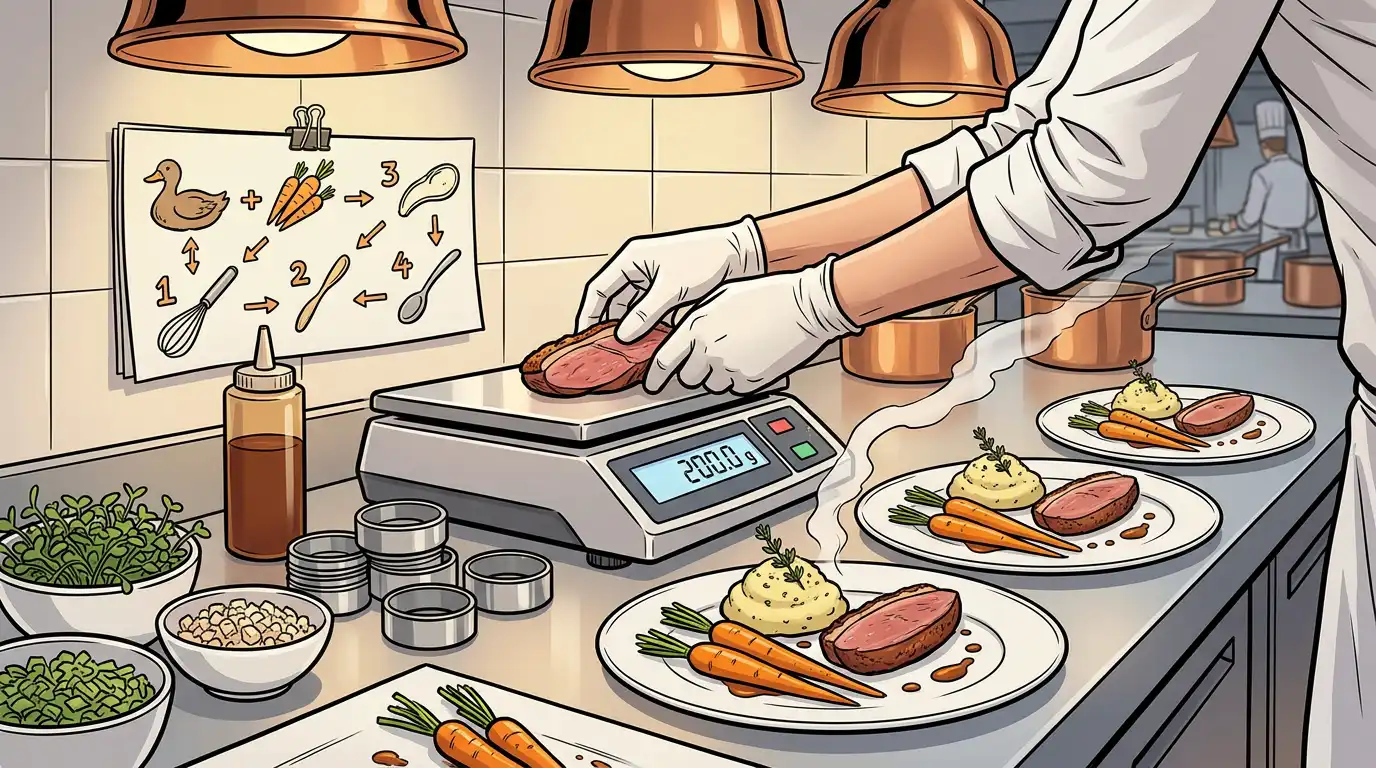
For operators who want to start immediately, here are concrete ideas that require minimal investment and can show results quickly.
Improvement without measurement is just hope. Track these metrics monthly and compare trends over time:
Tableview's reporting dashboard consolidates many of these metrics into accessible, visual formats that make weekly and monthly review practical rather than burdensome.
How to improve a restaurant is not a question with one answer. It is an ongoing discipline that touches every part of the operation, from the ingredients that arrive at the back door to the farewell a guest receives at the front. The restaurants that get measurably better over time are not the ones with the biggest budgets or the most innovative concepts. They are the ones that define clear standards, build systems to enforce those standards, measure performance honestly, and make small corrections continuously.
Every idea in this guide is achievable. None requires a renovation, a rebrand, or a capital raise. What they require is attention, consistency, and a willingness to treat improvement as a daily practice rather than an annual project. The tools exist, the data is available through platforms like Tableview, and the guests are paying attention. The only variable is whether you are.
Our sales, marketing and custom support stand ready 24/7 worldwide.