Food waste in a restaurant is one of those problems that feels small until you add it up. A few overfilled plates here, a forgotten prep container there, a case of produce that went soft before anyone noticed, and suddenly you are watching margin walk out the back door in trash bags. If you are trying to run a tighter operation, learning how to reduce food waste in a restaurant is not a “nice to have” sustainability story alone. It is a profit story, a consistency story, and a leadership story.
This guide breaks down three practical levers most kitchens can improve quickly: food portioning (so guests get a predictable experience and you stop giving away food accidentally), FIFO (so older product gets used before newer product), and specials (so surplus becomes revenue instead of spoilage). Along the way, we will cover habits, training, storage discipline, and the simple metrics that keep a team honest.
If you are an owner, a general manager, or a chef who is tired of writing off inventory you never got paid for, you are in the right place.
Why food waste in a restaurant is a management problem, not only a kitchen problem
Most teams assume waste happens because cooks are careless. Sometimes that is true, but more often waste happens because systems are unclear. People do what is easiest in the moment. If portion standards are vague, staff will eyeball. If walk-in shelves are chaotic, FIFO becomes a slogan instead of a routine. If specials are random, you can accidentally create new waste while trying to fix old waste.
When you reduce food waste in a restaurant systematically, you usually improve three things at once:
- Food cost becomes more stable because you stop losing product before it hits the plate.
- Guest experience becomes more consistent because portioning is aligned with what the menu promises.
- Team confidence goes up because expectations are explicit and everyone can succeed.
That last point matters more than people admit. A kitchen with clear standards is calmer. A service team that can explain portions and specials without guessing reduces complaints and comps.
Start by defining what “waste” means in your restaurant
Before you change anything, split waste into categories. You do not fix everything with one tactic.
Pre-consumer waste
This is product that never makes it to the guest. Examples include trim that could have been used, spoiled produce, expired dairy, overcooked batches, and prep that sat too long. This is where FIFO and storage discipline matter most.
Post-consumer waste
This is what comes back on plates. Sometimes it signals oversized portions, unbalanced plates, or dishes guests do not actually want at that size. This is where food portioning and restaurant menu design matter.
“Process waste”
This is waste created by your workflow: over-prepping for a slow night, batching sauces too far ahead without a plan, or running stations without a prep list tied to sales patterns.
Quality waste
This is when product is technically still usable but no longer matches your standard, limp herbs, bread that is not fresh enough for service, proteins you are unwilling to serve because the sear was wrong. Sometimes that is unavoidable. Often it is reducible with better training and better timing.
When managers talk about food waste in a restaurant, they usually mix all four together. Your weekly improvements get easier when you know which bucket is costing you the most.
Food portioning: the fastest lever for consistency and margin
Portion control is not about making plates look smaller. It is about making plates look intentional. Guests notice inconsistency even if they cannot describe it. One night the pasta feels generous, the next night it feels skimpy. That inconsistency creates complaints, extra remakes, and distrust.
Food portioning is also one of the simplest ways to reduce food waste in a restaurant because it reduces the accidental giveaway of food. If every cook scales protein differently, your theoretical food cost might look fine on paper while your actual usage drifts upward.
Build portion standards that are hard to misunderstand
A good portion standard answers four questions:
- What is the exact item?
- How much by weight, count, or volume?
- Where does it go on the plate?
- What does “finished” look like?
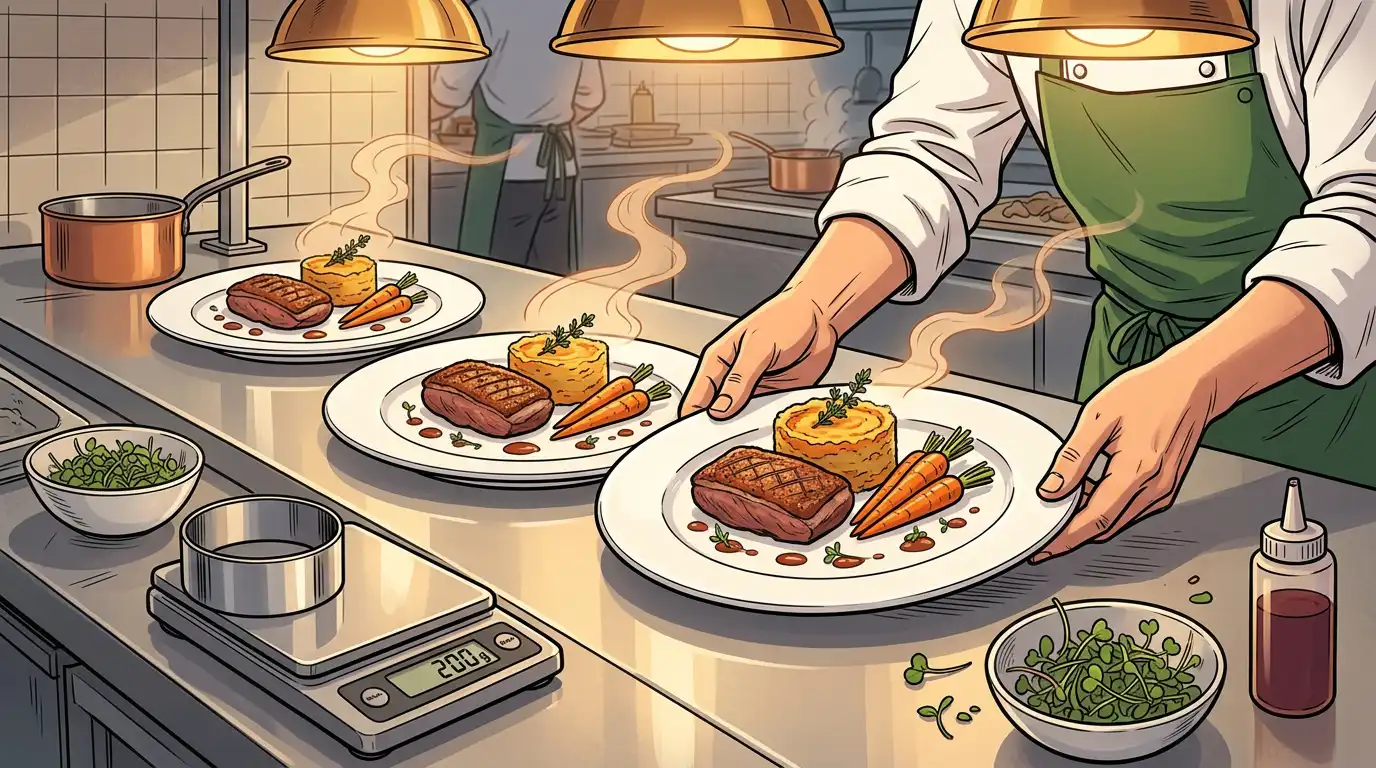
For example, “six ounce cooked protein” is better than “a nice piece of fish.” “Two fluid ounces of sauce in a squeeze bottle counted as three rings” is better than “sauce as needed.”
Use tools that remove debate
Scales, portion scoops, ladles with known volumes, spoodles, rings for starches, and pre-portioned proteins are not bureaucracy. They are guardrails. The goal is not to remove skill. The goal is to remove variance.
If you operate a high-volume concept, pre-portioning during prep windows can save enormous time during service and reduce panic over-scooping.
Train with visuals, not vibes
A photo binder or digital library of correct plating helps newer cooks align fast. Even better, post photos at the station where the decision happens, not only in an office binder nobody opens during rush.
Tie portioning to menu engineering
Sometimes waste is not a kitchen failure. It is a menu failure. If a side is consistently left half eaten, the portion may be too large for what guests want, or the side does not match the main dish’s heaviness. Adjusting the menu can reduce post-consumer waste while improving satisfaction.
Portioning and takeout
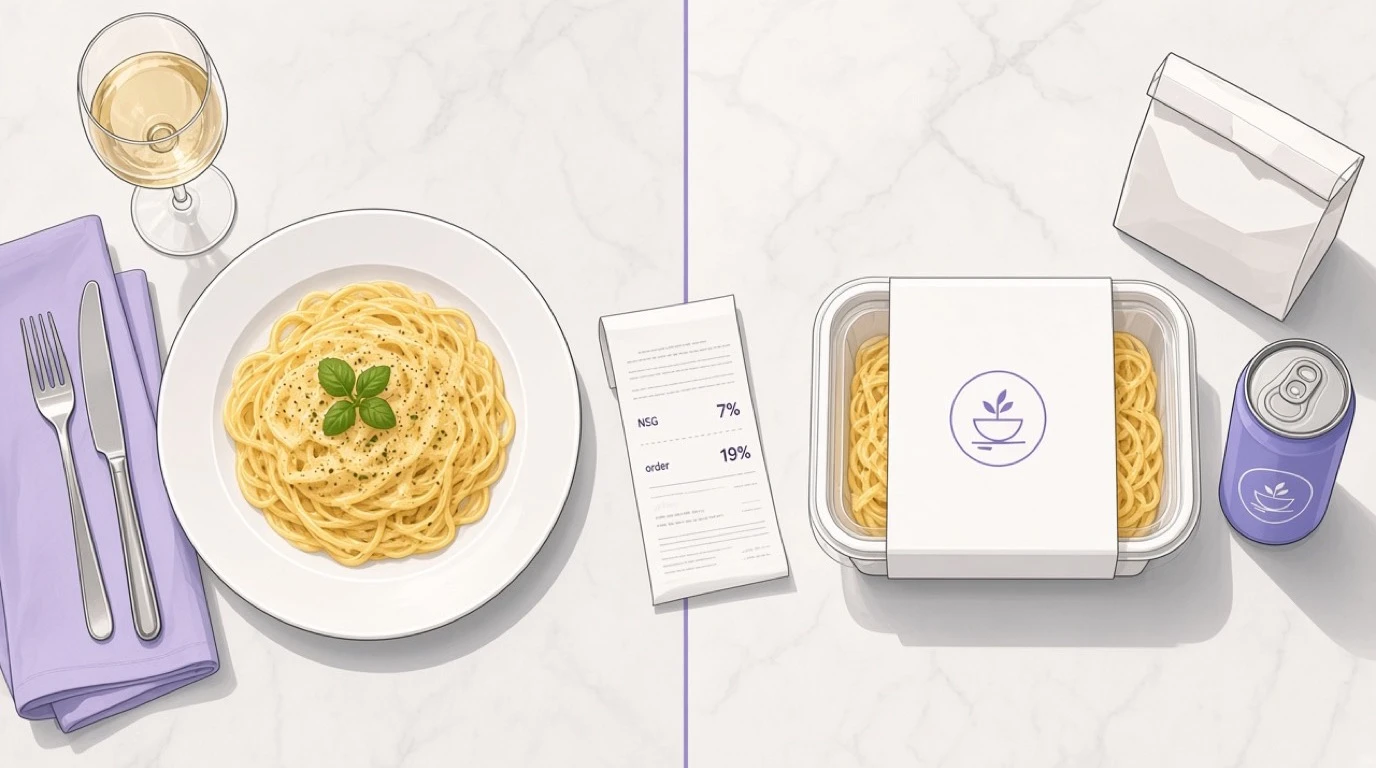
Takeout amplifies portion issues. Sauces can separate, fries can steam, and proteins can feel smaller once guests re-plate at home. If your dine-in portion is optimized for a hot plate in a dining room, your takeout portion may need a different build, not necessarily bigger, but smarter packaging and component separation.
How Tableview supports portion discipline operationally
You can have perfect recipes on paper and still struggle if the menu on the floor does not match what the kitchen prints. A modern restaurant system helps keep the menu, modifiers, and kitchen output aligned so teams are not guessing what got ordered. Tableview is built for hospitality operations where clarity between front-of-house and back-of-house matters. When orders are clear and consistent, kitchens execute more consistently, which supports portion control in real service conditions.
FIFO: the unsung hero of reducing spoilage and confusion
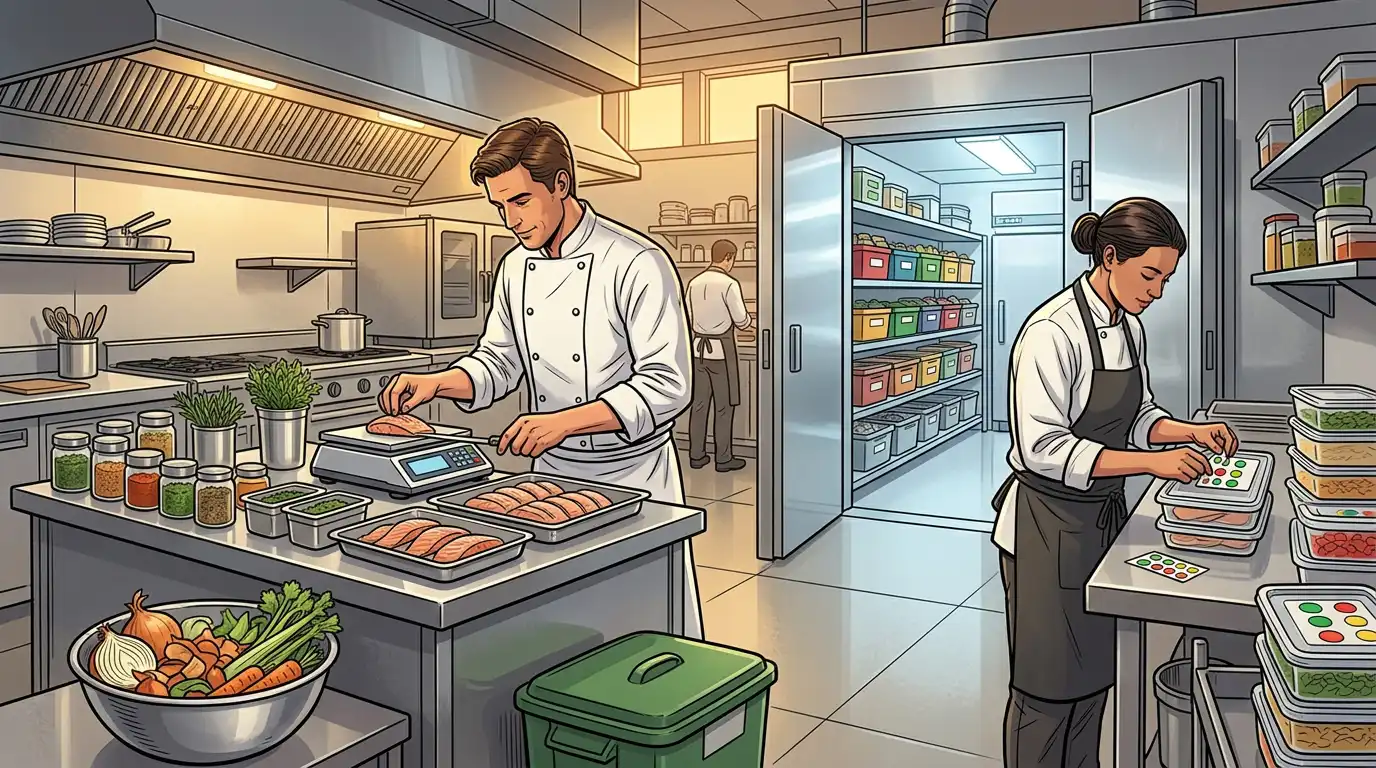
FIFO stands for first in, first out. It is a simple rule: use older inventory before newer inventory, so the oldest product moves out first. In practice, FIFO is less about remembering a definition and more about designing storage so the correct behavior is the easiest behavior.
Why FIFO fails in real restaurants
FIFO usually breaks for predictable reasons:
- New deliveries get stacked in front of older product because someone is in a hurry.
- Containers are not labeled, so everyone opens the newest tub because it looks fresher.
- Prep is dated incorrectly, or not dated at all.
- Multiple people share responsibility, so nobody feels responsible.
If FIFO is only a rule you mention in training, it will not survive your busiest week.
The receiving step is where FIFO starts
If receiving is rushed, you start behind. A strong receiving habit includes:
- Checking temperatures for cold items as required by your local food safety rules.
- Noting damage, short cases, or poor quality before it gets mixed into storage.
- Putting away product in an organized way immediately, not “later when it slows down,” because later often means never.
Label everything that can be confused
At minimum, labels should include:
- Product name
- Date prepared or date opened
- Use-by guidance if you use it in your operation
- Who prepped it if that helps accountability on your team
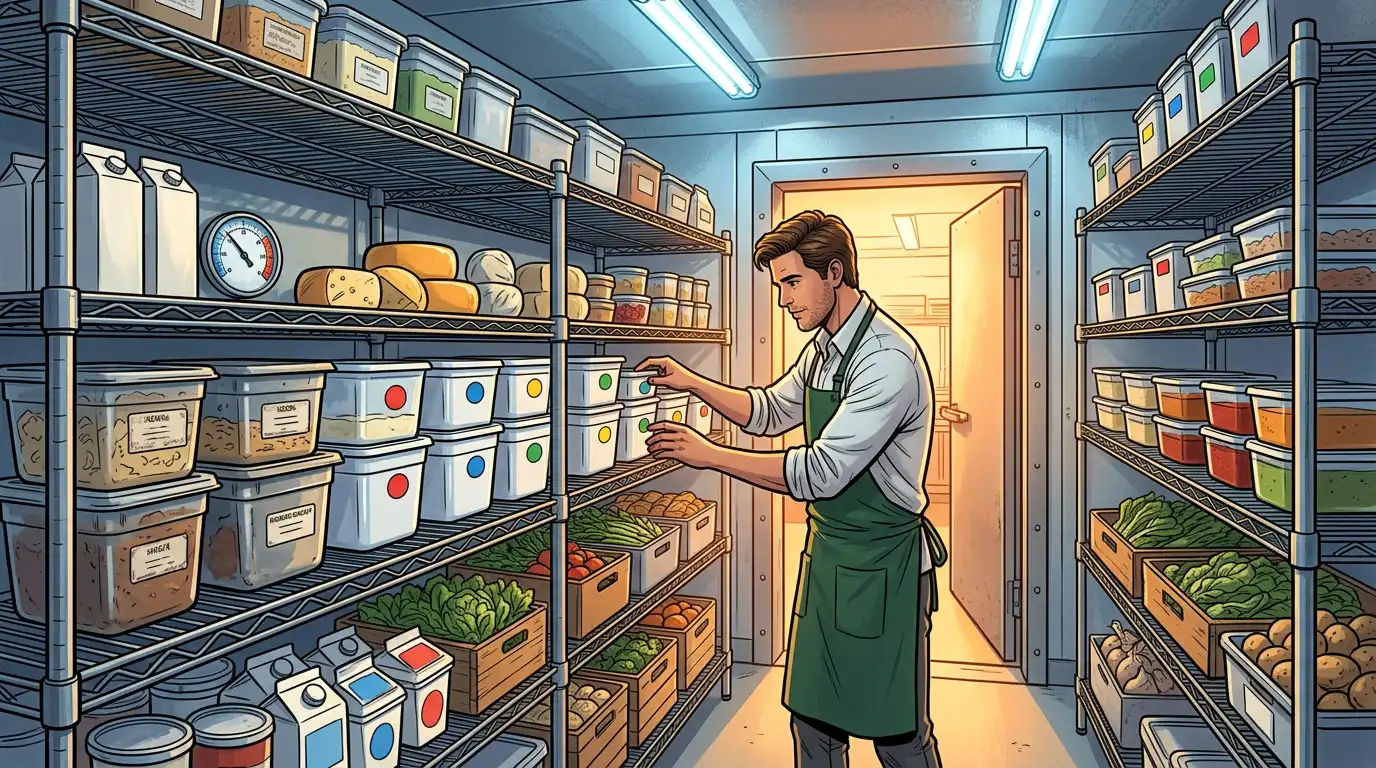
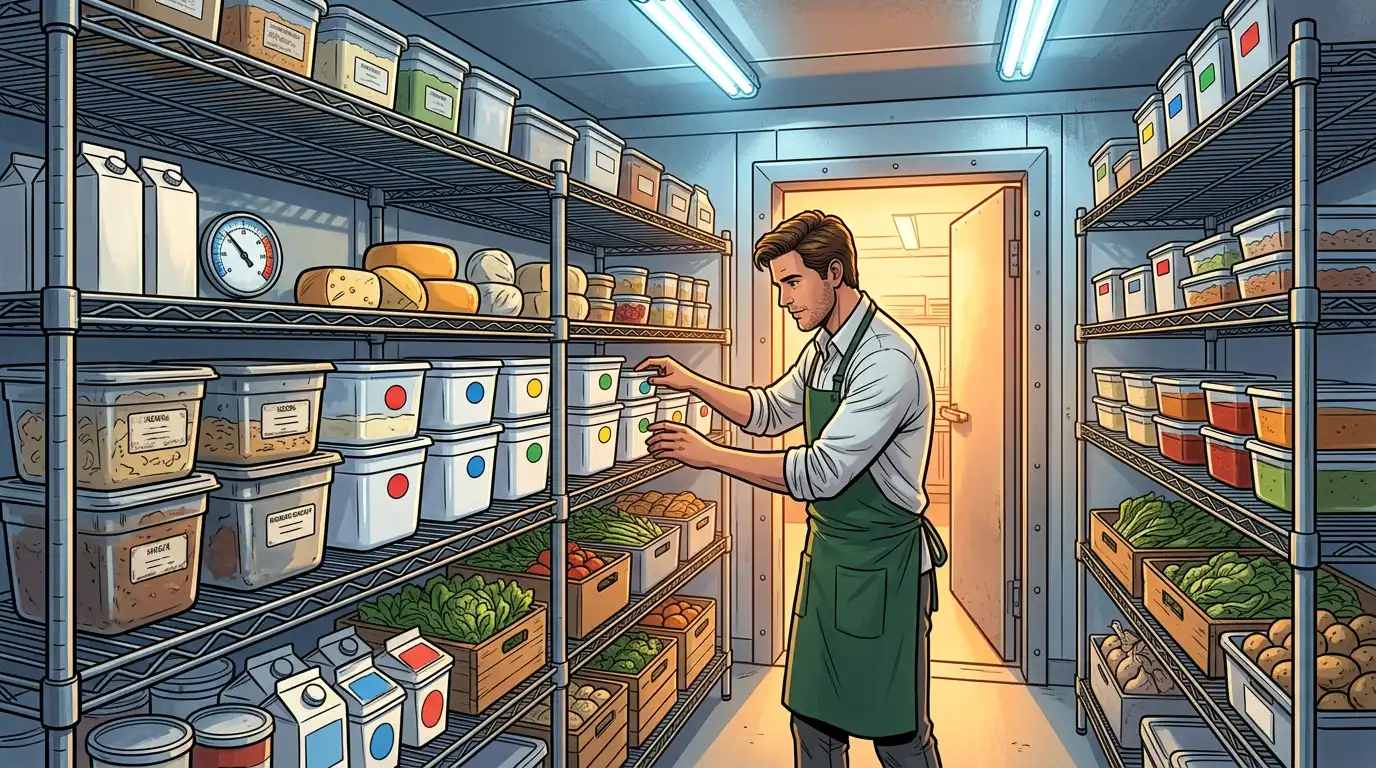
Color-coded day dots work well in many kitchens because they are visible at a glance.
FIFO in the walk-in: zones and “faces”
Think in zones:
- Ready-to-eat versus raw separation is non-negotiable for food safety.
- Within safe categories, group items so older stock is physically forward or on the left, depending on what your team can follow consistently.
Some kitchens use a “use first” shelf at eye level. That small visual cue can beat a hundred reminders.
FIFO on the line, not only in storage
FIFO matters in reach-in drawers too. During service, line cooks should be trained to pull the older prep before opening a new one. That sounds obvious, but under pressure people grab what is fastest to reach.
FIFO for dry storage
Dry goods still spoil, stale flour, oxidized nuts, old spices losing potency. Rotation matters for quality and for preventing mysterious bags in the back that nobody wants to claim.
Training FIFO as a habit, not a lecture
Short daily line checks work better than monthly speeches. A 60-second walk with the lead cook can catch:
- Mis-rotated dairy
- A new case stacked wrong
- A container without a date
FIFO and inventory accuracy
FIFO supports cleaner inventory counts. If product is rotated correctly, your counts reflect reality more often, which improves ordering accuracy. Better ordering reduces overstock, which reduces the chance of spoilage. This is the quiet chain reaction that makes FIFO a profit tool, not only a storage habit.
Specials: turn surplus into strategy, not panic
Specials can be the best friend of a kitchen trying to reduce food waste in a restaurant, or they can create extra waste if they are poorly planned. The difference is whether the special is tied to inventory reality and whether the floor staff can sell it.
The two good reasons for a special
- Strategic creativity: you want seasonal excitement and margin opportunities.
- Operational recovery: you have product that must move before it loses quality.
Both can work. The failure mode is a special that is invented randomly and requires new ingredients you did not need, which creates fresh waste while trying to solve old waste.
Build specials from what you already have
Strong waste-reducing specials often come from:
- Trimmings that can become rillettes, meatballs, staff meal bases, or soup foundations.
- Vegetables that are still good but not pretty enough for premium plating.
- Proteins approaching their use window, handled safely and cooked to proper standards.
- Herbs nearing wilt, turned into sauces, oils, or chimichurri-style blends if that fits your concept.
Keep specials simple enough to execute
A special that requires six new components during a busy service is a risk. A special that reuses one protein, one sauce, and one starch adjustment is easier to run consistently.
Price specials for value, not desperation
Guests can sense “clearance plate” energy. Position the special as seasonal, chef’s choice, or market fish. Train servers with two selling points: flavor and story. Even a simple line like “we brought in local mushrooms this week” can justify the dish without sounding like you are unloading inventory.
Track what specials actually sell
If you run specials but never measure results, you are guessing. Track:
- How many you sold
- What you spent on incremental ingredients
- How much leftover special prep you had at close
If a special creates leftover waste every time, it is not solving the problem.
Specials and your menu software
Specials work best when they are easy to ring in consistently. If the restaurant POS naming is messy, you get wrong tickets, remakes, and confusion. With Tableview, teams can keep menus organized so daily items are entered cleanly, priced correctly, and communicated clearly to the kitchen, which reduces the hidden waste created by order errors.
Prep lists tied to sales, not optimism
A lot of food waste in a restaurant is simply over-prepping. Teams prep for the busiest night they remember, not the Tuesday they are facing.
Use recent sales, not vibes
Look at recent covers by daypart, recent item mix, and weather if it affects your business. Prep should flex with reality.
Prep in batches aligned with turnover
Instead of one giant batch at open, consider a mid-shift refresh plan for volatile items that die on the line, delicate greens, certain fried items, anything that holds poorly.
The “use it first” prep shelf
A dedicated shelf for items that must move today can help the whole team align. It makes FIFO visible beyond the walk-in.
Cross-training so waste reduction survives turnover
Waste programs fail when only one person cares. If only the chef enforces FIFO, the system breaks when the chef is off. If only one server understands portions, consistency breaks on busy weekends.
Short cross-training moments help:
- Servers tasting new dishes so they describe portions accurately
- Line cooks understanding how plate waste shows up in trash cans
- Managers auditing plates during peak, not only during slow moments
Audit waste without shaming people
If you want buy-in, treat waste as a process issue. Blame creates fear, fear creates hiding. Curiosity creates improvement.
Plate waste checks
During service, quick visual checks of return plates can reveal patterns. Are guests leaving the same side dish repeatedly? Is one protein always half eaten?
Prep waste log
A simple log for a few weeks can reveal surprises:
- Which items get thrown away most during prep
- Which stations generate the most trim
- Whether waste spikes on certain shifts
You do not need perfect data. You need directional truth.
Trash audits (carefully)
Some operations do occasional trash reviews by category. This can be eye-opening, but do it in a way that respects staff dignity. The point is learning, not punishment.
Vendor and ordering discipline
Sometimes waste starts before food enters your building. Ordering cases you cannot use in time, chasing “deals” that do not match your throughput, or accepting inconsistent specs from suppliers can all increase spoilage.
Right-size orders to real usage
If you are seeing recurring spoilage on a SKU, the fix might be smaller orders more often, not better FIFO alone.
Standardize specs
If “large tomatoes” means different things each week, your kitchen will produce inconsistent results and more rework.
Sustainability as a bonus, not the headline
Guests increasingly care about sustainability, but in day-to-day operations, waste reduction wins because it protects margin. The sustainability story is authentic when you can point to measurable reductions in pounds tossed, dollars saved, or spoilage incidents down.
If you publish sustainability claims, back them with numbers you actually track.
Technology that supports waste reduction without replacing judgment
Software cannot chop onions for you, but it can reduce the chaos that creates mistakes.
What to look for in restaurant systems
- Accurate sales data so you can forecast prep better
- Menu and modifier clarity so kitchen output matches what was sold
- Inventory visibility if you track it, even at a basic level
Tableview fits into this picture as a POS platform that supports operational clarity across hospitality environments. When orders are clean and kitchen communication is reliable, you reduce remakes, and remakes are a hidden form of food waste.
A practical weekly rhythm that actually works
If you want a simple operating cadence:
Daily
- Short line check for dated prep and rotation
- Quick review of specials sell-through
- Note any recurring return-plate patterns
Weekly
- Review top items sold versus prep plan
- Adjust par levels where spoilage appeared
- Train one micro-skill (a portion photo, a FIFO rule, a labeling habit)
Monthly
- Review food cost trend and spoilage incidents
- Update menu items that drive waste
- Celebrate improvements so the habit sticks
Common mistakes restaurants make when trying to cut waste
Mistake 1: Big speech, no follow-through
Motivation fades. Systems stay.
Mistake 2: Only focusing on plate size
Sometimes the issue is menu design, prep levels, or storage, not portion size.
Mistake 3: Punitive culture
People hide mistakes. Hidden mistakes create more waste.
Mistake 4: Ignoring takeout and delivery
Packaging and hold times change how food eats, which changes what guests finish.
Mistake 5: Chasing perfection on day one
Small consistent improvements beat a dramatic week that collapses.
FAQ: quick answers managers search for
What is FIFO in a restaurant?
FIFO means first in, first out. Older product should be used before newer product so you reduce spoilage and keep quality consistent.
Why is food portioning important?
Food portioning controls cost, improves consistency, and reduces post-consumer waste when portions match guest expectations.
How do specials reduce food waste?
Specials can move ingredients that are still good but need to sell soon, especially when they are designed from what you already have and executed simply enough to sell through.
What is the fastest way to reduce food waste in a restaurant?
Combine clear portion standards, strict FIFO discipline, prep aligned to sales, and specials that sell through without creating new complexity.
Final thoughts
Learning how to reduce food waste in a restaurant is not about guilt. It is about professionalism. Food portioning makes your brand consistent. FIFO protects your ingredients from preventable spoilage. Specials turn smart kitchen judgment into revenue.
If you tighten these three areas, you will likely see results quickly, not because you became perfect, but because you removed ambiguity. In a kitchen, ambiguity becomes waste.
Keep measuring, keep training in small doses, and keep your team focused on the same definition of a correct plate. That is how waste goes down and confidence goes up at the same time.
Read next: Restaurant Procurement and Vendor Management: The 2026 Operator's Playbook for Lower Food Cost (with Free Vendor Cost Comparison Calculator) and Restaurant Inventory System: Implementing the Right Solution and Food Cost Percentage: The 2026 Restaurant Operator's Guide.