A ghost kitchen has no dining room, no host stand, and usually no sign on the street. It is a kitchen that cooks only for delivery and pickup, and quite often the brand on the app never existed anywhere else. The idea took off because the math looked irresistible: skip the expensive dining room, skip the front-of-house payroll, cook for a delivery demand that keeps climbing year after year. Reality turned out to be more complicated, but the model is very much alive in 2026, and for the right operator it is one of the cheapest ways to test a new concept that exists. If you are weighing it up, the single most important decision is which kind of kitchen you cook from, and the second is which tools run the line. Most delivery-first operators end up building on a cloud kitchen POS precisely because the dine-in playbook does not fit a room that has no diners.
Here is the part the hype skipped over. A ghost kitchen is not a way to escape thin margins; it is a way to trade one set of costs (rent, servers, decor) for another (delivery commissions, packaging, app dependency). Whether you come out ahead depends almost entirely on how carefully you count. The operators who win treat the delivery channel like the demanding, expensive partner it is, and they make sure a healthy slice of orders flows through their own takeaway and delivery channel instead of through an aggregator that skims a fifth of every ticket. Get that balance right and a ghost kitchen can be genuinely good business. Get it wrong and you are working twelve-hour days to make a marketplace rich.
This is the operator version of the guide. We will sort out what a ghost kitchen actually is versus the words people confuse it with, the three doors you can walk through to start one and what each really costs, the commission math that decides whether you make money, how virtual brands work, the tech that keeps the line calm, the menu rules for food that has to survive a 25-minute scooter ride, and a launch plan that does not require betting your savings.
What a ghost kitchen actually is (and the words people mix up)
The vocabulary around this is a mess, so let us be precise. A ghost kitchen is a business model: a food brand that sells only through delivery and pickup, with no dine-in. You will also hear cloud kitchen, dark kitchen, and delivery-only restaurant, and for practical purposes those all mean the same thing. The brand might be a real restaurant that also happens to deliver, or it might be a name that exists nowhere except inside the apps.
A commissary kitchen is different. That is the physical, licensed commercial space, often a building full of individual cooking stalls that operators rent. A ghost kitchen frequently runs out of a commissary, which is why people blur the two, but one is the business and the other is the real estate. You can run the same delivery brand out of three completely different buildings.
Then there is the virtual brand, which is the clever cousin. A virtual brand is a delivery-only concept that piggybacks on a kitchen that already exists. Your taco shop launches a late-night quesadilla brand on the apps using the same grill and the same two cooks. No new lease, no new equipment, just incremental orders during hours you were already paying for the kitchen. We will come back to this because it is the lowest-risk entry point by a wide margin.
Why operators keep trying it
Delivery did not go back in the box after the early 2020s. A meaningful and growing share of restaurant spend now happens off-premise, and a lot of that demand never wants to sit in a dining room at all. That is the pull. If people want to eat your food on their couch, you do not strictly need a 60-seat room and the rent that comes with it to serve them.
The cost structure is the other draw. A traditional restaurant might spend a brutal share of revenue on rent in a high-street location and a similar share on front-of-house labor. A delivery-only kitchen can sit in a cheaper industrial unit with no servers, no bussers, no host. On paper you have just deleted two of your biggest line items. The trick, and it is the whole trick, is that the money you saved on rent and waiters does not vanish. It reappears as commission and packaging. More on that next, because it is where most ghost kitchens live or die.
The three doors: how to actually start one
There is no single way to open a ghost kitchen. There are three, and they sit on very different rungs of the risk ladder. Pick the wrong one for your situation and you can lose a lot of money proving something a cheaper door would have told you for free.
Door one: a virtual brand from your existing kitchen
If you already run a restaurant, this is almost always where to start. You launch a new delivery-only concept on the apps that cooks out of your current kitchen, using equipment and staff you already pay for. Spare capacity at 9 pm becomes revenue. A pizzeria adds a wings brand; a Thai kitchen adds a poke brand off the same proteins. Your incremental cost is packaging, a menu, and good photos. If it flops, you turn it off on Monday and you are out a few hundred dollars. That asymmetry, almost no downside and real upside, is why this door should be the default for any existing operator.
Door two: a stall in a commissary kitchen
No restaurant yet, or no spare capacity in the one you have? Rent a stall in a shared commercial kitchen. You get a licensed, equipped space without the build-out, typically for somewhere in the low thousands per month plus a deposit in many markets. This is the classic ghost kitchen setup: cheaper and faster than your own lease, with the flexibility to leave if the concept does not work. The tradeoff is that you do not control the building, your hours may be shared, and the economics still have to clear the commission hurdle on their own without an existing dine-in business to lean on.
Door three: your own dedicated build-out
Sign your own lease, build your own kitchen, run your own delivery-only operation. This is the most expensive and riskiest path, and it is genuinely the right call only for operators who have already proven demand and want to scale a known winner. Going straight to door three with an untested concept is how people lose six figures fast. Prove it through door one or two first. The kitchen you build after you have demand is a very different, much safer bet than the one you build hoping demand shows up.
The commission math that decides everything
This is the section to read twice. A ghost kitchen lives and dies on a single number most first-timers underprice: the cut the delivery apps take. Depending on your plan, your market, and how much marketing you buy inside the platform, third-party aggregators take somewhere in the range of 15 to 30 percent of each order. On a thin-margin food business, that is not a fee, that is your profit.
Run the numbers on a 30 dollar order. At a 25 percent commission, the app keeps 7.50 before you have paid for a single tortilla. Add your food cost, say 30 percent, and that is another 9 dollars. Packaging on a delivery order is not trivial either, often 1 to 2 dollars once you count the container, the bag, the label, the little cup of salsa. Before labor and overhead you are already down past half the ticket. This is exactly why a delivery menu cannot be priced like a dine-in menu. It has to carry the commission.
So price for it, openly. Most disciplined delivery operators set their in-app prices noticeably higher than their dine-in prices, often 15 to 25 percent higher, because the customer is paying for convenience and the app is taking its cut regardless. Customers expect delivery to cost more; they are comparing you to other delivery options, not to your dine-in check. Pricing delivery at dine-in levels is the single most common way ghost kitchens quietly lose money on every order while looking busy.
The second lever is channel mix. Every order that comes through your own ordering link instead of an aggregator skips the commission entirely. You will not move all of it, the apps own discovery, but moving even a quarter of your volume to a commission-free channel can be the difference between a profitable kitchen and a break-even one. Put your own ordering channel on your packaging, your receipts, your social, and give people a small reason to use it. That direct channel is the most valuable asset a ghost kitchen can build, because it is the one the apps cannot tax or take away.
Virtual brands, done without wrecking your core
Virtual brands deserve their own warning label because they are the easiest door and also the easiest to do badly. The promise is real: incremental revenue from spare kitchen capacity, near-zero startup cost, and a low-stakes way to test concepts. A single physical kitchen might run three or four virtual brands off overlapping ingredients.
The danger is twofold. First, cannibalization: if your new virtual brand just sells the same food to the same people who would have ordered your main brand, you have added work and packaging cost without adding real revenue. The brands need to capture genuinely different demand, a different cuisine, a different daypart, a different craving. Second, line chaos: every virtual brand adds menu items and tickets to a kitchen that still has to put out your core orders on time. If the virtual brand slows your main tickets, it is costing you more than it makes. Build virtual brands around what your kitchen can already produce fast, keep the menus tight, and route everything through one ticket system so your line sees a single ordered queue rather than four competing ones.
The tech that keeps the line calm
A ghost kitchen needs less hardware than a dine-in restaurant and better software. There is no floor to manage, no table layout, no server handhelds. What there is, instead, is a firehose of orders arriving from several apps at once, and the entire game is turning that chaos into a calm, ordered line.
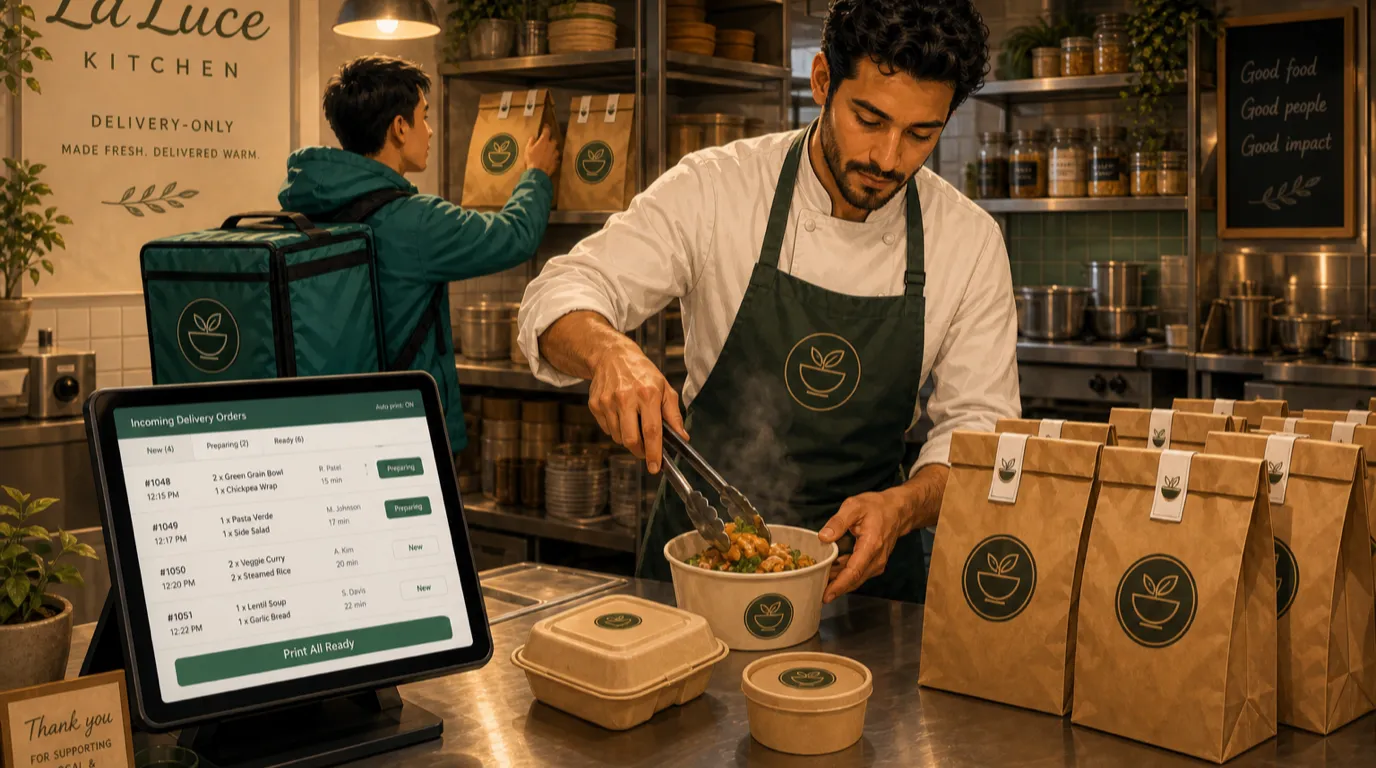
Start with order consolidation. The classic ghost kitchen failure mode is the wall of tablets: one device per delivery app, each chiming out of sync, each with its own menu you have to update separately, each a place for a missed order to hide. Pulling every channel into one point of sale so the line works off a single screen is the most important technical decision you will make. When a menu item sells out, you want to flip it off once and have it disappear everywhere, not race four tablets.
Behind that, a digital menu and mobile ordering setup gives you the commission-free channel that protects your margin, and a kitchen display turns the incoming orders into clean, timed tickets so nothing gets lost in a rush. The KDS matters more than people expect in delivery, because you are batching orders for drivers and timing prep so the food is hot when the courier arrives, not sitting under a heat lamp going sad for ten minutes. Get the order flow right and a two-person line can handle volume that would bury a kitchen juggling tablets.
Menus built for a 25-minute scooter ride
Dine-in food and delivery food are not the same product, and pretending otherwise is how you collect one-star reviews. The moment a dish leaves your kitchen it starts to change: steam softens the crispy thing, the fries wilt, the sauce migrates, the salad sweats. A delivery menu has to be engineered for what the food becomes 25 minutes later in a paper bag, not for how it looks the second it leaves the pass.
Favor items that travel. Stews, braises, rice bowls, burritos, fried chicken that holds, anything saucy and forgiving. Be ruthless about cutting items that die in transit: a delicate seared fish, anything that depends on a crisp-soft contrast, a salad with hot and cold components in the same box. If a signature dish simply cannot survive the trip, either redesign it for delivery or leave it off the delivery menu entirely. A tight menu also helps your line; a delivery kitchen running 18 well-chosen items will beat one trying to deliver a 60-item dine-in menu every night.
Packaging is part of the recipe now, not an afterthought. Vented containers for fried food so steam escapes, separate cups for sauces and dressings, compartments that keep the hot away from the cold. It costs a bit more and it is worth every cent, because in delivery the packaging is the only thing standing between your cooking and a soggy disappointment. The guest never sees your kitchen. They judge you entirely on what shows up at their door.
Marketing a kitchen nobody can see
A storefront restaurant gets free marketing from its location: people walk past, notice it, wander in. A ghost kitchen gets none of that. Your visibility is almost entirely inside the delivery apps, and that changes how you market.
Inside the platforms, your ranking is mostly earned through operations. Apps push the kitchens with strong ratings, high order volume, fast acceptance, and low cancellation rates, so running a tight, reliable kitchen is itself your best marketing. On top of that, use in-app promotions deliberately, especially at launch, to seed your first orders and reviews, because a brand-new listing with zero reviews is invisible. And spend real effort on photography. In a delivery app the photo is your entire storefront; a great shot of the food does more for your order count than almost anything else.
Then build the channel you own. Social media, a direct ordering link, a simple loyalty hook, a flyer in every delivery bag pointing customers to order direct next time. The apps are rented reach and they can raise the rent whenever they like. A list of customers who order directly from you is the one marketing asset a ghost kitchen truly owns, and the smart operators start building it from day one rather than waking up two years in completely dependent on a platform.
The mistakes that quietly kill ghost kitchens
They tend to fail the same handful of ways, and every one of them is avoidable.
Pricing delivery like dine-in. The most common killer. You forgot to carry the commission, so you lose a few dollars on every order and the busier you get the more you lose.
Betting the lease before proving demand. Going straight to a dedicated build-out with an unproven concept. Test through a virtual brand or a commissary stall first; let the data tell you whether to sign.
Tablet hell. Running each delivery app on its own device with its own menu. It guarantees missed orders, menu drift, and a frazzled line. Consolidate or suffer.
A menu that cannot travel. Shipping food that arrives soggy and cold because it was designed for a plate, not a box. Reviews tank, and in the apps your rating is your visibility.
Total app dependency. Building zero direct channel, so an aggregator owns your entire customer base and can change the terms whenever it suits them. Own a slice of your demand from the start.
A 90-day launch that does not bet the house
You can test this model without a heroic budget. Here is a sequence that has worked for operators going in sensibly.
Weeks 1 to 3: decide the door and the concept. If you already have a kitchen with idle hours, plan a virtual brand and do not rent anything. If you do not, price out commissary stalls before you ever consider a lease. Pick a concept that captures demand your current setup does not, and design a tight menu of items that travel well and that your line can execute fast.
Weeks 4 to 6: set up the tech and the menus. Get every delivery channel feeding into one point of sale, set up your own commission-free ordering link, and configure the kitchen display so tickets route cleanly. Build the menus in every app, price them to carry the commission, and shoot genuinely good photos of each dish. Test the whole flow with a few friendly orders before you go live.
Weeks 7 to 9: soft launch and seed reviews. Go live quietly, run a launch promotion inside the apps to pull the first orders, and obsess over execution: accept fast, prep tight, pack well, hit your times. Early reviews set your trajectory, so the first few weeks of operational discipline matter more than anything you will do later.
Weeks 10 to 13: read the data and decide. Now you have numbers. Look at order volume by channel, your real margin after commission and packaging, your ratings, and your prep times. Cut the menu items that do not sell or do not travel. Push harder on the direct channel. And only now, if the concept is clearly working, start the conversation about whether a dedicated space is worth it.
How to know it is actually working
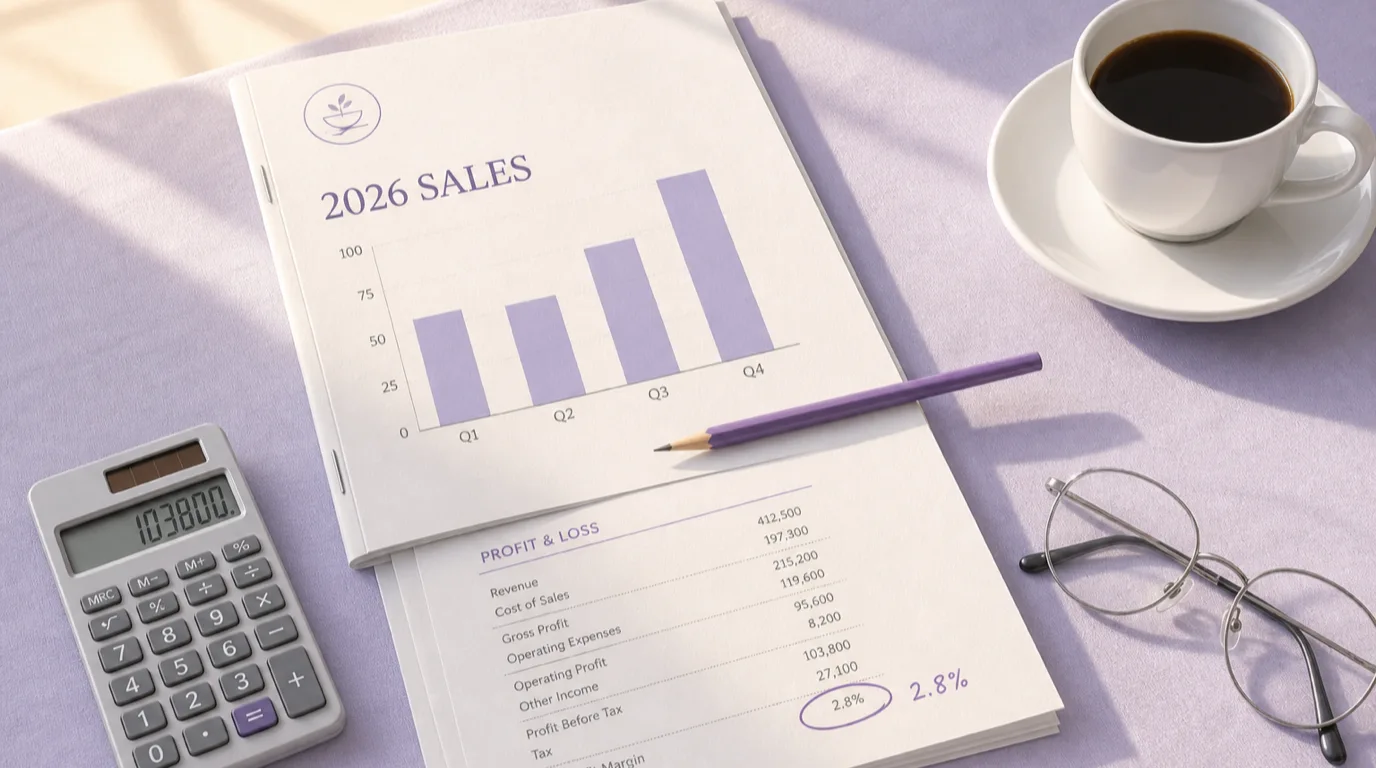
Order count is the vanity number; a busy kitchen that loses a dollar an order is just an efficient way to go broke. Watch margin after everything: after commission, after packaging, after the labor the brand actually consumes. That is the only number that tells you if this is a business.
Then watch your channel mix, because it is the lever you most control. If 100 percent of your orders come through aggregators, you have built a kitchen that works for the apps. As the share flowing through your own direct channel climbs, your margin climbs with it and your risk drops. Track that percentage every month and treat growing it as a core job, not a side project. Keep an eye on your app ratings too, since in a delivery business your rating is your foot traffic.
A ghost kitchen is not a shortcut to easy money and it never was. It is a lean, demanding way to sell food to people who want to eat at home, and it rewards operators who count carefully, price honestly, design for the box, and refuse to rent their entire customer base from someone else. Start from a kitchen you already pay for, prove the concept before you sign anything, and build your direct channel from the first order. Do that, and the model earns its keep.
Read next: Third-Party Delivery for Restaurants: The 2026 Guide to Commissions and First-Party Ordering and Commissary Kitchens: How Shared and Private Kitchens Work and POS With Online Ordering: Why Integration Beats Tablet Chaos.