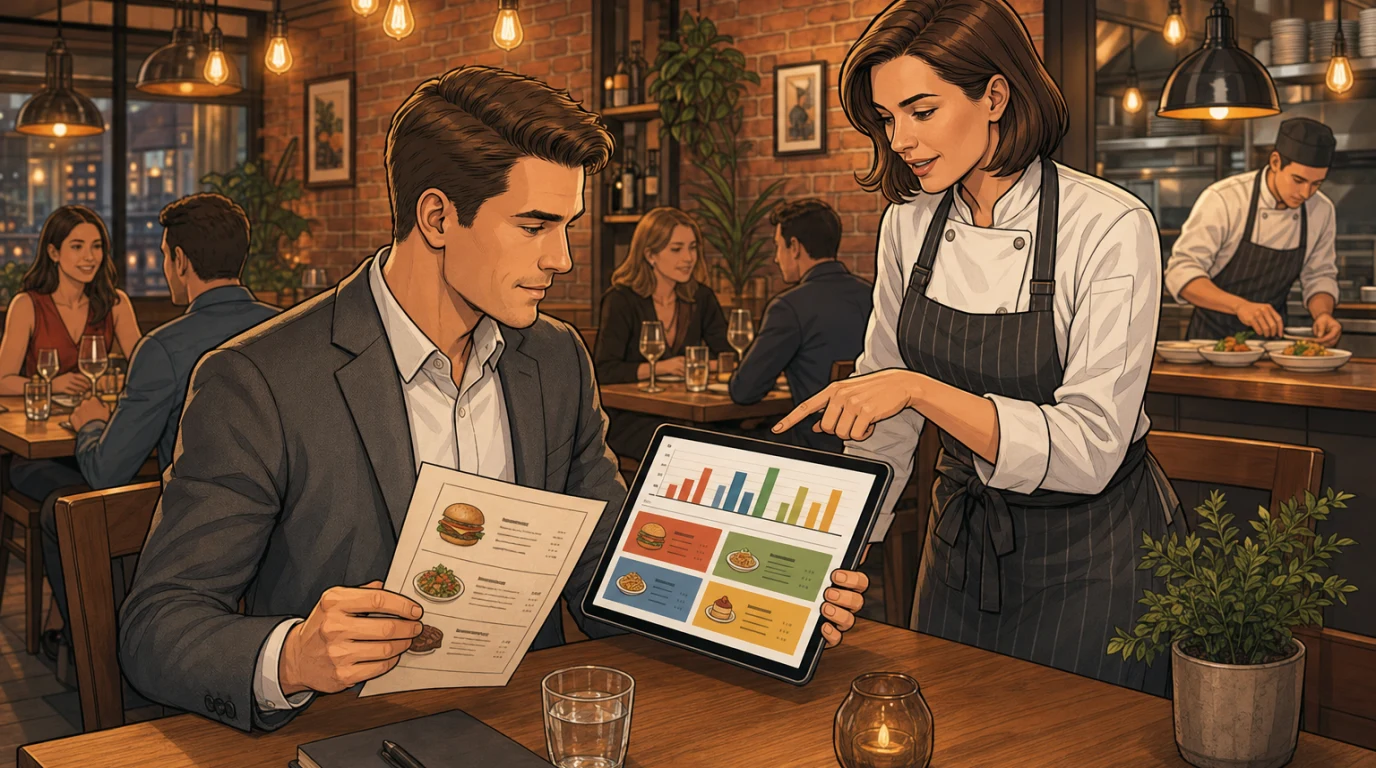
Two restaurants on the same street, with the same kitchen, the same suppliers, and the same customer counts, can end the month with profit margins five percentage points apart. The difference is almost never the food. It is the menu.
Menu engineering is the discipline that closes this gap. It is the structured loop between sales data and menu design that decides what your guests actually order, how much margin each plate carries home, and how often a category earns the right to stay on the page. It is not a spreadsheet exercise reserved for chain operators with analytics teams. Any restaurant with a modern POS and four weeks of trading history can do it, and the operators who do it consistently are the ones who survive food-cost shocks, labour pressure, and shifting guest behaviour without panicking on price.
This guide walks you through the discipline end to end. You will see the five numbers you need, how the four-quadrant matrix actually works, what to do with each item it reveals, how to price and design a menu that quietly steers behaviour, and how to wire the whole thing into your POS so the engineering loop runs itself.
What Menu Engineering Actually Is
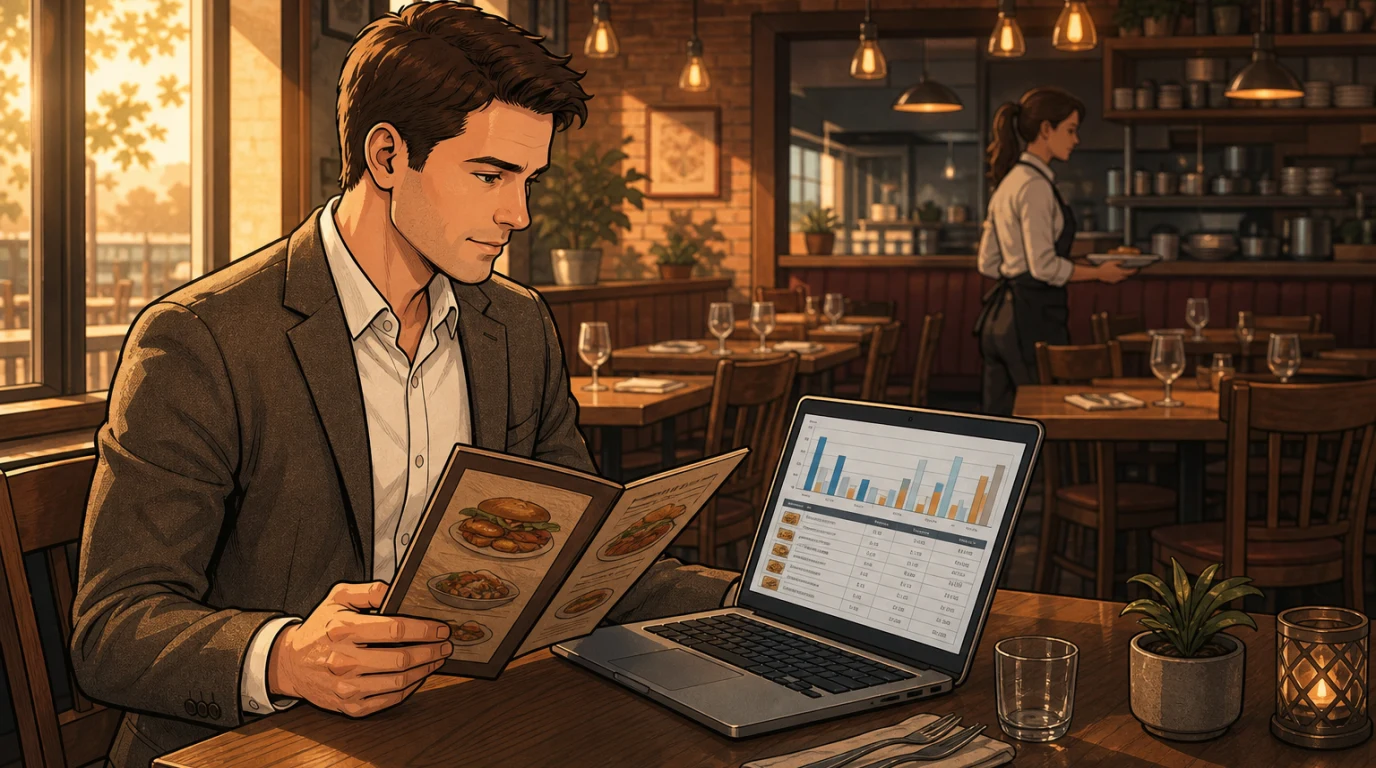
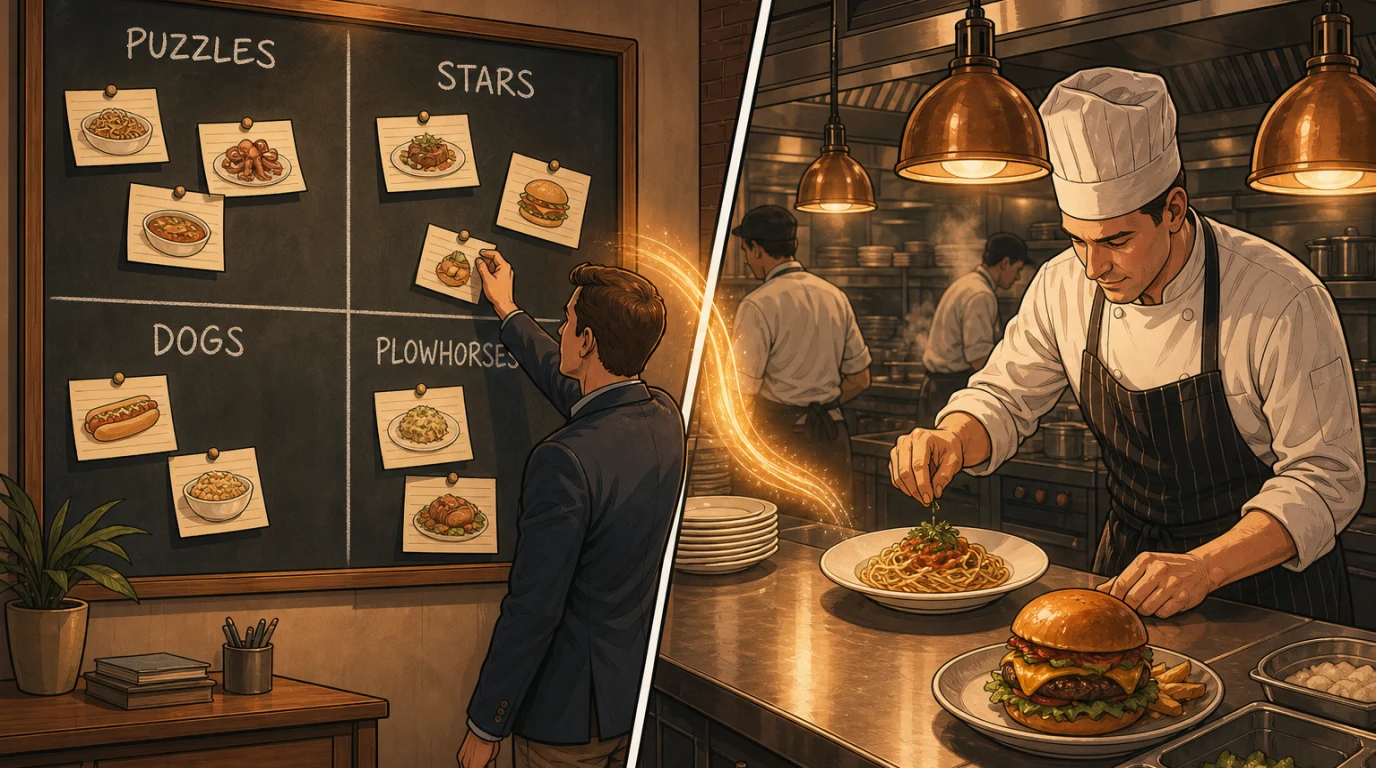
Menu engineering is the systematic process of categorising every item on your menu by two variables, contribution margin and popularity, and then acting on the categories. The shorthand for those four categories, Stars, Plowhorses, Puzzles, and Dogs, was coined in 1982 by Michael Kasavana and Donald Smith at Michigan State University, and the framework has outlasted four generations of POS hardware because it solves a permanent problem: not every item on a menu deserves the same treatment, and the eye cannot tell which is which.
The point is not to print prettier menus or to chase a 28% food cost as gospel. The point is to make a deliberate decision for every dish on your page. Which items are doing the work and need protecting. Which look profitable on the spec sheet but no one orders. Which are loved but are eating your margin alive. Which deserve to go.
The discipline matters more in 2026 than it did when it was invented. Ingredient costs move weekly. Aggregator platforms take 25 to 35 percent off the top of every order routed through them. Labour costs in most European markets have moved up faster than menu prices. The restaurants that engineer their menus quarterly tend to be the ones still adjusting, while the ones that print a menu once a year and see how it goes are the ones quietly burning their reserves.
The Five Numbers You Need Before You Start
Menu engineering only works if your inputs are honest. If your costed recipes drift, if you guess at portion sizes, if your popularity counts come from till receipts that do not capture modifiers, the matrix you build on top is fiction. Get these five numbers right, and the rest follows.
Item food cost. The fully landed cost of a single portion as it leaves the kitchen, garnish and oil included. If your bruschetta has a quarter of a tomato, the tomato cost goes in. If you fry in batches of ten and lose 8 percent of the oil, that loss is part of the food cost of one portion. Most operators underestimate this number by 10 to 15 percent because they cost recipes from supplier price lists instead of from received inventory. Recipe-level stock management is the discipline that closes that gap.
Sell price. The actual price on the menu today, not last quarter's price, not the average if you ran a promotion. If you have multiple channels (dine-in, takeaway, aggregator), record the channel price separately because aggregator menus often carry a premium that is wholly absorbed by the platform commission.
Contribution margin. Sell price minus food cost. This is the euro figure each plate puts toward your overheads. It matters more than food cost percentage. A 35 percent food-cost item that contributes 15 per plate is almost always better for the business than a 22 percent food-cost item that contributes 4.
Popularity index. The share of total sales each item represents, weighted across the period. The simplest version is item sales count divided by total covers. The more useful version is item sales divided by the average mix you would expect from a menu of that size, where any item selling more than 70 percent of its expected share counts as popular.
Period. Four weeks is the working minimum. Two weeks is fine for a venue with high traffic and a stable menu. Anything less and you are reacting to noise. For seasonal venues, run the analysis at the start of each season instead of by the calendar.
The Four-Quadrant Matrix
Once you have the numbers, plot every item on two axes. Contribution margin on one, popularity on the other. The midpoint of each axis is the menu average, weighted by item. The four quadrants this creates are the entire framework.
Stars (high margin, high popularity). These are the items that built your reputation and pay your rent. A signature pasta that costs 3.20 and sells at 16, ordered by one in three covers. Stars get protection. You guard the recipe, defend the spec, and resist the urge to improve them. You also use them as the anchor for the rest of the menu, placing them where the eye lands and supporting them with strong descriptions.
Plowhorses (low margin, high popularity). These are the items guests love that you barely make money on. A house burger sold at 12 with a fully loaded food cost of 5.80 is the classic example. Plowhorses are dangerous because volume hides the bleeding. The good news is they are also the easiest items to recover, because guests already know and want them. The bad news is that the wrong fix kills the volume.
Puzzles (high margin, low popularity). A grilled octopus at 26 with a food cost of 7 is a puzzle if only one cover in twelve orders it. The numbers want you to push the item, but the guests are not biting. Puzzles usually fail on positioning rather than substance. The dish is fine. The description is flat, the photo is bad, the price gap from the next item is too wide, the server does not recommend it.
Dogs (low margin, low popularity). Nobody is ordering them and they do not make money when ordered. The brutal truth is that most dogs should be cut. The exception is the sentimental item that drags a small but loyal regular crowd. If you have a vegetarian moussaka that sells five times a week to the same three families who would walk if you removed it, that is a brand cost you accept knowingly, not a menu engineering failure.
What To Do With Each Quadrant
Categorising is the easy half. The work is the action plan that comes next. The mistake operators make is treating all four quadrants the same way (usually by raising prices across the board). Each quadrant wants something different.
Stars: Protect and Promote
Stars are not a problem to be solved. They are a position to be defended. Keep the recipe locked, with a written spec, a plate photo, and a gram-level portion check. Resist the temptation to bundle them into discount promotions, because a star at 20 percent off is a plowhorse for the duration of the promotion. The pricing move on a star, if any, is a small, deliberate increase of 0.50 to 1.00 when you are confident the brand can carry it, supported by a tiny upgrade to the plate. Most operators are too timid here. A star item priced 2 below where guests would happily pay is the most expensive item on the menu.
Plowhorses: Re-engineer the Recipe, Not the Position
Plowhorses look like they need a price increase, and sometimes they do, but the more reliable move is to re-engineer the food cost. Shave 0.30 off the burger by switching the bun supplier, dropping the imported gherkin for a local one, swapping the side salad leaves for a cheaper blend that the guest cannot perceive. Each small change adds up. If after a full recipe pass the contribution margin still will not move, a price increase becomes a real option, but it should be supported (a new toasted brioche, a smashed-style cook, a new sauce) so the guest registers added value, not stealth inflation.
Puzzles: Rename, Reposition, Photograph, Train
A puzzle is a marketing problem disguised as a menu problem. Rewrite the description with sensory language and a hint of origin or technique. Move it to a highlighted position on the page, ideally near a star. Add a small image if your menu allows it, or a chef's pick callout. Then train the floor: a single line in the daily briefing ('if a guest is hesitating on a main, the octopus is the highest-margin dish that always lands well') moves more octopus in a week than any redesign.
Dogs: Replace, Do Not Re-engineer
Dogs do not improve. If you have spent a month trying to lift one with promotion, training, and re-pricing, and the numbers have not moved, retire it. The slot the dog occupies is more valuable than the dog itself. Replace it with a candidate that can be tested as a special before going on the printed menu, and document why the previous item failed so you do not put the same dish back on in eighteen months.
Pricing Tactics That Actually Move Behaviour
Once you know which items deserve price attention, the question is how to set the number. Restaurant pricing is not pure math. It is psychology applied to numbers, and small choices in how a price is shown can swing the behaviour of every guest who reads the menu.
Charm pricing versus round prices. The 9 ending (12.95, 16.95) signals value, and works well at casual price points. The round price (16, 24, 38) signals quality and intent. The same dish at 16 feels more confident than at 15.95, and at fine-dining price points the round number outperforms charm pricing in both perceived quality and average ticket. Pick the convention that matches the room you actually run, and apply it consistently across the menu. Mixing conventions reads as sloppy.
Anchor with a deliberate high price. If you sell a 28 steak and a 22 pasta, the pasta looks expensive next to the rest of the menu. Add a 42 chateaubriand to the steak section, and the 28 steak becomes the obvious sensible choice. The anchor item does not need to sell in volume. Its job is to set context.
Drop the currency symbol. Academic studies and dozens of restaurant trials have shown that menus without currency symbols (16 instead of 16 euros) increase average ticket size by 5 to 12 percent. The symbol triggers a small pain-of-payment response that disappears when removed. The trade-off is that some guests find symbol-less menus pretentious or confusing, so the rule is room-specific: fine and upscale casual can drop the symbol confidently, family casual and tourist-heavy venues should keep it.
Beware the round-up. Increasing a 12.50 plowhorse to 12.95 recovers some margin and almost no guest notices. Going from 12.95 to 14 in one step is when the noise starts. The right pace for a plowhorse price correction is small and frequent, ideally as part of a menu refresh that gives guests something new to read.

Menu Design Psychology, Briefly and Honestly
You will find articles claiming that guest eyes land on the upper-right corner of a printed menu and that placing your stars there guarantees orders. The original eye-tracking research that produced that golden triangle claim is forty years old and has been challenged by more recent studies showing guests read menus the way they read web pages, in an F-pattern, scanning the top and then the left edge before committing. The honest takeaway is not 'place your stars in position X.' It is that placement matters less than ordering and emphasis.
What does matter, consistently across studies and across cuisines:
Item descriptions of 12 to 25 words outperform shorter ones, but only if the language is concrete. 'Slow-braised lamb shoulder with smoked aubergine and burnt onion' outsells 'lamb with vegetables' by a wide margin. Avoid generic adjectives ('delicious,' 'amazing,' 'tasty') because they signal marketing rather than substance. Use the origin, the technique, or the producer.
Section count should be small and confident. A printed menu with 8 to 12 mains performs better than one with 25. Guests asked to choose from longer menus take longer, order less wine, and report lower satisfaction. If your kitchen runs a wide menu, group it into clear sections and let the guest skim.
Photos are surgical. A handful of well-shot plate photos on a digital menu raise orders of those specific items by 20 to 30 percent. The same photos on a printed menu, badly produced, drag the entire menu's perceived quality down. A QR or mobile-app menu with good photos and contextual upsell prompts is where photography pays out cleanly.
Make Your POS Do the Heavy Lifting
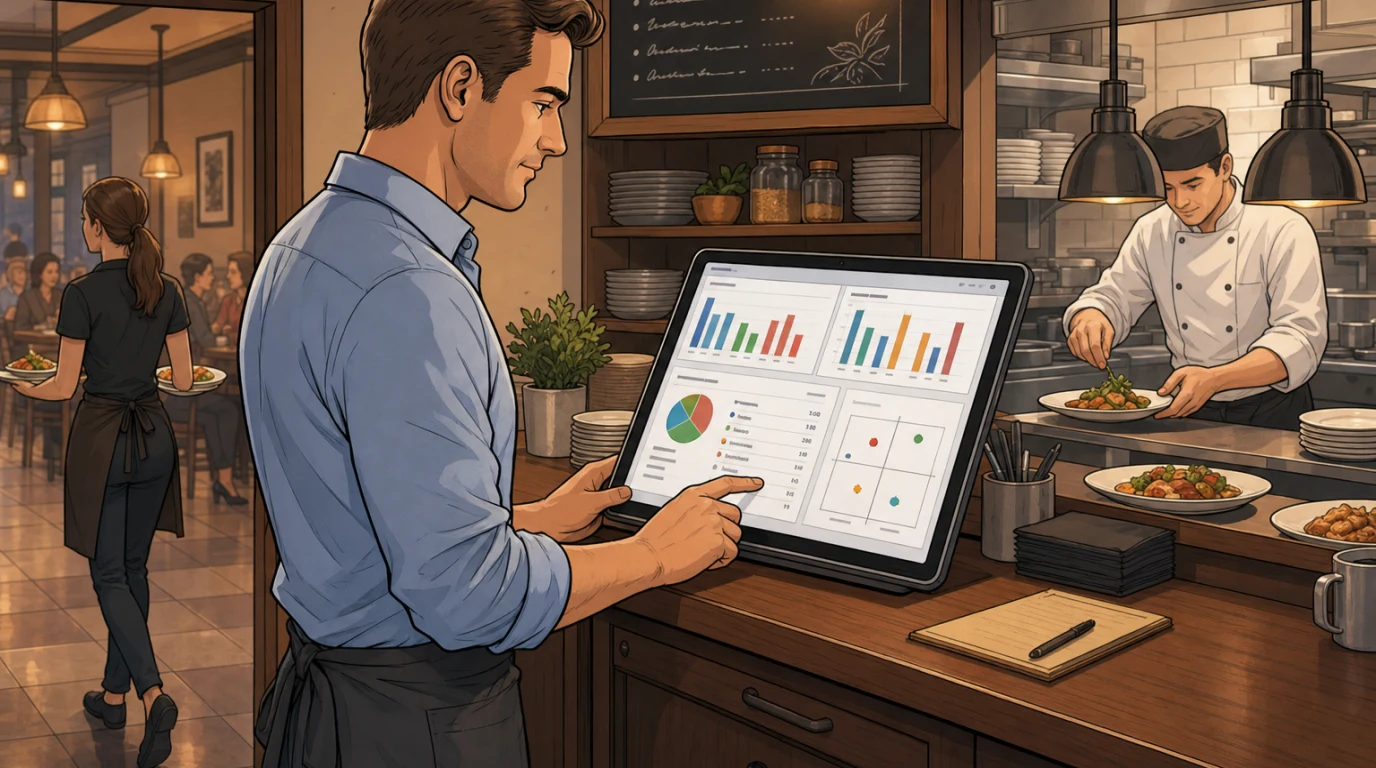
Menu engineering done with spreadsheets and till receipts is real work. Done from POS reports it is a 90-minute monthly meeting. The exact reports you want are the same ones a strong POS already generates, but the operators who get the most out of them know what to ask for.
Pull these four reports for each menu engineering cycle:
Item mix. Every item sold in the period, with sales count, gross revenue, and contribution margin. Sort by both popularity and contribution margin, and you have your four quadrants without lifting a calculator.
Contribution margin by daypart. A dish can be a star at dinner and a dog at lunch. Looking at the period total can hide a structural problem in one service.
Modifier attach rate. Sides, sauces, and extras are silent profit. Knowing that 18 percent of burger orders take the truffle butter at plus 3 is the difference between a plowhorse and a plowhorse with a rescue plan.
Time-since-engineering log. A simple note of which items have been touched, when, and what the result was. This stops you from re-engineering the same item three times in a quarter because nobody remembers the last attempt.
Pull these out of a good POS and the analysis is mechanical. If you are tracking them in a spreadsheet, you are paying with hours what your POS should do for free. Back-of-house integration stops the worst kind of error in this work, where the costed recipe in your accounting tool drifts from the actual recipe being cooked because nobody updated both.
The Compounding Effect
Menu engineering rewards the operator who treats it as one thread in a wider operations loop. A star item with a great margin still bleeds money if the kitchen sends it out cold because the pass is overwhelmed. A re-engineered plowhorse recipe will drift back to its old food cost in three weeks if stock management is not catching the variance. A puzzle that gets repositioned at the top of the page will not shift if the floor does not recommend it.
The strongest results come when menu engineering plugs into the rest of the stack. Table turnover protects star margins by keeping covers moving. Kitchen display routing keeps the kitchen sending high-margin items to the pass first. Stock control catches the moment a plowhorse drifts from spec. Treat the menu in isolation and you get a marginal lift. Treat it as the centre of an operations loop and you compound.
Pitfalls and What Not to Do
The most expensive menu engineering mistakes are not technical. They are timing, sentiment, and over-correction.
Do not re-engineer during a launch or a holiday week. The data is noisy and the team is stretched. Wait for two normal trading weeks before drawing conclusions from any change.
Do not kill sentimental dogs without thinking. An item that sells eight covers a week but anchors a loyal regular crowd is a dog on the matrix and a brand asset off it. The cost of losing those regulars is almost always higher than the cost of keeping a dog on the menu.
Do not make food cost percentage your religion. A 35 percent food cost item with strong volume and a 15 contribution margin will beat a 22 percent item with a 5 margin every shift. Engineer for contribution per cover, not for a ratio that ignores volume.
Do not redesign without testing. The best menu engineers run new descriptions, prices, and layouts on one shift before rolling them out. A single test service catches the unforeseen ('the new description scared off the regulars') cheaply.
Do not use raw sales count alone. A 4 side dish sold 200 times in a period is not 'more popular' than a 22 main sold 80 times. Weight popularity against contribution margin, or you reward the wrong items.
A 90-Day Implementation Plan
For an operator running a single-site venue, the practical roll-out looks like this.
Week 1: pull the data and classify. Pull the four POS reports for the last four trading weeks. Score every item. Identify your three highest-margin stars, your three biggest plowhorses, your top puzzle, and your worst two dogs.
Weeks 2 to 4: surgical changes. Re-cost the three plowhorses and find at least 0.40 of margin recovery on each. Rewrite descriptions for the top puzzle and one other underperforming item. Decide on the dogs and either commit to a replacement plan or accept the brand cost and move on. Do not touch the stars yet.
Month 2: full redesign cycle. With four weeks of new data, run the full matrix again. If the surgical changes worked, plan the next cycle of moves. If they did not, audit your inputs (costed recipes, popularity counts) before changing the plan.
Month 3: measure and protect. By month three you have the loop. Average contribution per cover is the metric to watch. If it has moved up by 0.40 to 0.80 per cover, you are doing menu engineering right. If it has not moved at all, the most common cause is recipe drift, not menu design, and the fix lives in the kitchen.
Where the Right Tools Fit In
You can do all of this with a spreadsheet, a costing notebook, and a clipboard. Operators have for forty years. The reason most successful menu engineering programmes run on a unified platform is not that the math gets harder without one, but that the loop stops running when any single piece is friction-heavy.
The Tableview platform ties the four pieces together by design. The POS captures sales mix and modifiers without manual entry. Stock management holds costed recipes that update when supplier prices change. The accounting layer turns it into contribution margin reports you can act on. The kitchen display protects margins by keeping the pass moving. None of those pieces is unique on its own, but the value of having them under one schema means your menu engineering cycle is a 90-minute meeting, not a three-day cross-system reconciliation. If you want to see how a unified loop looks in your kind of venue, the team will walk you through it on a short call.
Read next: Restaurant Payment Processing Fees: The 2026 Operator's Guide to Lowering Your Effective Rate (with Free Effective Rate Calculator) and how to increase average check and Menu Pricing Strategy for Restaurants: The 2026 Operator's Playbook on How to Price Your Menu (with Free Menu Price Recommender) and Food Cost Percentage: The 2026 Restaurant Operator's Guide.