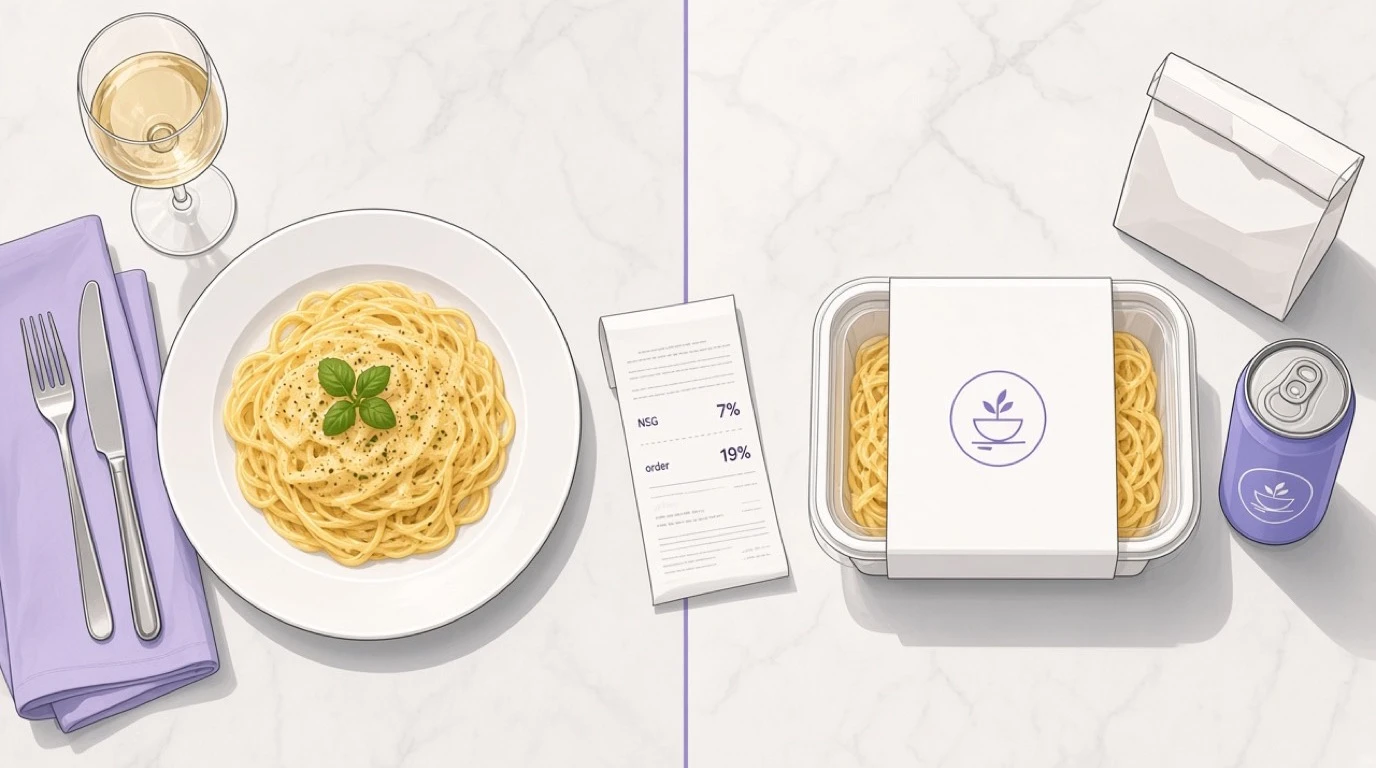
The dining room is full on Friday but your private room sat empty on Thursday, and last month someone asked about catering forty lunches to an office and nobody called them back until the week was over. That is how restaurants leave high-margin revenue on the table. Catering and private events are not a side favor for friends of the owner; they are a product line with different logistics, contracts, and timelines than walk-in service, and they deserve the same discipline you give the Friday night floor. When the program runs through your restaurant POS for deposits, final bills, and item mix, you can see whether events actually beat regular covers instead of guessing from memory.
This guide is for full-service operators and ambitious fast-casual rooms with space or production capacity to sell. We cover catering versus on-premise private dining, how to package and price without bleeding margin, the Banquet Event Order workflow, lead response standards, kitchen and floor coordination, and a ninety-day launch you can run without hiring an event director on day one. If you run a full-service restaurant with a room, a patio, or a lunch gap, this is the playbook for monetizing capacity you already own.
Catering, private dining, and buyouts: three products
Operators blur these terms and then wonder why contracts confuse guests.
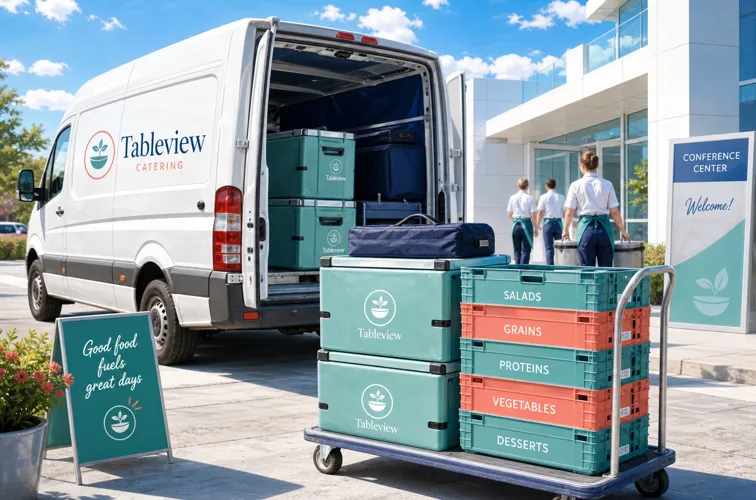
Off-site catering: food leaves your building. Drop-off platters, staffed buffets at a venue, boxed lunches. You need transport, holding equipment, permits in some jurisdictions, and timelines that do not collide with dinner service unless you segregate production.
On-premise private dining: guests eat in your space in a semi-private area or dedicated room. You control the environment; margin is often strongest because you use existing labor and liquor licenses.
Full buyout: the guest rents the entire restaurant for a window. Price it as lost regular revenue plus an exclusivity premium, not as a big party tab with a discount. A Saturday buyout floor might be projected dinner sales plus 25 to 40 percent because you turned away walk-ins.
Package each product separately in marketing and contracts so inquiries map to a template fast.
Why events beat average covers when priced right
Events concentrate revenue in predictable blocks. A corporate dinner for thirty with a beverage minimum can exceed what the same tables would produce with random two-tops and turn anxiety. Prep is known in advance, which reduces waste versus guessing Saturday covers. Labor can be scheduled as a dedicated team rather than stretched across a thin floor.
The catch is custom work. Every bespoke menu and one-off rental erodes margin. Standard packages with clear upgrade paths protect you. Three tiers (essential, premium, chef's choice) convert faster than blank-slate proposals because buyers compare options instead of negotiating from zero.
Building packages that sell
Start from what you already execute well on a busy night, not from a fantasy menu you have never stress-tested. A package should include:
Food: plated or buffet structure, number of courses, vegetarian/vegan alternate count built in, dessert included or add-on.
Beverage: open bar, limited bar, wine pairing, cash bar, or per-hour bar packages for receptions.
Service length: three-hour reception versus seated dinner with defined start time.
Included extras: linens, AV, coat check, dedicated server ratio (one server per eight to twelve guests for plated is a common starting point).
Price shape: per person, per person plus beverage minimum, or flat room fee plus minimum food and beverage spend.
Publish starting prices on your website even if final quotes vary. Buyers with budgets self-qualify; you waste fewer calls on impossible dates.
Example tier sketch for a 60-seat full-service room (adjust to your market):
Tier 1, Essential: $65 per person, three courses, coffee and tea, three-hour room use, one server per ten guests. Limited bar add-on at $28 per person for beer and wine.
Tier 2, Premium: $85 per person, four courses with a protein upgrade, champagne toast, dedicated event captain, linens included.
Tier 3, Chef's table: $110 per person, tasting menu with wine pairing option, custom timeline for speeches, premium AV hookup.
These numbers are placeholders; your food cost and labor model dictate the floor. The point is buyers see a ladder, not a blank negotiation.
Pricing, minimums, and deposits
Minimum spend is the guardrail that makes a private room worth opening on a Saturday. Without it, a party of twelve with a low check ties up your best real estate. Set minimums by daypart: lower for Tuesday lunch corporate, higher for Saturday night buyout.
Deposits secure the date and filter flaky leads. Common practice: 25 to 50 percent deposit at contract signing, non-refundable inside a defined window, balance due before or at event end. Put cancellation tiers in writing (full refund 60 days out, partial 30 days, none inside 14 days, for example). Align language with your state rules on event contracts.
Track deposits in the POS as a payment on account or dedicated item so accounting reconciles without a separate spreadsheet that drifts from reality.
For buyouts, publish a formula internally: projected regular covers times average check plus exclusivity premium. If Saturday dinner would gross $18,000 at normal occupancy, a buyout might start at $22,000 minimum before beverage, because you gave up walk-in upside and marketing buzz from a busy room visible from the street.
Staffing ratios and labor planning
Events fail when you staff them like a normal section. Plated dinners need more kitchen coordination than buffet; buffets need more floor staff for replenishment and clearing.
Starting ratios operators use (tune to your style):
Plated dinner: one server per eight to ten guests, one busser per fifteen to twenty, one captain for events over thirty guests, one bartender per fifty guests if bar is active.
Buffet: one server per twelve to fifteen guests for table service of drinks and clearing, one line attendant per buffet station, kitchen runner for replenishment.
Cocktail reception: one bartender per seventy-five guests if stations are spread, one server per twenty-five for passed apps if you offer them.
Build labor cost into the package price, not as an afterthought. A $75 per person menu with 35 percent food cost and 22 percent event labor might still beat Tuesday night when the room would otherwise sit dark. Run the math per package tier before you publish.
Schedule event staff in a separate block in your scheduling tool so they do not double-book on the regular floor. The event captain should be off the regular section that night.
Beverage packages and bar economics
Food-only packages leave money on the table when guests drink wine aggressively. Beverage minimums ($40 to $60 per person for open bar in many US markets) protect margin and signal seriousness to corporate buyers comparing venues.
Package types:
Open bar: highest guest satisfaction, highest risk if not capped by hours or drink tiers. Use top-shelf upgrades as add-ons.
Limited bar: beer, wine, soft drinks, one signature cocktail. Easier to cost and stock.
Consumption bar: guests pay per drink; you charge a lower room fee. Works for casual social events, less for corporate where accounting wants one invoice.
Wine pairing: priced per person, often 40 to 60 percent of food package price for three pours. Kitchen and bar must align on course timing.
Train bartenders on package rules before guests arrive. Nothing kills trust faster than a guest told beer is package-only at a bar that looks fully open. POS drink buttons should map to event packages so comps and voids show up in event P&L, not buried in regular bar sales.
Lead channels and response discipline
Leads arrive from your website form, Instagram DM, phone, walk-in, hotel concierges, corporate office managers, wedding planners, and repeat clients. Assign one owner for event sales, even if they also manage the floor. Split ownership means slow response and dropped details.
Respond in under two hours with acknowledgment and one clarifying question (date, guest count, occasion). Send a package PDF within 24 hours for qualified leads. Corporate inquiries often need daytime flexibility; social events need emotional reassurance and photos of the room lit for parties, not empty at noon.
Log every inquiry in a simple CRM or spreadsheet: source, date, status, lost reason. Lost data teaches you which channel pays. Our restaurant CRM guide covers guest data; events need the same hygiene for companies and planners.
The Banquet Event Order workflow
The BEO is the contract translated for operators. One page for the kitchen: item counts, fire times, allergy flags, pickup or room service time. One page for the floor: timeline (guests arrive, cocktails, seated, speeches, dessert, exit), seating plan, bar package, staffing notes. One page for the client: confirmed menu, price, deposit received, balance due.
Finalize guest count and menu choices at a deadline (often seven to ten days before). Changes inside 48 hours should incur fees or be refused if they break production. Kitchen cannot add forty extra steaks the morning of without hurting regular service.
Route BEO changes through one approver. Multiple verbal tweaks from the client to different staff members recreate the chaos you built the BEO to prevent.
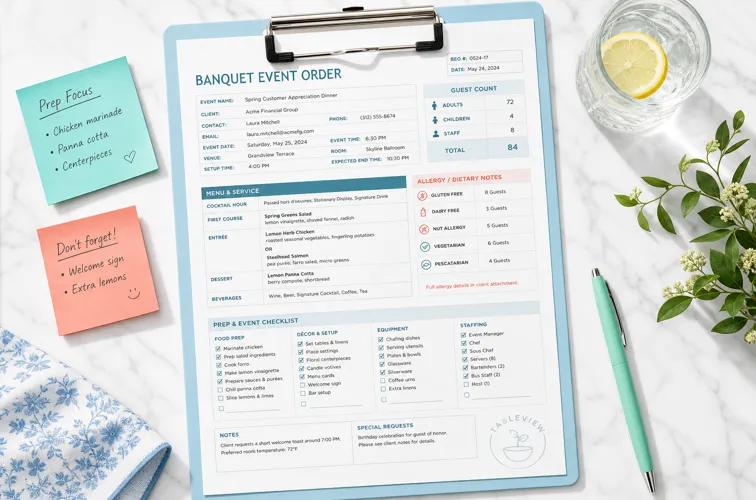
Sample BEO walkthrough
Concrete example reduces abstraction. Client: regional law firm holiday party. Date: December 12, 6:30 p.m. to 10:00 p.m. Space: full private dining room, forty guests confirmed (forty-five max). Package: Premium tier at $88 per person, limited bar at $32 per person.
Timeline on BEO: 6:30 cocktails in room, 7:15 welcome remarks (AV mic check at 6:45), 7:30 seated salad, 7:45 entree fire, 8:30 dessert, 9:00 bar closes, 9:30 room vacate. Coat check in foyer; wheelchair access via main entrance.
Kitchen counts: forty salads, forty salmon (eight beef alternate, four vegan alternate noted), forty dessert plates, extra twelve beef portions held backup. Allergy row: two nut-free, one gluten-free entree plated separately with flags.
Floor: four servers, one busser, one captain, one bartender with beer, wine, two batch cocktails, NA options. Linens white, centerpieces client-provided (arriving 4:00 p.m.).
Financial: deposit $3,200 received October 1, balance $2,880 due night of event. Gratuity 20 percent auto on food and beverage package for staff pool.
That single document is what the captain prints, the kitchen pins, and accounting matches to the POS close. Email threads do not substitute.
Kitchen and floor execution
Events compete with regular service for the same line. Decide production windows: prep heavy items day before, finish on event day between lunch and dinner, or block a slow day for catering-only production. A kitchen display helps when event tickets fire with distinct labels so line cooks do not treat a forty-person buffet like forty individual tables.
Walk the room with the event captain before guests arrive: AV, chair layout, bar placement, kids policy, cake cutting, where coats go. Assign a single floor captain who owns the timeline and talks to the client, not every server improvising answers.
For off-site catering, pack lists and hold temps are the failure points. Build a pack sheet from the BEO: containers, labels, utensils, sternos, backup portions. Someone signs the pack sheet before the van leaves.
Floor plans matter for seated events. Our guide to restaurant floor plans applies double when you reconfigure for weddings versus corporate rounds.
Corporate versus social events
Corporate: shorter sales cycle when you have a relationship, higher repeat potential, needs quiet AV, clear invoices, dietary diversity, and reliable timing. Target law firms, tech offices, hospitals, universities within driving distance. One satisfied office manager books quarterly.
Social: weddings, milestones, funerals, showers. Higher emotion, more customization pressure, stronger photo marketing upside. Require tighter packages and upgrade menus for premium proteins and open bar.
Holiday window: November and December can produce 25 to 40 percent of annual event revenue for active programs. Outreach in September beats scrambling in November.
Corporate buyers want invoices with line items, W-9 on file, and sometimes proof of insurance. Social buyers want Instagram photos of real parties in your room, not stock images. Same venue, two sales motions. Train whoever answers the phone to tag the inquiry type in the log so follow-up templates match.
Legal, permits, and insurance
Off-site catering triggers rules that in-room events skip. Health permits for mobile service, commissary agreements, transport time limits for hot food, and sometimes separate liquor permits if you pour at an external venue. A city health inspector at a corporate lunch with improper holding temps ends the program faster than one bad Yelp review.
Carry general liability and liquor liability appropriate to event scale. Many corporate contracts require a certificate of insurance naming the client as additional insured. Wedding planners ask for the same. Keep COI templates ready so legal review does not delay a signed contract.
Contracts should limit your liability for client-provided items (DJ gear, decorations) and clarify who owns breakage on rented glassware. Verbal promises about ice sculptures belong in writing with a price or they become free labor.
Reservations and event space inventory
Double-booking the private room because it was on a paper calendar while reservations sat in another system is a classic failure. One calendar for event holds, color-coded: tentative, contracted, blocked for prep. Tie public reservation availability to room blocks so online bookers do not snag tables you need for a contracted wedding party flow.
Off-site catering and commissary overlap
Off-site work may require a commissary or separate production kitchen if health rules or volume demand it. If you already use a commissary kitchen for prep, catering can slot into existing production rather than inventing a new facility. Price transport, labor, and disposable costs explicitly; operators forget van time and lose margin on "easy" drop-offs.
Marketing your event product
Your event space is not the same product as your Tuesday lunch. Build a landing page with capacity, photos at night with people, sample packages, and inquiry form. Add Google Business photos of the private room. Email past event clients before holidays with a two-click rebook path.
Partner with planners and nearby hotels with a one-sheet PDF, not a vague "we do events" line on the homepage. Planners reuse vendors who respond fast with clear pricing.
Collect testimonials with permission to use company logos for corporate, and tagged couple names or anonymized quotes for social. Video of a packed room with candles reads better than an empty room at noon in your Google listing.
Post-event follow-up and repeat revenue
The event is not over when guests leave. Within forty-eight hours, send a thank-you with final invoice if balance was not settled, a link to photos if your team snapped a few (with guest privacy in mind), and a one-line ask about March Thursday lunch slots for teams like theirs.
Corporate repeat is the highest ROI channel in catering. One office that books four lunches a year at $1,200 each is $4,800 with lower sales effort than four one-off weddings. Track repeat rate by client name in your CRM, not just by event date.
Ask satisfied hosts for referrals to planners or HR contacts. Offer a modest incentive (complimentary appetizer on next booking) only if it fits your brand; many corporate clients prefer a clean invoice over coupons.
Debrief internally within a week: food cost actual versus projected, labor hours, complaints, timeline slips. One page in a shared folder beats oral memory that fades before the next season.
Measuring whether the program works
Track metrics monthly once you run more than two events:
Inquiry to contract rate: if below 25 percent, fix response time or pricing clarity.
Average revenue per event: compare corporate versus social.
Food and beverage cost percent per event: should align with or beat regular service; if worse, packages are too custom.
Labor percent per event: includes setup and breakdown, not just service hours.
Contribution versus empty room: Tuesday lunch for twenty at $45 per person grosses $900; if labor and food cost $650, you still beat zero revenue and zero utilization.
Roll event revenue into the same restaurant accounting rhythm as daily sales so owners see events as a line, not a mystery deposit every few weeks.
Seasonal calendar for outreach
Proactive selling beats waiting for the inbox to fill.
January to February: corporate new-year team dinners, slow social season. Pitch companies on Q1 lunch packages.
March to May: wedding showers, graduations, patio season previews. Refresh event photos with spring light.
June to August: wedding season peak in many markets, corporate summer parties. Watch kitchen heat and staffing vacations.
September: start holiday party outreach to corporates; prime dates go fast.
October to December: execute holiday volume, raise minimums on peak Saturdays, protect regular guests from feeling displaced when the whole room is private.
Map this to your local climate; ski towns and beach towns invert some peaks.
Scaling across locations
Multi-unit operators should not let every GM invent packages from scratch. Centralize BEO templates, deposit policy, and tier pricing; allow local minimums by market. Brand consistency helps when a corporate client books your downtown room and asks about the suburban location for a larger all-day meeting.
Shared production at one commissary or flagship kitchen can feed catering for smaller satellite stores that lack event space but have delivery demand. Route off-site leads to the location that can execute without cannibalizing the busiest Friday dinner line.
Common mistakes that kill margin
No minimum spend on prime nights. You gift your best asset.
Custom menus for every inquiry. Chef burnout and food cost surprises.
Slow response. Leads book competitors who answered first.
No deposit. Cancellations leave you with prep and empty rooms.
Kitchen learns from a text thread. Use a BEO every time.
Underpricing buyouts. Charge for exclusivity, not just food and drink consumed.
Ignoring regular service. A blown Friday dinner because catering prep consumed the line damages the core business events were meant to supplement.
A ninety-day launch plan
Days 1 to 14: Audit capacity (room seats, buyout math, off-site feasibility). Pick three packages. Write deposit and cancellation policy. Build BEO template.
Days 15 to 45: Publish event page. Train one event owner on response SLA. Run two small events (office lunch, friends and family rehearsal) to test BEO flow through POS deposits and kitchen.
Days 46 to 75: Outreach list: twenty local companies, five planners. Offer September through November dates early. Review food cost and labor per event versus projection.
Days 76 to 90: Refine packages from data. Kill lowest-margin custom requests. Set quarterly review of inquiry log and repeat clients.
Technology: keep events in the same stack
Deposits, final settlements, item-level sales, and beverage reporting should land in the same system as daily service so your P&L reflects reality. When events live in a separate cash box and spreadsheet, month-end surprises follow.
Integrate prep reporting with inventory when volume justifies it so a forty-person buffet deducts ingredients predictably. At smaller scale, a disciplined BEO and manual inventory adjustment after each large event is enough.
Catering and private events are how smart operators monetize Tuesday lunch, the back room, and the production team between rushes. Package clearly, respond fast, document with a BEO, protect margin with minimums and deposits, and run the program with the same seriousness as dinner service. The empty room and the unanswered catering email are not harmless; they are the most expensive silence in the building.
Read next: Restaurant reservation systems, Restaurant CRM, and Restaurant floor plan layouts.