
Ask a room of owners what a restaurant manager does and you will get a list of tasks. Ask the manager on duty during a Saturday rush and you will get a shorter list: keep the floor moving, keep the kitchen fed, keep the guests from leaving angry, and keep labor from eating the night. Both lists are true. The job is the bridge between the owner's targets and the crew's reality, and most of that bridge is built on decisions made in seconds, not in meetings. A solid restaurant POS does not replace those decisions, but it gives a manager something rarer than another app: a single place to see sales, labor, and service patterns while the room is still loud.
This guide is for owners writing a job post, for assistant managers trying to step up, and for operators who wonder why their "manager" is still the best server on the floor instead of the person running the room. We break the role into the seven responsibilities every manager owns, the skills that separate good ones from exhausted ones, what a real week feels like, and how the job differs from a general manager or an owner who manages by gut. If you run a full-service restaurant, the floor is your classroom. If you run counter service, the same seven buckets still apply, only the pace and the metrics change.
What a restaurant manager is actually responsible for
Strip the title down and a restaurant manager is accountable for output: guests who leave happy enough to return, a team that can repeat tomorrow's service without collapsing, and numbers that do not surprise the owner on the 15th of the month. You are not the star of every table. You are the person who makes stars possible on every table.
That sounds abstract until you list what breaks when the manager is missing or weak. Sections double-seat. Modifiers get lost. Labor runs 12 percent over plan because nobody cut early. A vendor shorted you on chicken and nobody adjusted the prep list. The host seats a party of eight in a section that already has two birthdays. Each failure has a root cause, and most root causes trace back to one of seven duties the manager owns whether or not they are written on the job description.
The seven core restaurant manager responsibilities
Everything else is detail. These seven buckets cover what a competent manager does in a healthy operation.
1. Hiring the right people
Hiring is the highest-leverage thing a manager does. A great hire makes the next six months easier. A bad hire becomes a problem that compounds across every shift they touch. The mistake most managers make is hiring for charm in the interview and discovering too late that the person cannot show up on time, cannot take feedback, or freezes when the dining room fills.
Structured interviews beat gut feel. Ask scenario questions tied to your house: how they handle a wrong check, a drunk guest, a coworker who is slacking, a table that camps for two hours. Score answers instead of nodding along. Check references for punctuality and teamwork, not just "is a nice person." When you are ready to post, use a clear title and a salary range. Vague posts attract vague candidates.
2. Onboarding into how your house runs
Onboarding is not day-one paperwork. It is the first two weeks where a new hire learns whether your standards are real or decorative. Hand them a uniform and a menu PDF and you have onboarded them into confusion. Walk them through how orders fire, how comps get approved, where the allergen book lives, who to ask when the POS does something weird, and what "good service" looks like in your room, not in a training video from 2018.
Pair every new server with a trainer who embodies the standard, not whoever was free. Give hosts a separate track from line cooks. Document the boring stuff: where keys go, how to clock in, how to call in sick without leaving the team short. Managers who treat onboarding as a favor to HR instead of a revenue project pay for it in remakes and comps for months.
3. Training to a consistent standard
Training never ends. Menus change, wine lists turn over, new equipment shows up, and the crew forgets the one step that kept the expo line calm. A manager's job is to keep the standard visible and repeatable. That means short, frequent coaching on the floor, not a quarterly lecture in the back office.
Build simple standards anyone can audit: greet within 30 seconds, repeat modifiers back to the table, never stack hot plates on a cold rail, fire desserts when mains hit the table. Use real shifts as labs. If ticket times spike on Thursdays, watch the first ten tickets with the team and fix one behavior, not ten. Link training to what guests actually complain about. If Google reviews mention slow drinks, train the bar handshake with the floor, not another script about brand story.
4. Scheduling and labor cost control
The schedule is a forecast written in dollars. Every hour on the floor is a bet that sales will cover it. Managers who schedule from habit, the same head count every Tuesday because it has always been that way, bleed labor in slow weeks and crush the team in busy ones. Managers who schedule from last year's sales and this week's events do better, and managers who schedule from live sales patterns do best.
Know your labor target as a percentage of sales, not as a vibe. If dinner labor should sit near 28 percent and you are running 34, the fix is rarely "work harder." It is cut a body on a soft night, stagger starts, or fix the section chart so one server is not carrying six tables while another has two. Our guide to restaurant staff scheduling walks through the mechanics; your job as manager is to enforce the plan when someone asks to leave early because "it's slow" while you are still at 85 covers.
5. Retention, culture, and the team you inherit
Turnover is expensive in a way spreadsheets understate. You lose institutional memory, guest relationships, and the person who could train the next hire. Culture is not a poster in the break room. It is what happens when a cook snaps at a server and whether the manager intervenes in front of the guest or lets resentment simmer.
Retention tactics that work are small and consistent: fair schedules, public credit for good work, private correction for bad work, and zero tolerance for harassment or bullying masked as "kitchen humor." Pay matters, but respect and predictability matter almost as much. If your best server leaves because they never know their schedule until the day before, you did not lose them to a competitor. You lost them to your inbox habits.
6. Daily operations and service execution
During service the manager is the conductor. You may expo, you may run food, you may jump on the host stand when the wait list explodes. The goal is not to be the hero. The goal is to see the room three moves ahead: which section will break in twenty minutes, whether the bar is three deep on cocktails, if the walk-in temp crept up since lunch.
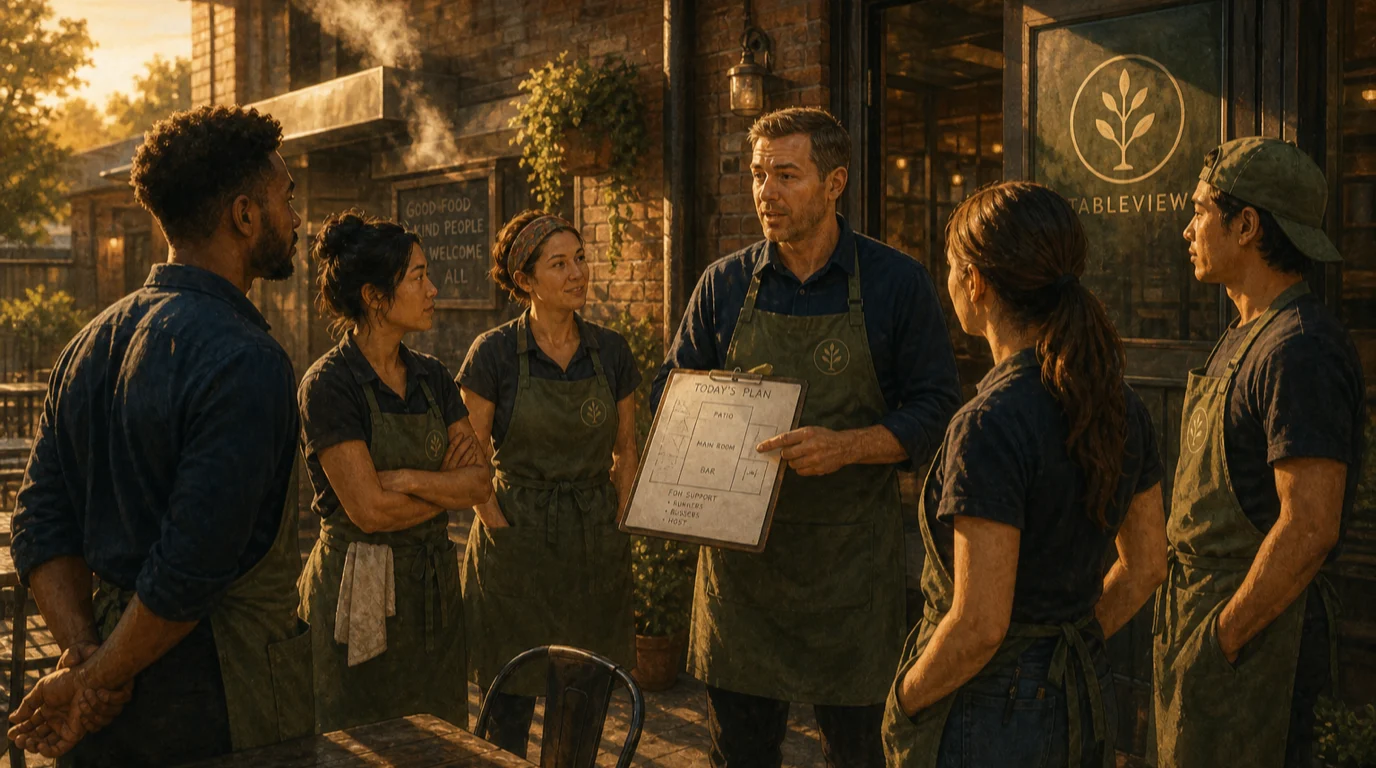
Pre-shift is where service is won. Five minutes of huddle beats an hour of rescue later. Cover 86'd items, big parties, staffing gaps, and one focus for the night, faster turns, quieter communication, sharper wine pitches. Mid-shift, scan the numbers if your POS gives you live labor and sales. Post-shift, debrief one thing that worked and one fix for tomorrow. Operators who skip the debrief repeat the same mistake every Friday.
7. Financial discipline on food and labor
You do not need to be an accountant. You need to notice drift before the owner does. Food cost creeping from 30 to 33 percent over three weeks is a manager problem: portioning, waste, theft, or a vendor price you never updated in the recipe. Labor drifting on the same sales volume is a scheduling or productivity problem.
Review the weekly P&L with curiosity, not dread. Tie restaurant labor cost to behaviors you can see on the floor. Tie food cost to prep lists and plate photos. When numbers move, walk the line and the pass before you blame the economy. Managers who only look at finance monthly are always surprised. Managers who look weekly can still fix the month.
Restaurant manager vs general manager vs owner
Titles blur, especially in independents. Use scope as the divider. The shift manager runs tonight. The restaurant manager runs the site week to week. The general manager runs profit and loss and often reports to ownership or a regional director. The owner may do all of the above and still jump on the line Saturday because payroll is tight.
Confusion hurts when accountability is fuzzy. If the "manager" cannot approve a comp over twenty dollars without a text chain, they are not really managing. If the GM is never on the floor, the crew will not trust their scheduling decisions. Write who owns hiring, who owns vendor credits, who owns price changes on the menu, and who gets called at 11 PM when the dishwasher floods. Clarity prevents the passive answer "that's ownership" when a guest is still waiting.
Skills that separate good managers from burned-out ones
Technical skills matter less than people think. Service sense helps. Basic food safety knowledge is non-negotiable. Beyond that, the managers who last develop a short list of habits.
They read data without worshipping it. A spike in voids is a signal to watch the bar, not a reason to yell in the kitchen. They give feedback that names behavior, not character. "You forgot the allergy flag twice tonight" beats "you are careless." They protect boundaries: they leave on time two nights a week so the team knows burnout is not the house culture. They document. Write up the verbal warning, log the vendor short, note the coaching conversation. Documentation feels corporate until you need it when someone no-shows three Saturdays in a row.
They also know when to sell and when to cut. Upsell training is useless if the kitchen cannot execute the special. Cutting labor on a packed night to hit a target is how you lose the guests who would have returned next week. Good managers trade short-term panic for medium-term health.
Working with the kitchen, the bar, and ownership
A restaurant manager sits in the middle of three pressure systems. The floor wants speed and tips. The kitchen wants rhythm and respect for the ticket. Ownership wants margin and growth. Your job is translation, not picking a favorite.
With the kitchen, clarity beats charm. Fire times, allergy flags, and 86 updates should be boring and loud. If the chef says salmon is gone, the manager puts it in the POS and tells the floor in the same minute, not after three more orders slip through. When the line falls behind, the manager protects the kitchen from new seats that will never get food in time. That conversation is awkward with guests at the host stand, but it beats serving a room full of angry tables an hour later.
With the bar, watch pour cost and ticket stacking. A manager who never steps behind the bar on a Friday cannot diagnose why cocktail sales cratered. Spend one rush watching well placement, garnish prep, and whether servers are ringing drinks before they leave the station. Bars leak margin in small pours and missing rings, not in one dramatic theft.
With ownership, bring numbers and stories. "Labor was high" is a complaint. "Labor was 31 percent on a 4,200 dollar Tuesday because we kept two closers through a dead patio" is a plan. Weekly five-minute syncs beat monthly surprises. If you are the owner reading this, give your manager one metric they own outright and defend it in public when they make the right unpopular call.
Metrics a restaurant manager should watch every week
You do not need a dashboard with forty tiles. You need six numbers you actually react to.
Labor percentage by daypart. Dinner labor on the same sales volume should look similar week to week. If Tuesday dinner labor jumps while sales flatline, the schedule or the floor habits moved.
Average ticket and items per guest. A falling average ticket with steady covers often means servers stopped suggesting or the kitchen slowed add-ons. Pair this with menu mix: are appetizers down because nobody offered them or because the fryer broke?
Ticket times and turn time by section. Long tickets in one section usually mean a training issue or a bad section chart, not "the kitchen is slow tonight."
Voids, comps, and remakes. Spikes cluster around one station, one shift lead, or one new hire. Fix the cluster, not the whole team.
Guest complaints and review themes. One bad night is noise. The same complaint three weeks running is a manager project.
Food cost variance. Compare theoretical usage to actual if your system gives it. If not, walk inventory on your top ten items weekly until you trust the trend.
Managers who watch these weekly catch problems managers who only read monthly P&Ls miss entirely. The goal is not more spreadsheets. The goal is fewer fires that should have been a five-minute fix on Wednesday.
What a week on the job actually looks like
Monday might be admin: schedule edits, vendor calls, menu tweaks, one-on-ones with the assistant manager. Tuesday lunch could be quiet enough to train a new host on the reservation flow. Wednesday dinner you are on the floor because two servers called out and the patio opened early. Thursday you sit with the owner for thirty minutes on last week's prime cost. Friday and Saturday you barely sit at all. Sunday brunch is half service, half recovery.
The managers who struggle try to do Monday's admin during Friday's rush. The managers who survive block time for paperwork and defend it like a reservation. They also build redundancy: an assistant who can open, a lead server who can run the board, a cook who can call 86's without panicking. If every shift depends on you personally, you built a job, not a system.
Common mistakes new restaurant managers make
Playing favorites is the fastest way to lose the middle of the team. The crew notices who gets easy sections and who gets cut first. Micromanaging every plate while ignoring the schedule is another classic failure. You cannot fix garnish placement while labor runs six points over target.
Some new managers avoid conflict until it explodes. A server who is rude to hosts will eventually be rude to guests. Address it early, in private, with a clear expectation. Others confuse being liked with being respected. You can buy lunch for the crew and still hold the line on standards. The respect comes from fairness and competence, not from free appetizers.
Finally, do not hide behind "that's how the owner wants it" when you have not actually aligned with the owner. If you disagree with a policy, fight for clarity upstairs or enforce it consistently downstairs. Mixed messages destroy managers faster than bad Yelp reviews.

Restaurant manager job description template
Use this as a starting block. Edit for your concept and pay band.
Title: Restaurant Manager (Full-Service)
Reports to: General Manager or Owner
Schedule: Mix of opening, closing, and weekend shifts. Typical 45 to 50 hours per week.
Responsibilities: Hire, onboard, and train front-of-house and back-of-house staff. Build weekly schedules that meet labor targets and service needs. Lead daily pre-shift meetings and manage floor operations during service. Maintain guest service standards and resolve complaints. Control food and labor costs through daily oversight and weekly reporting. Partner with kitchen leadership on menu execution, 86 procedures, and health standards. Enforce safety, sanitation, and alcohol service policies.
Requirements: Two plus years in restaurant leadership or five plus years in restaurants with demonstrated progression. Working knowledge of POS, scheduling, and basic P&L lines. Calm under pressure, clear communicator, available for nights and weekends.
Nice to have: Experience with full-service dining rooms of 80 to 150 seats, local liquor laws, wine and cocktail program basics.
Publish a salary range. Candidates with options will not guess.
Tools that make the job survivable
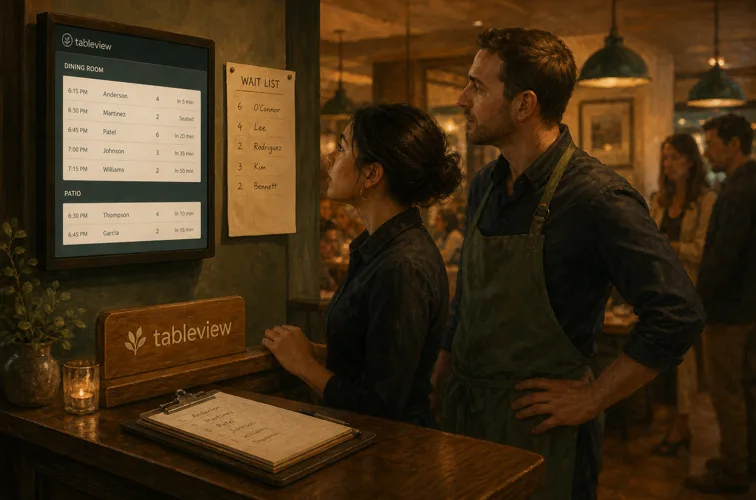
No tool replaces judgment, but the wrong stack makes every judgment harder. You want one POS that servers trust, kitchen integration that matches how tickets actually move, and reporting you can read in two minutes between seatings. When managers export CSVs at midnight to understand lunch, they burn out. When they can see item sales, labor percentage, and voids on one screen during service, they intervene while it still matters.
Scheduling tools should connect to sales, not live in a spreadsheet that ages the moment you save it. Inventory signals should reach the manager before the cook discovers empty salmon mid-rush. Guest history should not require interrogating the host about whether table four was here last week. The best managers treat technology as early warning, not as homework.
Growing into the role
If you are stepping up from server or line cook, ask for incremental ownership before the title. Run pre-shift for a month. Own Tuesday scheduling for a quarter. Sit in on one vendor call. Write the onboarding checklist for hosts. Each slice proves you can think past your own station.
If you are an owner promoting your first manager, coach in public and correct in private. Give them a written scope and a number they own, labor percentage, food cost, guest complaint count. Review it weekly for ninety days, then monthly. Promoting without structure sets up good people to fail publicly.
The restaurant manager job is not glamorous. It is the role that determines whether your concept feels intentional or accidental when a stranger walks in on a busy night. Hire for the seven buckets, train for consistency, schedule with math, and read the numbers while the room is still full. Do that and the title starts to mean something beyond the person who unlocked the door.
Read next: Restaurant staff scheduling, How to control restaurant labor cost, and What is a line cook in a restaurant.