One bad plate can undo ten years of good reviews. A norovirus outbreak traced back to a line cook who came in sick, a chicken breast that spent the afternoon at room temperature, a peanut that ended up in a dish marked nut-free: any one of these can close your doors, and some of them can end careers. Food safety is not the boring compliance chore it gets treated as; it is the foundation that everything else, your brand, your reviews, your insurance, sits on top of. Getting it right starts with knowing where your food actually lives and how long it has been there, which is why temperature and date control through your stock management system matters as much as any recipe.
This guide walks through food safety the way a working kitchen experiences it, not the way a textbook lists it. We cover HACCP without the jargon, the temperature danger zone, cross-contamination and color coding, allergen control, the real difference between cleaning and sanitizing, FIFO and labeling, pest basics, how to pass a health inspection, and how to build a culture where the team does the right thing when nobody is watching. Where it helps, flagging allergens and modifiers right on the line through a kitchen display system removes one more chance for a dangerous mistake.
What food safety actually covers
People hear food safety and picture handwashing posters. It is broader. It spans receiving (rejecting a delivery that arrived warm), storage (raw chicken below ready-to-eat food, never above), preparation (separate boards, clean hands, controlled time out of refrigeration), cooking (correct internal temperatures), holding (hot food hot, cold food cold), cooling and reheating (the steps most kitchens get wrong), and cleaning (surfaces, equipment, and the building itself).
Miss any link and the chain breaks. A perfectly cooked chicken means nothing if it cools too slowly overnight and grows toxins that cooking will not destroy. The discipline is end to end.
Receiving deliveries safely
Food safety starts at the back door, before anything hits your shelves, and it is the step most kitchens rush. A delivery is your last easy chance to reject a problem instead of owning it. Check refrigerated items on arrival: cold products should be 41 F or below, frozen products solid with no signs of thaw and refreeze (large ice crystals or a block of stuck-together items are a red flag). Reject dented, swollen, or leaking cans, torn packaging, and anything with an off smell.
Inspect the truck too. A dirty delivery vehicle or a driver stacking raw chicken on top of produce tells you what happened during transport. Log delivery temperatures, note rejections, and do not let a busy Friday pressure you into accepting a marginal load because sending it back is inconvenient. The cost of one bad case of chicken is nothing next to the cost of an outbreak. Move refrigerated and frozen items into storage first, fast, so they do not sit on the dock warming up while someone counts dry goods.
HACCP explained without the jargon
HACCP (Hazard Analysis and Critical Control Points) sounds like a certification you buy. It is really a way of thinking. Walk your menu item by item and ask: where could this become unsafe, and what is the one step that keeps it safe? For grilled chicken, the critical control point is cooking to the correct internal temperature. For a cold pasta salad, it is keeping it cold and limiting time in the danger zone. For a house-cured item, it might be salt concentration and time.
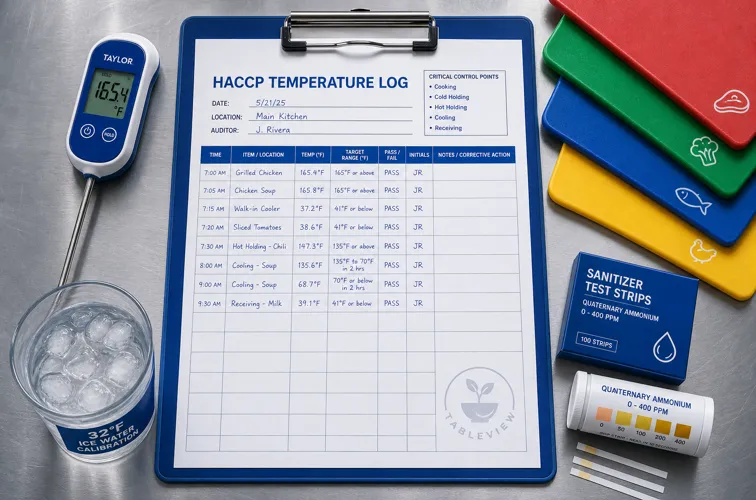
The formal system has seven principles, but the mindset is simple: find the hazards, identify the few make-or-break steps, set limits, check them, and write down what you checked. Records are not bureaucracy for its own sake; they are how you prove the burger was cooked and the cooler held temperature when someone claims otherwise.
The seven HACCP principles, made practical
1. Conduct a hazard analysis. List each menu item and the biological, chemical, and physical hazards it could carry.
2. Identify critical control points (CCPs). The steps where control is essential: cooking, cooling, hot holding, sometimes receiving.
3. Establish critical limits. The number that must be met: chicken to 165 F, cold hold at or below 41 F.
4. Monitor the CCPs. Check with a calibrated thermometer on a schedule, not by eye.
5. Set corrective actions. Decide in advance what to do when a limit is missed: recook, rapid chill, or discard.
6. Verify the system works. Calibrate thermometers, review logs, spot-check.
7. Keep records. Temperature logs, cleaning logs, corrective-action notes. Digital logs beat a grease-stained clipboard nobody can read.
The temperature danger zone
Bacteria multiply fastest between roughly 41 F and 135 F. That band is the danger zone, and time inside it is what kills people, literally. The core rules:
Cold holding: 41 F or below. Check coolers at least twice a shift.
Hot holding: 135 F or above. Steam tables are for holding, not cooking cold food up to temperature.
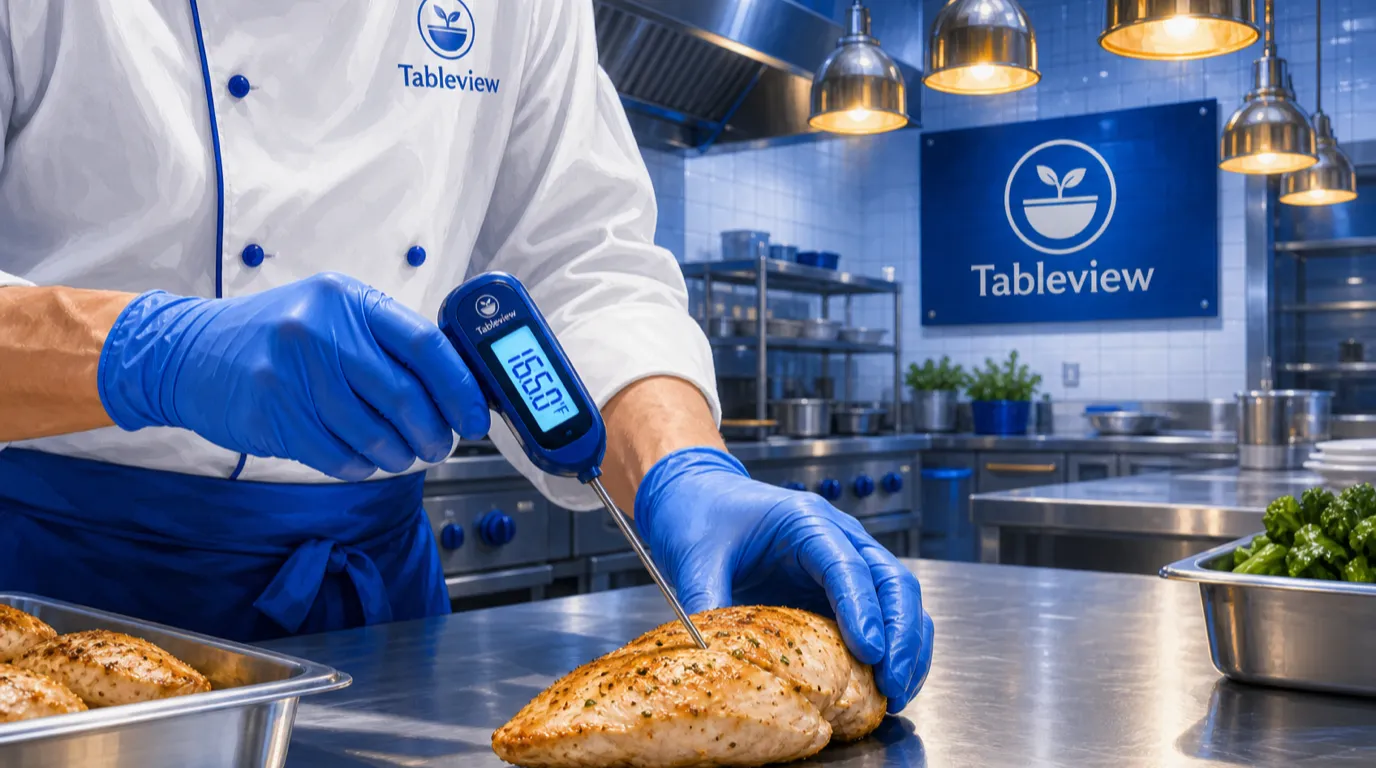
Cooking: hit the right internal temperature for the product. Poultry needs the highest; ground meats, whole cuts, fish, and eggs each have their own target. Use a probe thermometer in the thickest part.
Cooling: the step most often botched. A common standard is 135 F down to 70 F within two hours, then down to 41 F within the next four. Big pots of chili cooling on a counter overnight are a classic outbreak cause. Use shallow pans, ice baths, ice paddles, or a blast chiller.
Reheating: to 165 F, quickly, before hot holding.
The cumulative four-hour rule matters: total time in the danger zone across a food's life should not exceed four hours, and many operators cap it at two.
Internal cook temperatures are worth memorizing because eyeballing color is unreliable. As a rough guide used in many US kitchens: poultry and stuffed items to the highest target (around 165 F), ground meats to a mid-high target (around 155 to 160 F), whole cuts of beef, pork, veal, and lamb plus fish and shell eggs for immediate service to a lower target (around 145 F with rest time), and fresh produce or commercially processed ready-to-eat items reheated for hot holding to 135 F or the required reheat temperature. Always confirm against your local code, which is the authority that matters if an inspector disagrees. Calibrate your thermometers regularly with the ice-water method (a properly calibrated probe reads 32 F in an ice slurry); a thermometer that lies is worse than none because it gives false confidence.
Personal hygiene and handwashing
Sick employees are a top cause of outbreaks. If a cook has vomiting, diarrhea, jaundice, a sore throat with fever, or an infected wound, they should not be handling food. Build a policy that lets people stay home without losing the shift financially, or they will show up sick and hide it.
Handwashing is not rinsing. It is 20 seconds with soap and warm water, before starting work, after the restroom, after handling raw protein, after touching the face or phone, after taking out trash, and after any break. Handwashing sinks are for hands only, never for rinsing pans or dumping ice. Keep them stocked with soap and towels and never blocked by a trash can or a stack of trays. Gloves are a supplement, not a substitute; a gloved hand that touches raw chicken then a bun is just as dangerous as a bare one.
Cross-contamination and color coding
Cross-contamination is how a hazard travels from one food or surface to another. The big three routes: raw to ready-to-eat, hands, and equipment. Controls:
Storage order: in the walk-in, ready-to-eat on top, then seafood, whole cuts of beef and pork, ground meat, and raw poultry on the bottom. Order by final cook temperature so nothing drips onto food that will not be cooked hotter.
Color-coded boards and utensils: a common scheme uses green for produce, red for raw meat, blue for seafood, yellow for poultry, white for dairy. The colors matter less than everyone using the same system every shift.
Clean and sanitize between tasks: switching from raw chicken to slicing tomatoes means the board and knife get washed and sanitized, not just wiped.
Watch the sneaky routes too. A tasting spoon dipped twice, a towel used for both wiping the raw-prep bench and drying clean hands, a mandoline shared between allergen and non-allergen prep: these are the paths that do not show up in a quick walk-through but cause real illness. Assign equipment to zones and train the team to treat a raw-protein surface as contaminated until it has been through the full clean-and-sanitize sequence.
Allergen management
Allergens are a life-or-death subset of food safety, and they are increasingly a legal one. The major allergens (in the US the big nine: milk, eggs, fish, shellfish, tree nuts, peanuts, wheat, soy, and sesame) can send a guest to the hospital in minutes. A dish labeled nut-free that carries trace peanut is not a small error.
Control it with process, not luck. Know exactly which menu items contain which allergens (down to the sauces and fryer oil). Prevent cross-contact: separate prep space, dedicated utensils, a clean fryer for allergen orders, changed gloves. When a guest declares an allergy, that ticket should be flagged clearly for the whole line. This is exactly where surfacing the allergy on the kitchen display beats a server shouting it over the pass and hoping. Train staff to take allergy statements seriously every time, not to guess, and to say no when they cannot guarantee safety. The matrix, the supplier specifications and the records behind all of this are covered in full in how to manage allergens in a restaurant.
Cleaning versus sanitizing
They are two different jobs and you need both, in order. Cleaning removes visible dirt, grease, and food debris with detergent and water. Sanitizing reduces the microorganisms left on a already-clean surface to safe levels, using heat or a chemical sanitizer at the correct concentration and contact time.
Sanitizing a greasy surface does almost nothing; the organic matter shields the bugs. The sequence for food-contact surfaces is: scrape, wash, rinse, sanitize, air dry. Test sanitizer strength with test strips (too weak does not work, too strong is a chemical hazard and can taint food). Set cleaning schedules for the things that get forgotten: soda gun nozzles, ice machines, can openers, slicer blades, gaskets, and the floor drains that breed problems.
FIFO, labeling, and storage discipline
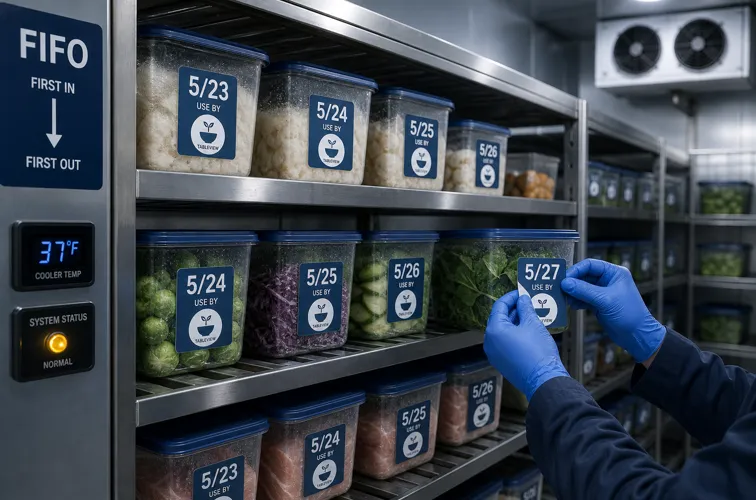
First In, First Out is the habit that keeps old stock from lurking behind new. Newer deliveries go behind or below older ones so the oldest gets used first. Pair it with clear labeling: every prepped or opened item gets a label with contents and a date. If you want the deeper mechanics, our guide on what FIFO means breaks down rotation step by step.
Use-by discipline is where many kitchens quietly fail. A container with no date is a container you cannot trust, so it should be tossed, which is expensive. Good labeling plus tight rotation cuts both risk and waste. Track it through your inventory management process so par levels and order timing keep product fresh instead of aging on a shelf. Store dry goods off the floor, keep chemicals in a separate area far from food, and never reuse original packaging for a different product without relabeling.
Pest control basics
Pests are both a health hazard and an instant inspection failure. Prevention beats extermination: seal entry points, fix door sweeps and screens, keep dumpsters closed and away from doors, clean up spills and crumbs fast, and remove standing water. Store food sealed and off the floor. Schedule a licensed pest control service and keep their reports; inspectors ask for them. A single droppings trail near a prep area can shut you down, so the daily cleaning routine is your first line of defense.
How to pass a health inspection
The secret is unglamorous: there is no secret. Restaurants that pass consistently are the ones running clean every day, not scrambling the night before. Inspectors focus on the risk factors that actually cause illness: temperature control, sick-worker policies, handwashing, cross-contamination, and safe sourcing.
Prepare by running your own inspection weekly using your local health code as the checklist. Common violations to hunt for: cold-holding units above 41 F, food not date-marked, handwashing sink blocked or missing soap, chemicals stored above food, employee drinks on prep surfaces, and dirty can openers or slicers. When the inspector arrives, be cooperative and honest, walk with them, fix what you can on the spot, and treat the report as a to-do list with root-cause fixes rather than quick patches. A repeat violation is far worse than a first-time one.
Know your local grading system. Many jurisdictions post a letter grade or score in the window, and that placard is marketing whether you like it or not; guests read it, and delivery apps increasingly surface it. Understand how points are assigned so you focus effort on the high-risk, high-point items (temperature, handwashing, cross-contamination) rather than losing sleep over a minor cosmetic ding. Keep your last report and your certified manager credentials somewhere you can produce them in seconds, because being disorganized during an inspection reads as being disorganized about safety.
Training and food safety culture
Rules on a wall change nothing. Culture is what the team does at 11 p.m. when the manager is gone and the walk-in is full. You build it by making the safe way the easy way: thermometers within reach, labeled containers stocked, a fast rinse-and-sanitize station, and a sick policy people can actually use.
Train before the first shift, refresh at least yearly, and repeat the critical bits in pre-shift. Keep at least one certified food protection manager on site (in many areas this is required). Praise people for catching problems instead of punishing them for reporting; the moment a cook is scared to say a cooler is warm, you are running blind. Tie food safety into the same operational rhythm you use for the rest of the business, the way you would treat any core part of a manager's daily responsibilities.
Technology that reduces human error
The clipboard on the walk-in door is where food safety goes to die: it gets skipped, faked, or soaked in condensation. Modern kitchens cut error with tools:
Digital temperature logs and wireless sensors that record cooler and freezer temps automatically and alert you when a unit drifts out of range at 3 a.m., before a full walk-in spoils.
Allergen and modifier flags carried from the order straight to the line, so the message does not get lost between server and cook.
Inventory and expiry tracking that shows what is aging and needs to move, supporting FIFO instead of relying on memory.
Technology does not replace trained people; it removes the gaps where tired people forget. The goal is a system where the safe action is the default, and the unsafe one is hard to do by accident.
The real cost of getting it wrong
Owners under-invest in food safety because the payoff is invisible when things go right. The downside is not. A single foodborne illness outbreak can trigger lawsuits, medical claims, a forced closure while you deep clean and re-inspect, and the kind of local news coverage and online reviews that follow a restaurant for years. Studies have put the average cost of one outbreak in the hundreds of thousands of dollars once you add legal fees, lost revenue, higher insurance, and cleanup, and that is before counting the regulars who simply never come back.
Compare that to the cost of prevention: thermometers, test strips, labels, a certified manager course, and a bit of daily discipline. Food safety is one of the highest-return investments in the building precisely because the loss it prevents is so catastrophic. The math is not close.
Common mistakes that fail kitchens
Cooling in deep containers. A full stockpot cools from the outside in and the center stays in the danger zone for hours. Shallow pans and ice baths fix it.
Undated or mislabeled prep. If you cannot prove when it was made, you cannot trust it.
Handwashing sinks used as prep or dump sinks. An instant violation and a real contamination route.
Wiping instead of sanitizing. A dirty wet rag dragged across surfaces spreads bacteria rather than removing it; use a sanitizer bucket at the right strength and change it often.
Thawing on the counter. Thaw in the cooler, under cold running water, or as part of cooking, never at room temperature for hours.
Ignoring the sick-worker policy. One cook powering through a stomach bug can infect dozens of guests.
Trusting the clipboard nobody fills in honestly. Logs that get back-filled at the end of a shift are fiction, and fiction does not protect anyone.
Building your food safety program
You do not need a consultant to start. A workable program has a few parts: written standard procedures for the high-risk steps (cooking temps, cooling, cleaning, allergen handling), monitoring logs for temperatures and cleaning, a designated certified manager, an onboarding and refresher training plan, a self-inspection checklist run weekly, and a supplier list you trust for safe sourcing.
First 30 days: map your menu's hazards and critical control points, buy and calibrate thermometers, set cold and hot holding checks twice per shift, and start date-labeling everything.
Days 30 to 60: write your core procedures, set up cleaning schedules for the forgotten equipment, and get at least one manager certified.
Days 60 to 90: run your first full self-inspection, fix root causes, and layer in digital logging or sensors for temperature.
Food safety is the least glamorous and most important system in your building. Nobody leaves a five-star review because they did not get sick, but one outbreak can erase everything you built. Run the kitchen clean every day, control temperature and cross-contact, take allergies seriously, keep honest records, and make the safe way the easy way. Your guests will never know how much went right, which is exactly the point.
Read next: What FIFO means for restaurants, Restaurant inventory management, and How to reduce food waste.