Twenty six percent. Eighty seven percent. Both numbers describe how many restaurants were using AI going into 2026, both come from surveys worth taking seriously, and the distance between them is the most useful thing on this page. One counts operators who say they use AI-related tools. The other counts operators who say they use some form of AI, after being shown a list that included menu optimization and inventory. Same year, same industry, sixty one points apart. Knowing why that gap exists is worth more than any vendor demo, because the gap is exactly what a sales deck is built on. One thing does not change either way: all of these tools read your sales history, so a restaurant POS that records items, modifiers, voids and who rang them is the difference between a forecast and a guess dressed up as one.
What follows is where AI is genuinely earning money in restaurants right now, why the guest-facing side has stalled at 6%, the one phone case that deserves a real argument, what any of it should cost, and the European compliance date that arrives on 2 August 2026. Fair warning: the wins are unglamorous. Most operators meet their first working model inside stock management, where it suggests an order quantity for Thursday, not out front charming guests.
The two numbers, and why they disagree
The National Restaurant Association's 2026 State of the Restaurant Industry report puts adoption at 26%. That is the share of operators who say their restaurants use AI-related tools. Marketing is where they feel it most: 19% of full-service and 15% of limited-service operators use it in their marketing work. Only 6% use it for customer orders.
TouchBistro's 2026 report tells a different story. Built on a Maru/Matchbox survey of more than 600 full-service owners, presidents and general managers across all fifty states, it found 87% already using some form of AI, most commonly for menu optimization, followed by reservations and booking, then inventory management.
Both can be true at once. The samples differ, and the questions differ far more. Ask an operator whether they use "AI-related tools" and they picture a chatbot they have to log into. Show them a list of features and they tick the ones their existing software quietly shipped last spring. The giveaway sits in that same TouchBistro report: adoption apparently fell from 95% in 2024 to 87% in 2026. Adoption does not fall like that. Labels do.
Which leads to the only sensible posture. Treat every adoption statistic aimed at you as marketing until you know the question behind it. Your decision does not need an industry average anyway. It needs one task, a baseline, and a number.
Where AI actually earns its keep in 2026
A pattern holds across every operator I have seen make this work. AI pays when it drafts, forecasts or classifies, and when a human still signs off before anything reaches a guest or a supplier. It disappoints when it is asked to be the hospitality.
Writing the things you never get around to
Menu descriptions. Replies to reviews. Job ads. The supplier email you have rewritten four times. This is the cheapest possible entry point: twenty dollars a month, no integration, nothing that can break service. It is also, per the NRA data, where the most operators report an impact, which tells you the bar is genuinely low.
Two guardrails, though. Never let a model write an allergen, provenance or health claim, because it will produce something plausible and wrong, and that one is not a marketing problem. And read everything aloud before it ships. Generated copy has a particular smell, and your regulars know your voice better than you think.
Forecasting covers and prep
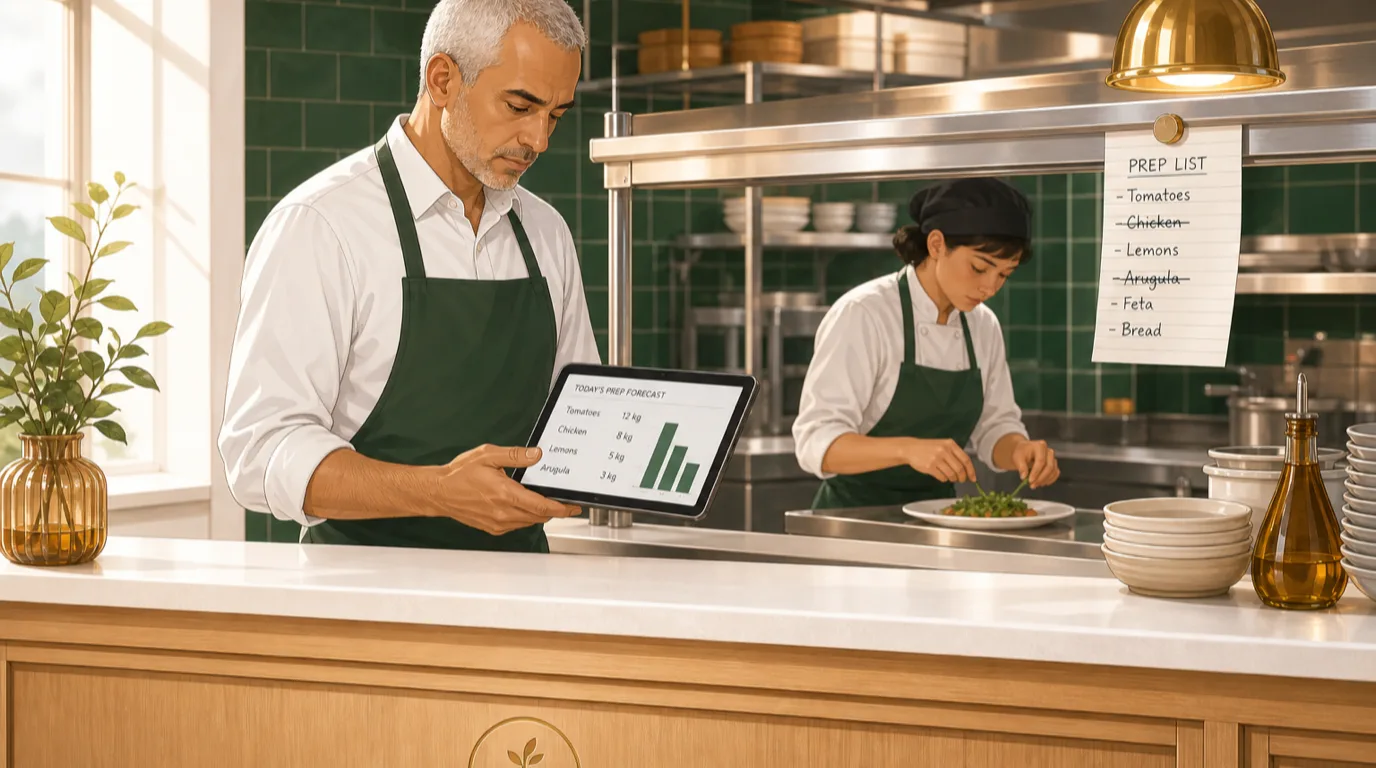
Take eighteen months of your own item-level sales, add day of week, weather and the local events calendar, and a forecast becomes genuinely useful for prep quantities and bake-off volumes. This is where the money is. A 90-cover bistro that over-preps forty dollars of mise en place twice a week is throwing away four thousand dollars a year, and nobody notices because it leaves in a bin bag rather than off the P&L.
The honest limit is that these models are weakest exactly when you want them most. A festival on your street, a heatwave, a transport strike, the Tuesday a competitor two doors down closes: all of it is outside the history. Treat the forecast as a starting number your head chef overrides, not an instruction.
Ordering, par levels and variance
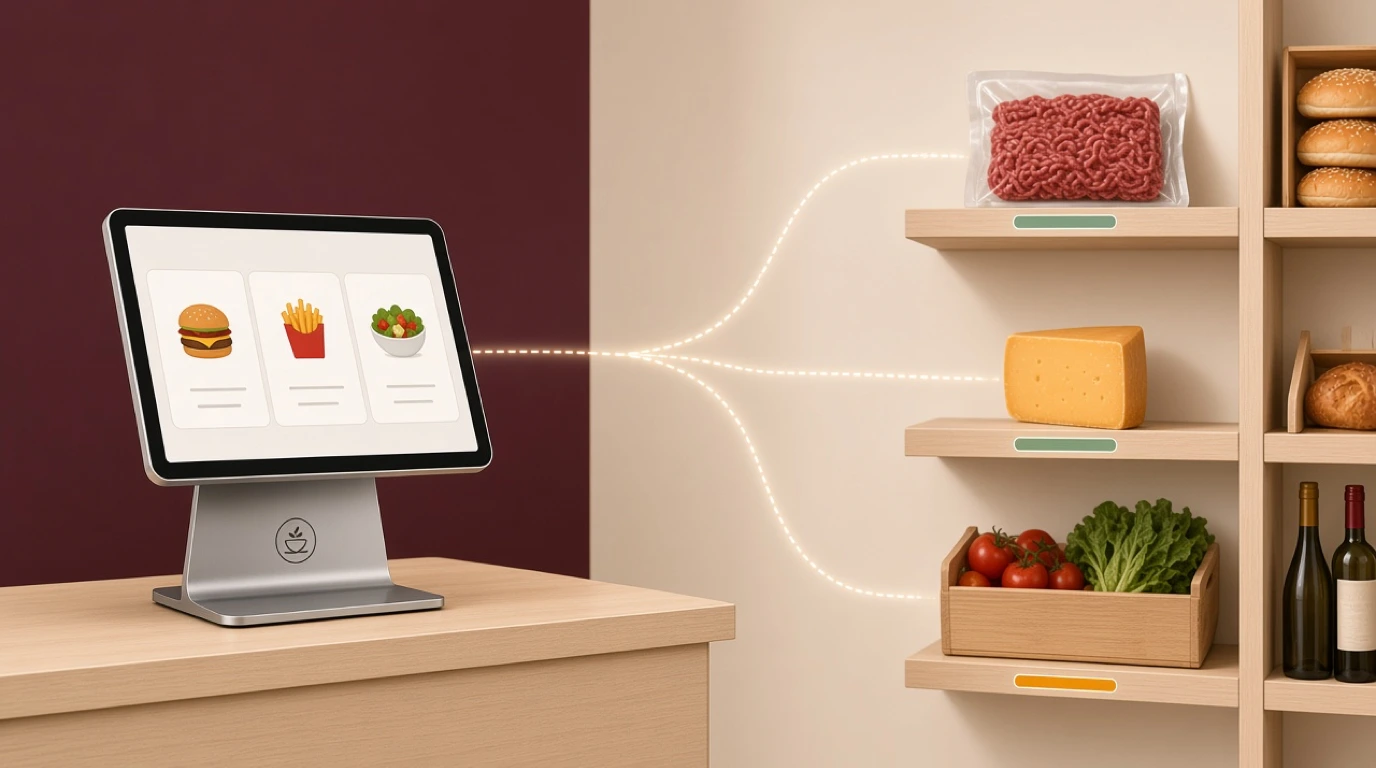
Suggested order quantities against par, flags where theoretical usage and actual usage separate, alerts when a supplier price moves. Paired with procurement management, this is the least glamorous and most reliable AI in the building.
The part the demo skips: it inherits your recipes. If your yields are guesses, you have not bought intelligence, you have bought your own guesses at scale and with more confidence. Fix the ten highest-volume recipes first.
Scheduling against a forecast
Labour is the other half of prime cost, and it is the one you can still move on a Tuesday afternoon. Feed a covers forecast into your rota and the software will tell you that last Thursday you rostered five servers for a night that needed three and a half, which is a conversation nobody has when the schedule is copied forward from last week out of habit.
The catch is that a model optimises for the number it can see. It does not know your new commis needs a quiet section for another fortnight, that Saturday's rota is the reason your best bartender stays, or that cutting the shift to four hours makes the commute uneconomic for the person doing it. Use it to catch the obvious overstaffing, then apply judgement. Operators who let the tool write the rota unedited tend to save 2% on labour cost and pay for it in turnover, which is a far more expensive line.
The paperwork nobody misses
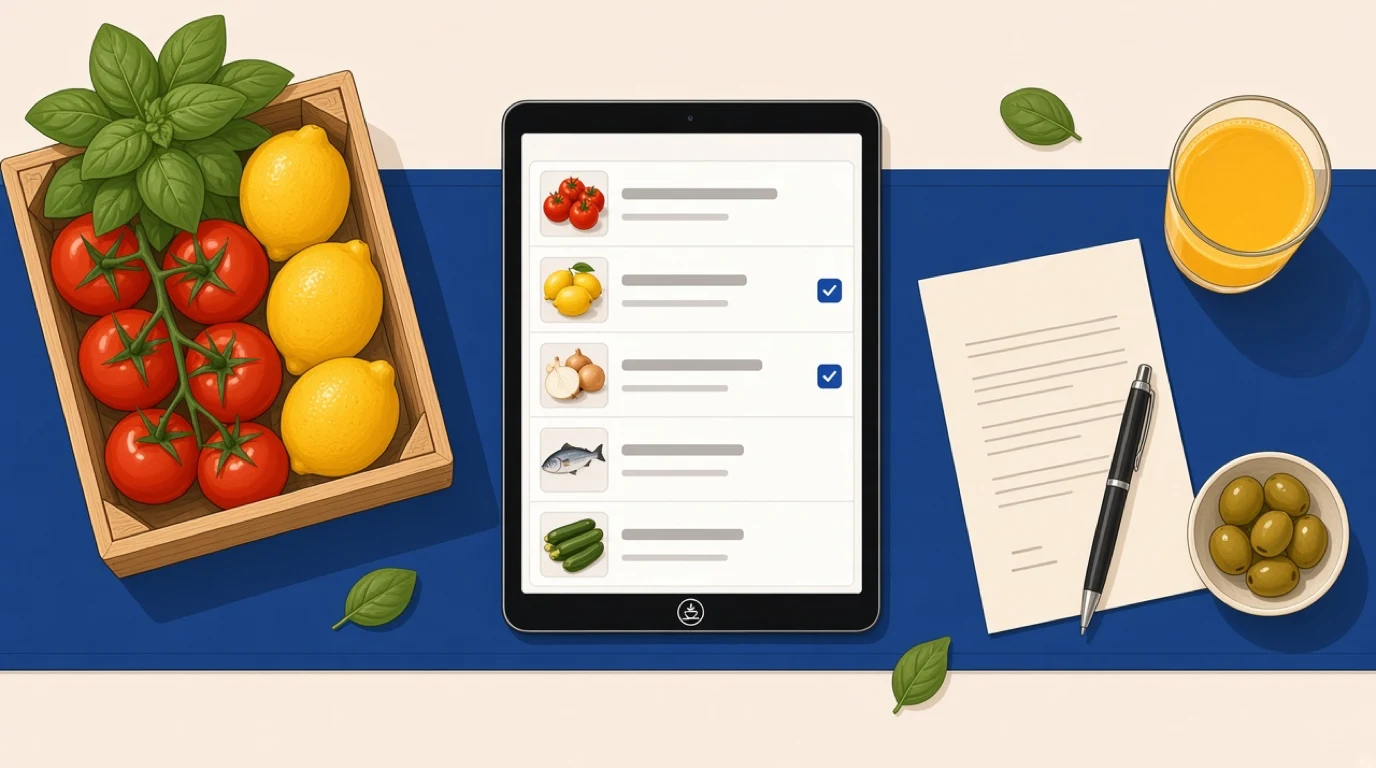
Invoice capture is the quiet winner of the last two years. Photograph a delivery note, get line items coded and matched, see the price changes your supplier did not mention. TouchBistro's numbers show 52% of full-service operators have automated invoicing already. Feed that into restaurant accounting and the month-end that used to eat a Sunday takes an hour.
Automation is not AI, and that is where most of the wins are
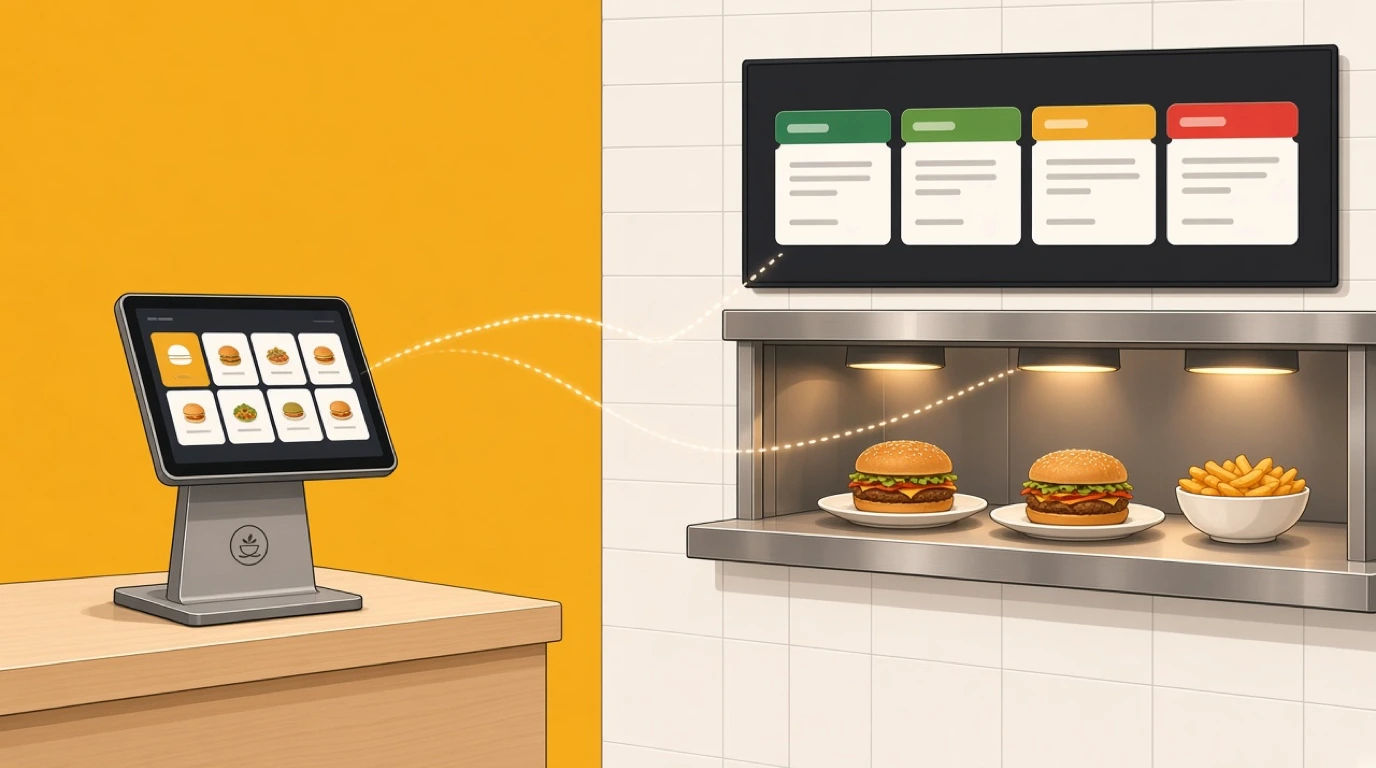
Worth separating the two, because the invoices for them look identical. Automation follows rules you wrote: if a ticket has a dessert, route it to the pastry screen at the right course. AI infers patterns you did not specify. Most of what restaurants actually need is the first thing.
The adoption figures back this up. Among full-service operators, TouchBistro found online ordering automation at 68%, up from 57% the previous year, payroll at 54%, invoicing at 52%, kitchen order routing at 52% and email marketing at 51%. The reason they give is speed: 52% cited faster service, up sharply from 37% a year earlier. Not one of those tasks requires a model. Kitchen order routing is an if-then statement wired into a kitchen display system.
So before you buy anything with AI in the name, go through what you already pay for and count the features you have never switched on. Most restaurants are sitting on a year of unused automation. The cheapest AI project in your restaurant this year is probably a rule you have not written yet.
Why the guest-facing side keeps stalling
Six percent. That is how many operators use AI for customer orders, after several years of announcements suggesting the drive-thru had already been handed over. The consumer research explains the hesitation better than any operator survey.
The NRA asked diners what they would be comfortable with. A solid majority will order and pay through a phone, a website, a kiosk or a tablet at the table. 62% would place an order by speaking to a live person on a video screen. Only 39% would do the same with an AI-generated persona. Nearly half would happily order on a website or app while chatting with an AI bot, rising to six in ten among millennials and Gen Z.
Read that carefully, because there is a real distinction in it. Typed, guests will accept AI. Spoken, they will not, yet. Whatever the technology can do, the synthetic voice remains the sticking point.
Sentiment on technology generally is split almost evenly: 41% of consumers say it improves hospitality, 38% say it detracts, 21% say it makes no difference. Just over half of Gen Z adults and millennials say technology enhances the experience, against 23% of baby boomers. Your customer mix decides this, not the trend. A late-night burger counter and a Sunday-lunch trattoria are answering different questions.
The generational spread runs wider than ordering. A majority of Gen Z adults are open to food delivered by a robot or a drone, against roughly one in five baby boomers. Useful reminder: the headline you read is an average of two very different customer bases, and you serve one of them rather than the average.
The chains are instructive here, if you read them honestly. Yum Brands has processed more than two million AI voice orders across three hundred plus Taco Bell locations, which is a real operational footprint. Taco Bell also publicly reconsidered the pace of its rollout after inconsistent performance, and McDonald's ended its voice AI partnership with IBM in 2024. When the companies with the biggest data science budgets in food are still iterating in public, "move faster" is a strange lesson for a sixty-seat restaurant to take.
Where guest-facing AI does work is on the surfaces guests have already accepted, which are screens rather than voices. Ordering through e-menu and mobile ordering with sensible recommendations attached is a much shorter argument than a phone agent, and you keep control of the wording.

The phone is the one guest-facing case worth arguing about
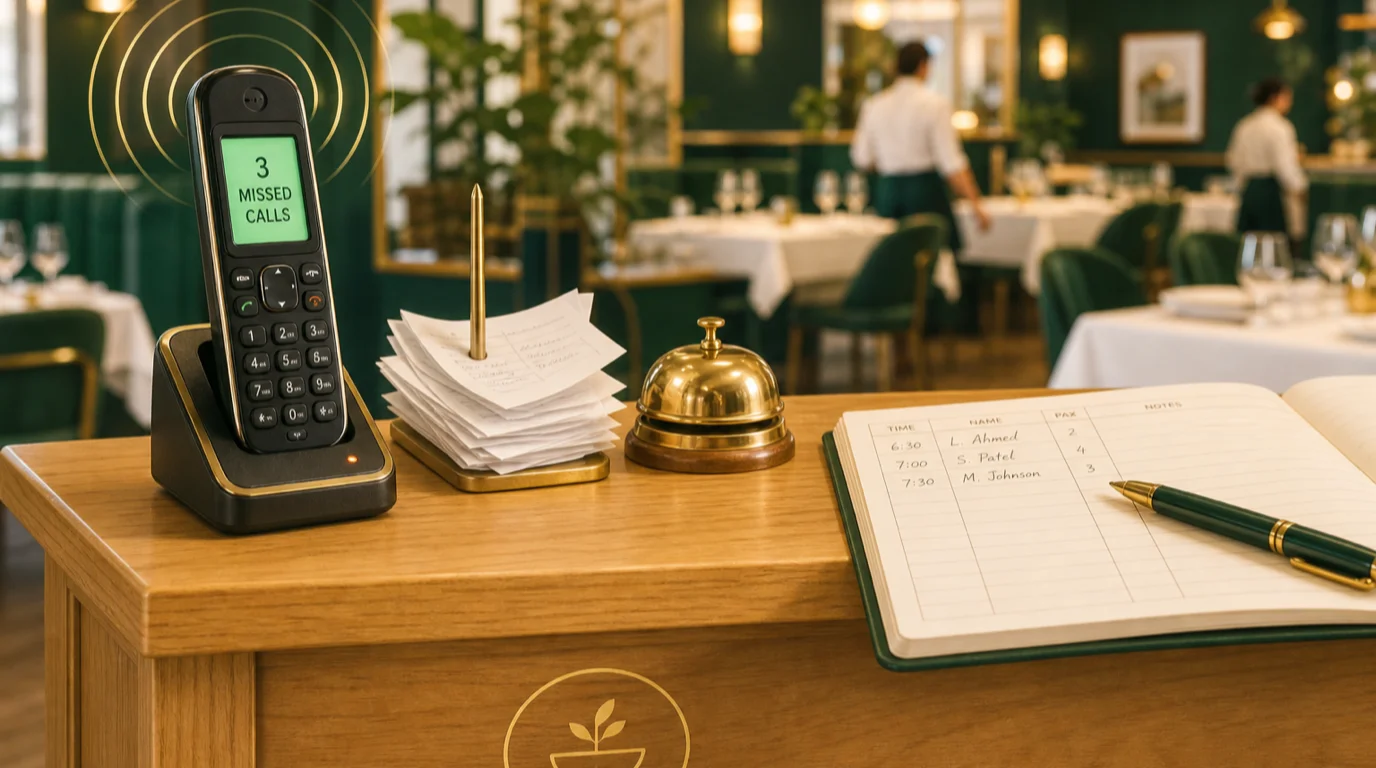
Here is the case for it, and it has nothing to do with technology being impressive. The current failure mode is worse than a robot. At 7:40pm on a Friday nobody picks up at all. The phone rings out next to the till while two servers run a full section, and the person calling books somewhere else.
Do the arithmetic with your own numbers rather than a vendor's. Pull the call log from your phone system or the handset for one week and count what went unanswered. Thirty missed calls, one in four of them a booking, an average spend of thirty five dollars a head for two: that is five hundred dollars of walk-away a week. If the number comes back at four missed calls, close the tab and go fix something else.
If you do trial one, insist on four things. It answers hours, address, parking and the basics of your allergen policy without inventing anything. It writes bookings into the same system your floor plan reads, not a separate inbox somebody has to copy from. It hands off to a human the moment it hears a complaint, an accessibility need or a large party. And it says clearly that it is an AI, which as of August 2026 in the EU is not a courtesy.
The counterweight deserves airtime. TouchBistro's data has phone answering and voice ordering as the least adopted uses of AI, and their own recommendation is to let AI work behind the scenes and keep guest conversations human. That is a defensible position. Mine is narrower: an AI that answers at 7:40pm beats a phone nobody reaches, and both beat a voice agent trying to upsell a tasting menu.
The European part the US articles skip
Article 50 of the EU AI Act applies from 2 August 2026, with Commission guidelines adopted on 20 July 2026. Penalties run to fifteen million euros or 3% of worldwide annual turnover. For a restaurant group that number is theatre, but the obligations themselves are small, specific and cheap to meet if you know them.
Four things matter in practice. First, if a chatbot or voice agent talks to your guests, people have to be told they are dealing with AI. That design duty sits with the provider, meaning your vendor, so make it a procurement question and get the answer in writing. Second, as the deployer you carry the duty to inform anyone exposed to emotion recognition or biometric categorisation. Third, and this one catches people out: emotion recognition in the workplace has been prohibited outright since 2 February 2025, with only a narrow medical or safety exception. The camera that scores whether your servers smiled enough is not a compliance project, it is a banned practice. Fourth, machine-readable marking of AI-generated content sits with providers, with systems already on the market getting until 2 December 2026, which is worth knowing before you publish a menu photo a model produced.
None of this replaces GDPR. Guest data pushed into a tool for targeting still needs a lawful basis, a retention limit and a processor agreement. Three questions cover most of the risk: where is the data processed, is our guest data used to train your models, and can you show us your Article 50 disclosure.
Your data is the prerequisite nobody sells you
Every disappointing AI project I have watched failed here, not at the model. The inputs were not good enough to support the question being asked.
What good enough looks like: sales recorded at item level with modifiers, not daily totals; voids and comps attributed to the user who rang them; waste logged against a reason code rather than tipped quietly; recipes with yields somebody has actually weighed; supplier invoices matched to line items so a price rise shows up as a number instead of a feeling. Per-user logins are not a nice-to-have here, they are the whole audit trail.
Eighteen months of clean history is a fair floor if you want seasonality. Twelve will do at a push. Three months of data cannot tell a model that August is quiet, so it will confidently forecast a normal August and you will over-order into a dead week.
None of this is exciting and all of it is cheaper than the software. It also pays off with or without AI, which is the best argument for doing it first.
What it should cost, and the test that decides
Three pricing shapes are common. A flat monthly fee per venue, usually because the feature is bundled into software you already run. A per-call or per-order fee, which is how most phone agents price. And per-seat licensing for the drafting tools. Watch the middle one: per-order fees scale with your success and land on a median full-service margin the NRA put at 2.8% in 2024. Growth that costs you margin is not growth.
The business case fits on one page. Name the task. Baseline it for two weeks in hours or dollars, measured, not remembered. Estimate the saving, subtract the subscription, and write down a date on which you will kill it if the number has not moved.
Invoice capture, worked through: sixty invoices a month at three minutes of keying each is three hours, call it fifty four dollars of loaded labour, plus the price rises nobody spots. A forty dollar tool that codes 90% correctly and flags the rest is an easy yes. A two hundred dollar tool that still needs your bookkeeper to check every line is a no, however good the demo looked.
Then ask the question vendors like least. What happens when it is wrong? Who notices, how quickly, and what does the mistake cost? A forecast that is off by 10% costs you some waste. A phone agent that quotes the wrong allergen answer costs you rather more than a subscription.
A 90-day trial that does not risk service
Pick one task with a number attached and spend the first two weeks baselining it. Hours, dollars, error counts, whatever the task produces. Skip this and you will be arguing about feelings in month three.
Weeks three to six, run the tool in parallel with the manual method and change nothing else. Nothing guest-facing yet. You are looking for how often it is wrong and how obvious the errors are, not for magic.
Weeks seven to eleven, if it is beating the baseline, remove the manual step and keep a written note of everything that breaks. That note is the real deliverable, because it tells you whether the tool degrades gracefully or takes the service down with it.
By day 90, decide: keep it, kill it, or extend to one more back-office task. Only after a back-office win would I let anything AI-shaped touch a guest. And nothing in a pilot goes near the payment path or the allergen data during service. Ever.
What I would ignore this year
Voice ordering in a dining room where acoustics and atmosphere are half of what people are paying for. Robot servers, which remain a marketing spend with a maintenance contract. Dynamic pricing on a thirty-item menu, where you will annoy regulars for the sake of a rounding error, and where a proper look at menu pricing strategy pays better. Anything requiring you to export your entire sales history into a vendor's platform with no documented way to get it back out. And anything sold to you on the strength of the letters A and I rather than the specific task it removes from somebody's day.
The 42% of operators the NRA found unprofitable in 2025 did not get there for lack of a model. They got there on food up 38% since 2019, labour up 35% and card fees up 40% since 2020. AI can shave a point off waste and give a manager back four hours a week. Hold it to that, and it earns its place. Ask it to fix your economics and it will just add a subscription to the list.
Two things to do this week, both free. Count your unanswered calls for seven days, which tells you whether the phone case is real in your building. Then pull three months of item-level sales and look at whether modifiers, voids and waste are actually in there, which tells you whether any forecasting tool has something to work with. Pick one task after that. Not a strategy.
Read next: building a restaurant tech stack, restaurant industry statistics for 2026, and self-ordering kiosks.