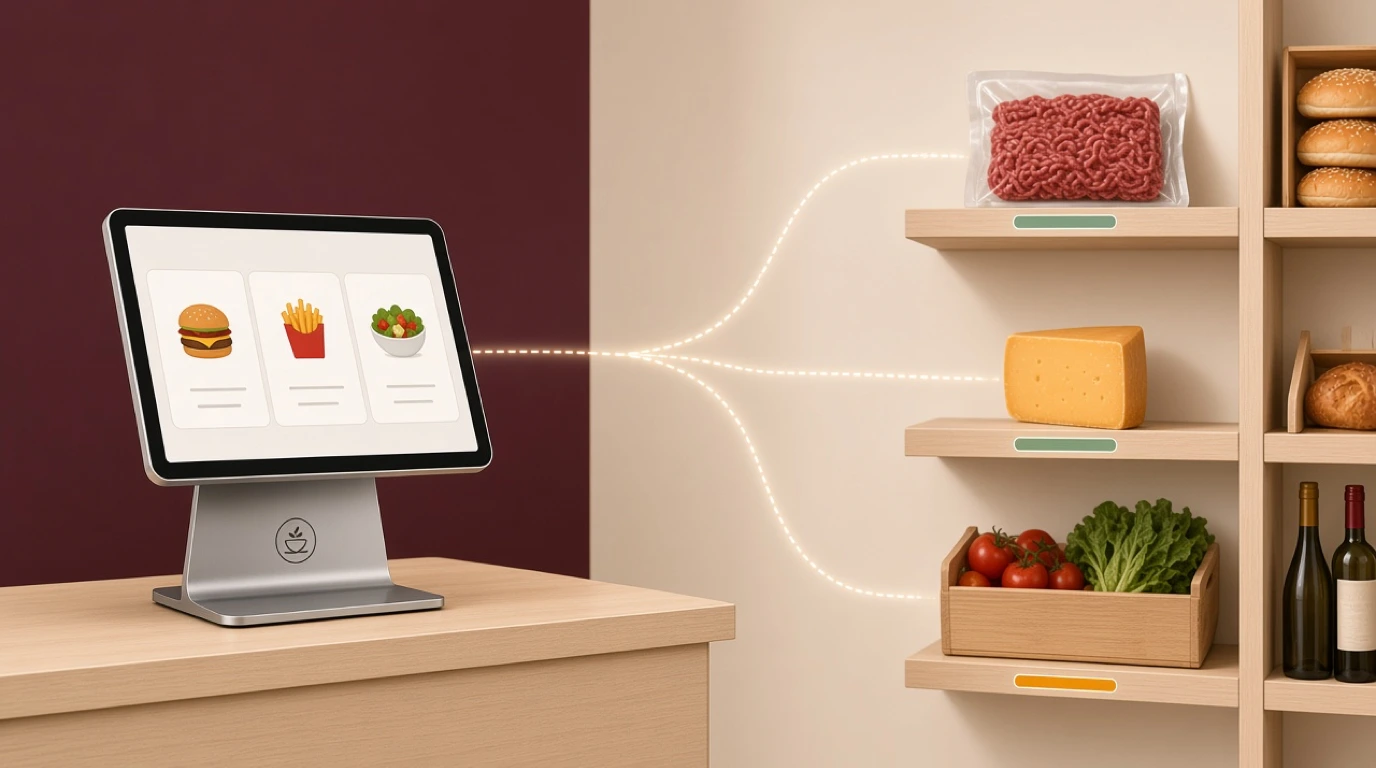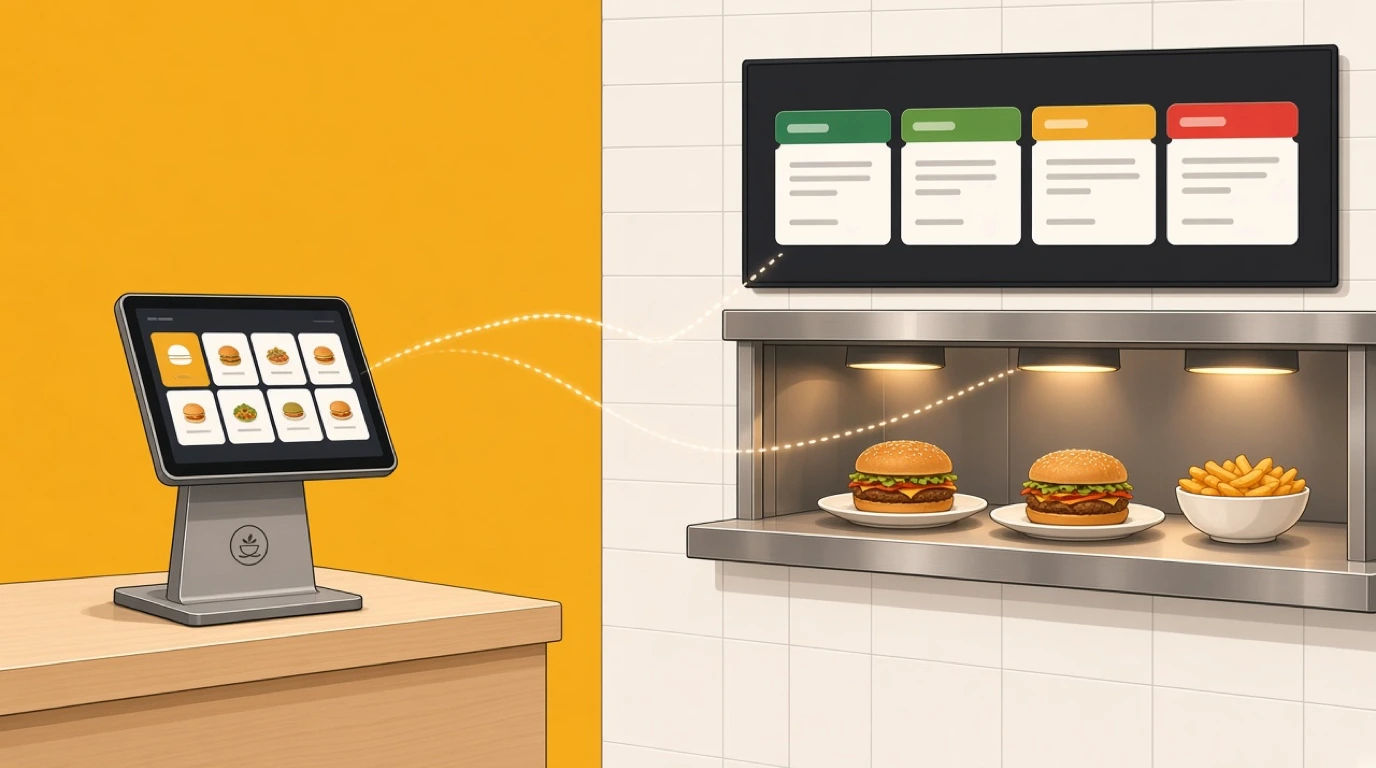

The phone in your apron pocket is already the most-used piece of equipment in the building. Staff check it on breaks, photograph the specials board with it, and text the closing manager from the car park. A pocket POS asks it to do one more thing: take the order. That sounds like a small step, and technically it is, because restaurant POS software now runs perfectly well on a handset. Operationally it is not small at all. Shrinking the till from a fifteen inch counter screen to something the size of a passport changes what a server can do with one hand, how deep your menu can go before it stops being usable, and what happens at twenty to ten when the battery hits four percent.
This is not a device review. There is no best phone for the job, and the spec sheet matters far less than anyone expects. What matters is the fit between a small screen and the way service actually moves, plus four decisions that only get made properly if you make them before rollout: which devices, whose devices, what the app does with no signal, and how a card gets charged when the guest is fifty metres from the nearest counter. That last one catches people out, so restaurant card payments get a section of their own further down.
A pocket POS is a constraint, not a category
Vendors sell "handheld" as a hardware line. It is more useful to think about it as a constraint you are choosing to accept, because the constraint is what produces both the benefit and every problem in this article.
Here is the test. Can the person using it be holding something else at the same time? If yes, it is a pocket POS. If they need to put the tray down, set the device on a table, or use a second hand to steady it, you have a portable till instead. Useful, but a different animal, and it will not change how service moves.
Three form factors, three different jobs. A fixed station has a big screen, a fixed position and years of muscle memory behind it, which is why it is still the fastest way to ring a complicated order. A tablet is portable but wants either a stand or a forearm. A pocket POS lives on the body, comes out mid-stride, and goes back. The screen difference is larger than it sounds: a six inch phone gives you roughly a third of the usable area of a ten inch tablet. You are not designing a smaller version of your till. You are designing a different thing.
What one thumb can actually reach
Pick up your phone in one hand right now and, without shifting your grip, sweep your thumb across the screen. You will trace a rough arc from the bottom corner nearest your palm up to about two thirds of the way along the opposite edge. Everything inside that arc is cheap to reach. Everything outside it, and the far top corner in particular, costs a grip change.
The far top corner is exactly where a designer raised on desktop software puts the back button. And the send button. Watch what a server does when the primary action sits up there: they stop walking, bring the second hand across to steady the phone, tap, and carry on. Two seconds. Fine once. Two hundred times a night, with a tray in the other hand, it is the reason the device ends up in a drawer by week three.
Tap targets need to be bigger than the interface guidelines suggest, because the guidelines assume a stationary user with dry hands. Service is neither. Hands are wet from the glass wash, greasy from a plate rim, occasionally gloved. A target that works at rest gets missed at pace, and a missed tap on a POS is not a neutral event: it is a wrong modifier that reaches the pass and comes back as a remake.
You can measure this without a lab. Have someone ring your five most common orders on the candidate app and count two things: taps per order, and grip changes per order. More than two grip changes and the layout is fighting the hand.
Your menu will not fit, and that turns out to be useful
A station can carry a hundred and forty buttons across nine categories and nobody complains, because the screen is big and the operator is standing still. A phone gives you somewhere between eight and twelve comfortable targets per screen. Everything else is a scroll or a tap deeper.
Most operators react to that by trying to cram the full menu in. The better reaction is to notice what the constraint is telling you. In most venues the top twenty items account for the large majority of covers. That long tail of items that sell twice a week does not need to be two taps away. It needs to be findable.
Depth is what actually hurts, not breadth
Count the taps on a real order. Category, item, modifier group, modifier, back, confirm. That is six before the ticket exists. Now add a burger that needs a doneness, a side swap and an allergy flag and you are at nine or ten. Multiply by two hundred covers.
Set a working rule: for the twenty items that make up most of your covers, no item should be more than three taps from the order screen to the ticket. If it is, the fix is usually not a faster device. It is a modifier structure that was designed for a big screen and never revisited, or a category tree that mirrors your printed menu instead of your order frequency. Those are the same edits that make a mobile ordering menu work for guests, so the work pays twice.
What to do with the long tail
Search. On a small screen a decent search field beats a category tree every single time. Three characters should be enough to land a wine. Staff pick this up faster than you expect because it is exactly how they use every other app on the same device.
Keep the grid for the movers, put the rest behind search, and let the app learn. An order screen that promotes what this server sold in the last hour is worth more on a phone than on any other screen size, because the space it saves is space you do not have.

The "runs on any device" part matters more than the spec sheet
Here is the thing that separates a pocket POS as software from a pocket POS as a product you buy: whether it is tied to the vendor's hardware.
Tableview runs on the devices you already have. The same account, the same menu, the same permissions, in a browser or as an app, on Android and on iOS. Put it on a cheap Android handset for the terrace, on a server's own phone for order taking, on a ten inch tablet at the host stand, and on the manager's laptop for the end of day. The layout adapts to the screen. The data underneath is one system, so an order started on a phone at table nine is the same order the counter sees thirty seconds later. There is no separate "handheld edition" with two thirds of the features missing, which is a real pattern worth checking for when you demo anything.
Why hardware you already own changes the math
A dedicated handheld terminal is one of the most expensive screens per square inch you can buy, and it needs a case, a charging cradle and usually a contract. Kitting out eight servers is a capital decision. Those same eight servers are already carrying capable computers, and even if you decide to buy rather than borrow, a mid-range Android handset costs a small fraction of a purpose-built terminal. The gap is a multiple, not a percentage.
Replacement is the part people forget. When a proprietary terminal dies in month fourteen, you open a support ticket and wait for a courier. When a commodity handset dies, somebody drives to the electronics shop at the retail park and you are trading again the same afternoon. Downtime, not purchase price, is where locked hardware actually bills you.
Then there is the exit. If your POS only runs on the vendor's terminals, changing POS means changing hardware too, and that turns a software decision into a capital one. Vendors know this. It is why the hardware is sometimes cheap and the software rarely is.
What to standardise anyway
"Runs on anything" is not the same as "run it on anything", and pretending otherwise gets you a support problem instead of a hardware bill. Set a floor and hold it: a minimum OS version you actually test against, a screen no smaller than about five and a half inches, and one or two approved models rather than eleven. One model means one case, one charging setup, one set of training screenshots, and a manager who can fix the common problem without calling anybody.
Keep two charged spares in the office. Not one.
Personal phones or the venue's?
Both work. The question is who carries the risk, and the answer differs by what the device is allowed to do.
Bring your own device costs you nothing up front, needs no charging logistics, and skips the training curve because people already know their own phone. The trade is control. You cannot compel an OS update, you cannot wipe a personal handset, and a server who quits after a bad Saturday walks out of the building with your app still installed. Venue owned devices invert all of that: you pay for them and you charge them, but they stay behind the pass and you decide what happens to them.
Most operations land in the middle. Venue devices for anyone who touches a payment, personal devices allowed for order-only roles, and a single rule that survives both: every person signs in as themselves. More on why that matters below.
Battery is the failure mode nobody demos
No vendor has ever opened a demo by telling you what their app does to a battery. It is the first thing that will bite you.
POS apps keep the screen awake, and the screen is far and away the biggest draw on a phone. Run one through a long dinner service at high brightness and a mid-range handset will finish the shift somewhere uncomfortably low. Outside, it is worse: a sunny terrace forces brightness to maximum, which can roughly double consumption compared with the same device indoors.
Four habits fix most of it. Charge to full before service rather than topping up during it, because a device on a cable is a device nobody is carrying. Keep spares on a charger behind the bar and swap at the shift change instead of at the crisis. Set the screen lock to a few minutes rather than thirty seconds, or your staff will spend the night unlocking instead of serving. And retire devices on battery health, not on whether they still switch on: a handset that comfortably ran a full Saturday last winter may not manage it eighteen months later.
Ask any vendor what their app draws per hour on a named device. The good ones have measured it. Most have not, which is itself an answer.
Pockets go where the wifi does not
Wifi that was designed for a dining room does not cover a car park, a courtyard, a function room in the basement or the far end of a terrace. A fixed till never found those gaps because a fixed till never went there. A pocket POS finds every one of them in the first week.
Walk the actual service route with the app open before you commit. Not a coverage map, not the router's admin page: the route, at the time of day you care about, with the doors in their normal position. Wifi behaves differently in a full room than an empty one, because bodies absorb the signal.
Then get specific with the vendor about what happens when the signal drops mid-order. The question is not "do you work offline", because everybody says yes. The question is whether the app queues the order locally and reconciles when it reconnects, and what it does about a card. Ask them to put the device into airplane mode halfway through an order during the demo. A surprising number of demos have never been run that way, and you learn a lot from how quickly they agree.
Where the gaps are structural rather than fixable, a data SIM in the device costs less per month than a single call-out to re-cable a courtyard, and it fails independently of the building's network, which is the real reason to have it.
Taking money on a phone
Three patterns, and the right one depends on your market and your service style more than on your POS.
Pairing the phone with a separate card reader over bluetooth is the most common. It works, and it is two objects to carry, two batteries to keep alive, and one pairing that will drop at the worst possible moment. Tap to pay directly on the phone, using the handset's own contactless hardware, reduces that to one object and is the cleanest experience when your market and card mix support it. Sending the guest a payment link or a code to settle on their own phone removes your hardware from the equation entirely, and moves the dependency onto the guest's data signal, which on a beach is not always an improvement.
Whichever you pick, test the tip screen. On a small display the tip prompt is the highest value screen in the entire application and it is very often the worst designed one: options too close together, the custom amount hidden behind an extra tap, or a layout that makes the guest hunt while a server watches them do it. A tip screen that costs you a few percent will quietly outweigh whatever the software saved you.
One non-negotiable on the compliance side: card data must never come to rest on the handset. The reader or the tap to pay stack should encrypt at the point of capture, and the phone should only ever hold a token. If a vendor cannot explain that boundary clearly in one answer, keep asking until they can.
Security when the till goes home in a coat pocket
A station is bolted to a counter inside a locked building. A pocket POS spends part of its life on a bus. Plan for that difference rather than discovering it.
Individual sign-in is the one that matters most, and it is the one most often skipped because a shared PIN is convenient during a rush. Skip it and every report that attributes an action to a person becomes decoration. Voids, comps, discounts and refunds are the numbers you would actually investigate one day, and they are worthless if four people share a login.
Beyond that, the list is short. Device lock on, measured in minutes. The ability to revoke a single device from the back office, tested once while nothing is wrong, so you know where the button is. A written procedure for a handset that goes missing on a Saturday night, because the middle of service is a bad time to invent one. And on personal devices, accept the limit honestly: you cannot wipe a phone you do not own, so what you need is to kill the session and the data behind it.

Where a pocket POS earns its place
The gain is almost always the same thing wearing different clothes: you stop walking to the machine.
In a sixty cover room a server makes dozens of round trips to a fixed terminal across a shift, and each one costs half a minute by the time you count the queue behind it. Recover even half of that and you have handed back a meaningful slice of the shift, spent on the floor rather than in a line at the till.
Some places the difference is not marginal at all. Anywhere with no counter to walk back to: pool decks, beaches, gardens, festivals and markets, where the alternative is a paper pad and a transcription error. A queue at a takeaway POS counter, where one person walking the line taking orders converts waiting into throughput without a second till. Mobile operations generally, where a food truck POS has nowhere to put a station in the first place. Busy bars, where a runner working a queue of drink orders beats three people crowding one screen, which is the pattern most bar and nightclub POS setups eventually arrive at. And function rooms, where the service area changes every week and the cabling never follows.
Tableside payment deserves its own mention because it changes table turn rather than order speed. The gap between "can we pay" and the card actually clearing is dead time on your table, and closing it at the table is the single easiest minute to win back in a busy room.
And where it does not
A phone is the wrong screen for the pass. Kitchen staff need something readable across the section, at a glance, with wet hands nowhere near it, which is a KDS and not a handset.
High volume bar counters at peak are usually still faster on a fixed screen. The layout never moves, the bartender never looks down, and muscle memory beats any amount of good mobile design. Long complicated tabs are the other honest limit: forty lines split six ways is possible on a phone and unpleasant on a phone. Do the ordering in the pocket and the splitting on a bigger screen.
Anything with real typing in it belongs elsewhere too. Menu edits, end of day, rota changes and report reading are laptop jobs, and the fact that the software can technically do them on a handset is not a reason to.
There is also a room-reading question that has nothing to do with technology. In a tasting menu dining room a phone in a server's hand reads differently than a leather pad does, whatever the software behind it. Some rooms will not care and some will, and you know which one you run.
A two week pilot that tells you the truth
Do not roll it out. Pilot it, narrowly, and measure the few things that actually predict whether it will stick.
Week one: two servers, one section, orders only, no payments. Record taps per order for your five most common orders, where the battery finished the shift, which dead zones showed up, and one number that matters more than the rest: how many times a server walked to the station anyway. That last figure is the whole pilot in one column. People do not walk past a tool that works. If they are still walking, either the phone cannot do something they need or it is slower at something they do constantly, and both are findable in an afternoon.
Week two: add payments to the same two servers. Track failed or retried card attempts, and the elapsed time from the guest asking to the card clearing. Keep an eye on the average tip percentage against the same two servers' history, because that is where a bad payment screen shows up first and it will not show up anywhere else.
Roll it out when the walk count has collapsed and the tip average has not. If you only have room to check one number before you sign anything, make it the walk count, and make somebody actually sit in the section and count. It takes one service and it is more honest than any demo you will be given. From there, the wider question of shortlisting and scoring vendors is a separate exercise, and the POS selection process picks up where this leaves off.
Read next: restaurant POS tablets, Android restaurant POS, and cloud based POS systems.