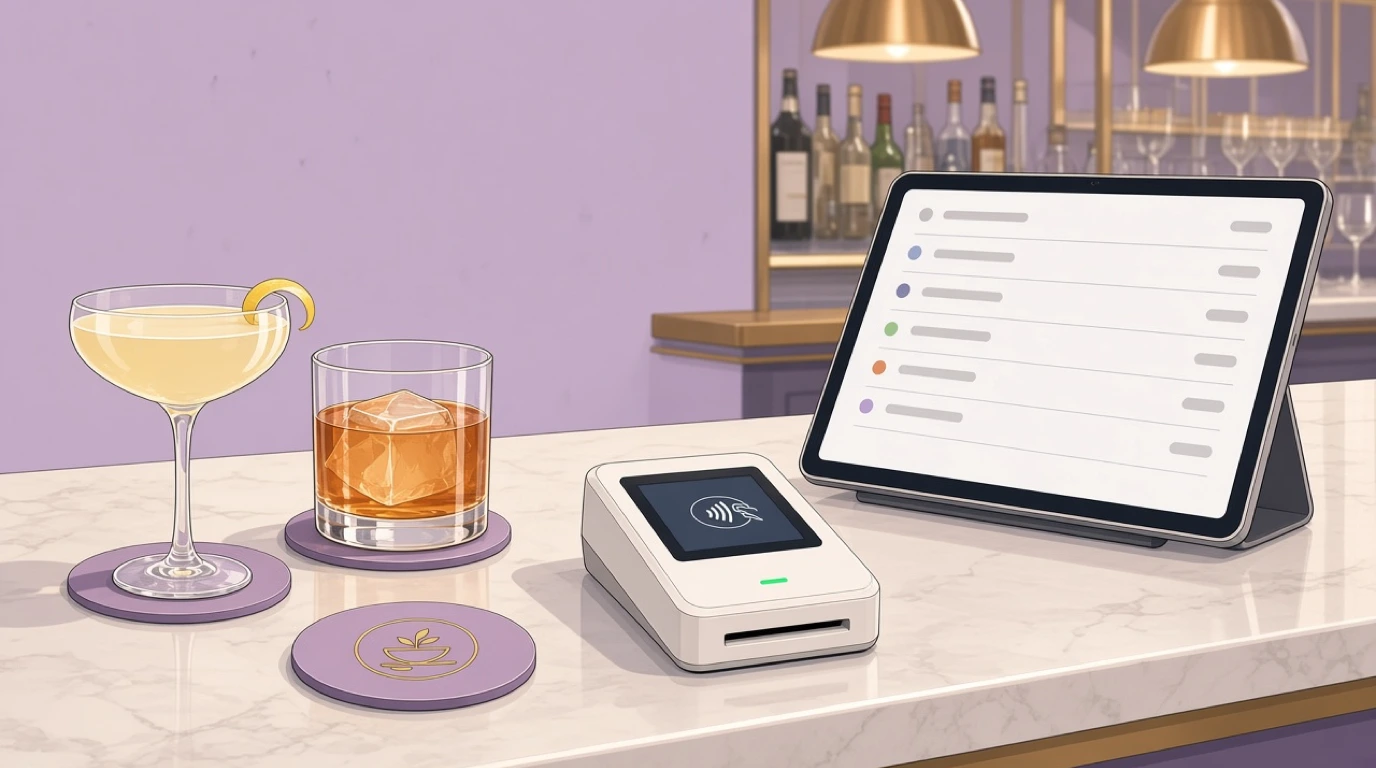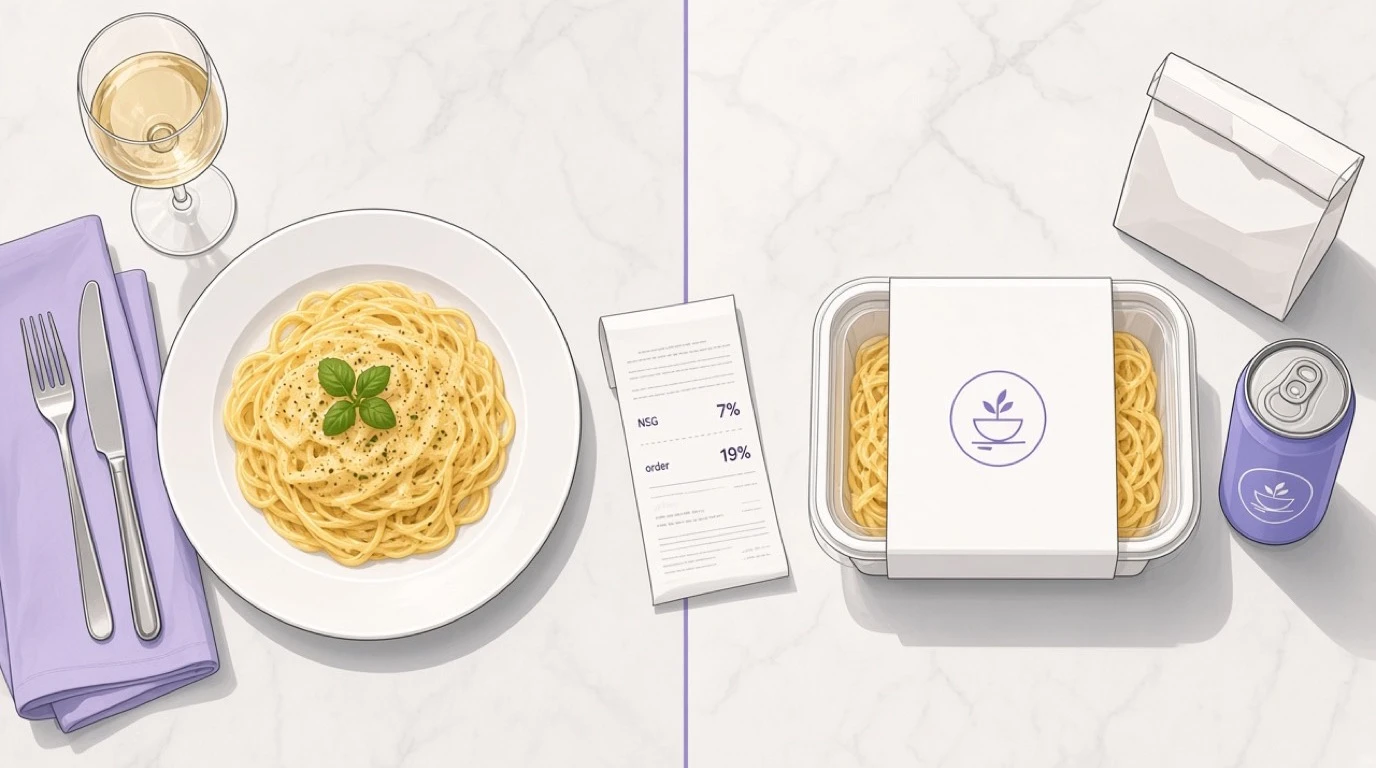

Two restaurants serve the same burger at the same price on the same street. One is packed on a Tuesday, the other is quietly dying. The difference is almost never the burger. It is the ninety seconds before a guest is greeted, the refill that arrives without asking, the mistake that gets fixed instead of defended. Customer service is the multiplier on everything else you do, and unlike your recipes, it cannot be copied from a photo. It can, however, be built deliberately, and the mechanics start with giving your team time: every minute a server spends walking to a terminal is a minute not spent reading a table, which is why a modern restaurant POS that takes orders at the table is as much a service tool as an accounting one.
This guide covers service the way operators actually experience it: the five basics that decide most reviews, standards for each stage of the visit, how to recover from complaints so they create loyalty instead of one-star reviews, training habits that stick, and where tools like e-menu and mobile ordering genuinely help versus where they get in the way. Whether you run a 40-seat bistro or a three-location group, the playbook is the same: make the experience effortless, and make recovery automatic.
What guests actually mean by good service
Ask guests to define great service and they say vague things: friendly, attentive, welcoming. Watch their behavior and the definition sharpens. Guests punish friction. Waiting to be acknowledged. Repeating an order. Cold food that was clearly ready five minutes before it landed. Hunting for the check while a coat is already on. None of these are rudeness; they are logistics failures that feel like rudeness.
That reframe matters because it moves service from personality to process. You cannot hire your way to charm on every shift, but you can design a visit with no dead spots. Warmth on top of a broken system reads as apologetic. Efficiency with even modest warmth reads as professional. Aim for both, but fix the system first.
There is a useful mental exercise here: eat at your own restaurant as a stranger once a month. Sit in the worst seat. Order the thing nobody orders. Time your own greeting. Operators are usually shocked by what the fifth table from the kitchen door experiences on a Friday, because the view from the office is not the view from the chair.
The five basics that decide your reviews
Speed. Greet within one minute of seating, even if only to say you will be right back. Drinks in under five. Apps in the window your concept promises. Speed is the single most reviewed dimension of service.
Accuracy. The order arrives as asked. Modifiers respected, allergies treated as sacred, no surprise onions. One wrong plate erases ten perfect ones in a guest's memory.
Attentiveness. The refill offered before the glass is empty, the check dropped when the table's energy says done. Attentiveness is anticipation, not hovering.
Courtesy. Adapted to the table. The date night wants privacy, the solo diner might want a chat, the business lunch wants invisibility and speed. Reading the room is the skill.
Recovery. Things will go wrong. The difference between a one-star review and a loyal regular is almost always what happened in the three minutes after the mistake.
Service standards stage by stage
Write standards for each moment of the visit so 'good service' means the same thing on Tuesday lunch and Saturday night.
Arrival: door acknowledged in seconds, wait quotes honest (an accurate 25 minutes beats a fantasy 15), waiting guests given somewhere to be and ideally something to sip.
Seating: menus that are current, a table that is actually ready, no wobbles, no wet spots, no being marched past better empty tables without explanation.
Ordering: server knows the menu cold, including what is 86'd, what contains the major allergens, and what to recommend when asked (a real answer, not 'everything is good'). Questions answered without a trip to the kitchen.
The meal: courses paced to the table, not the kitchen's convenience. Check back within two minutes of food landing, when a problem can still be fixed gracefully.
The check: the most common dead spot in the entire visit. The guest decides they are done a few minutes before you notice; every minute after that is negative time. Pay-at-table kills this wait entirely, which is why it consistently lifts satisfaction scores and, not incidentally, tips.
Departure: a genuine goodbye. The last ten seconds color the memory of the whole visit.
The host stand: your first and cheapest service upgrade
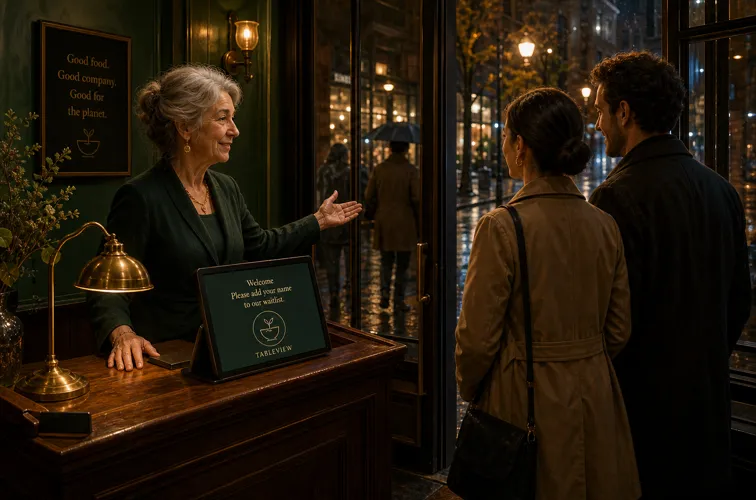
Most operators obsess over servers and treat the host stand as a place to park the newest hire. Backwards. The host controls the first impression, the wait experience, and the pacing of the entire floor, three of the highest-leverage service moments in the building.
A good host does real work: quoting waits honestly and updating guests who are past quote, seating in a rotation that does not bury one server while another polishes glasses, flagging the VIP and the first-timer to the floor, and reading the door (the couple hovering uncertainly at the entrance needs eye contact within seconds, not after the phone call ends).
Give the host stand tools and authority. A waitlist that texts guests beats shouting names over a crowded bar. Visibility into table status beats guessing which four-top is on dessert. And a standing instruction to offer waiting guests water or a menu costs nothing while cutting perceived wait time dramatically. Guests do not actually hate waiting; they hate uninformed, unacknowledged waiting. The difference between the two is entirely the host's craft.
Takeout, delivery, and the service you cannot see
A growing share of your guests never meet your staff, and their service experience is packaging, timing, and accuracy, full stop. Treat off-premise as a service channel with its own standards, because a delivery guest who gets cold fries and a missing side writes the same one-star review as a mistreated dine-in guest, and you never even got the three-minute recovery window.
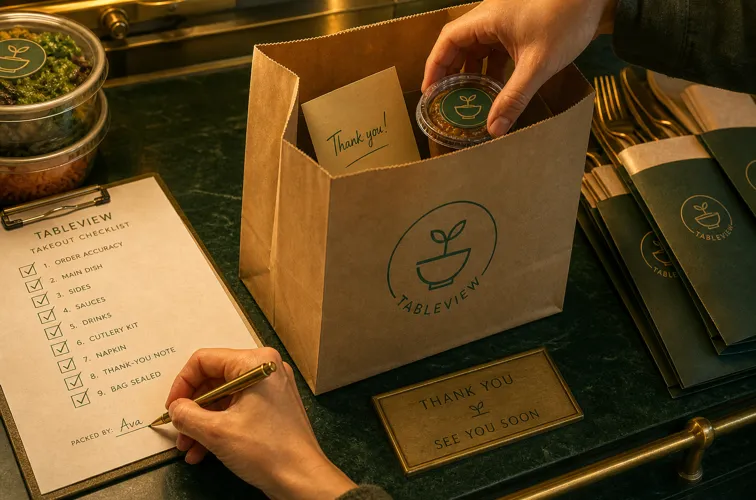
Accuracy is the whole game. A checklist at the pack station (entree, sides, sauces, utensils, napkins) catches the missing dressing before the bag seals. Order-level accuracy checks matter more off-premise than on, because there is no server to flag down.
Timing honesty. Quote pickup times you can hit. A guest who arrives to a not-ready order stands awkwardly at the counter forming their review. Fire off-premise orders in the same flow as dine-in tickets so the kitchen sees real demand, not a surprise stack of paper.
Packaging as hospitality. Fried items vented so they do not steam soggy, sauces sealed, hot separated from cold, and a bag that survives the trip. A handwritten thanks on the bag costs four seconds and gets photographed for social media more often than you would guess.
Recovery still applies. Make it effortless to report a problem (a phone number that answers, not a form), and fix it without interrogation: refund, redelivery, or credit. Off-premise guests remember frictionless fixes precisely because they expect a runaround.
Difficult situations: the scripts nobody wants to need
Every floor eventually faces the situations that do not appear in the employee handbook until after they have gone badly. Decide the play in advance.
The intoxicated guest. Service stops politely and firmly, water and food offered, a cab arranged if needed. The server should never negotiate alone; the manager takes over immediately. This is a legal exposure, not just a service moment.
The camper on a full night. A table lingering two hours past dessert while the waitlist stacks up. There is no perfect move, but the least-bad one is honest warmth: check if they need anything else, present the check, and if the wait is severe, offer to continue their evening at the bar with a round on you. What you cannot do is hover resentfully; guests feel it instantly.
The dispute between tables. Separate first, adjudicate never. Move one party (usually the calmer one, with a comped courtesy), and involve the manager before voices rise.
The guest filming a confrontation. Assume every difficult moment is being recorded. Staff trained to stay calm, lower their voice, and repeat the policy once are protecting your brand on camera; staff who match the guest's energy are producing tomorrow's viral clip.
The no-show reservation and the walk-in you cannot seat. Both are service moments. Hold reserved tables for a stated grace period, release them visibly, and offer the disappointed walk-in a concrete alternative (the bar now, or a booked table tomorrow), not a shrug.
Complaint recovery: the three-minute window
A complaint is a gift wrapped in an unpleasant package: the guest is telling you what would have made them come back, in person, while you can still act. Most unhappy guests say nothing and just never return, so the ones who speak up are handing you a chance the silent majority denied you.
Give the team a sequence they can run without hunting for a manager:
Listen completely. Do not interrupt, do not start solving mid-sentence. Being heard is half the fix.
Apologize cleanly. 'I'm sorry, that's not right, let me fix it.' No 'sorry you feel that way,' no kitchen logistics lecture.
Fix the concrete thing fast. Refire, replace, adjust the bill. Speed of recovery matters more than the size of the gesture.
Empower comps within a limit. A server who can comp a dessert or a round without approval fixes problems in seconds. Set the limit, track usage in the POS so abuse is visible, and let the floor act.
Follow up before departure. A manager touch on the table that had a problem turns 'they messed up' into 'they took care of us.'
Track complaints by type weekly. Three cold-steak complaints in a month is not a service problem; it is a pass problem, and no amount of apology training fixes the window timing.
Reviews are service, delayed
Online reviews are the visible tail of table-level service. The math is brutal: happy guests tell a few people, unhappy ones tell the internet. Respond to every review, good and bad, in a calm, specific voice; future guests read your responses as a preview of how they will be treated when something goes wrong. Never argue, never post the kitchen's side of the story. For the operational side of monitoring and responding, our guide to review and reputation management covers the workflow; the point here is that review management starts at the table, not at the keyboard. Recover well in person and the one-star review usually never gets written.
Regulars: the compounding asset
A guest who visits weekly is worth thousands a year, and regulars are made, not found. The mechanics are simple and mostly free: learn names, remember usuals, greet returning faces as returning faces. The hard part is doing it across shifts and staff turnover, which is where a guest database earns its keep. Notes on preferences, allergies, celebrations, and visit history let a brand-new server treat a five-year regular like a five-year regular. Our restaurant CRM guide covers building that memory into the operation so it does not live only in one veteran server's head.
Reservations deserve the same care: honoring the booking, remembering the request for the corner table, not making a guest re-explain their allergy on every visit. A reservation system that carries notes forward turns bookkeeping into hospitality.
Training that survives a busy Friday
Most service training fails the same way: a binder at onboarding, then nothing until something goes wrong. What works is little and often.
Onboarding that earns the floor. Shadow shifts, menu tastings, the allergy protocol, the greeting standard, and the comp rules, before a new hire owns tables alone. A server who has never tasted the special cannot sell it or answer questions about it.
Pre-shift huddles. Five minutes: one service point, today's 86 list, VIPs and large parties, one recent win or miss. This cadence does more than any annual seminar because it is close to the moment of use.
Role-play the hard 10 percent. The complaint, the intoxicated guest, the allergy order, the camper on a full night. Nobody improvises these well the first time under pressure.
Feedback on observed behavior. 'You greeted table 12 in four minutes' can be coached. 'Be more attentive' cannot.
Audit the system before blaming the people. If ticket times are twenty minutes on a Saturday, the servers are not the problem. Fix scheduling, station layout, and kitchen flow first; service quality is downstream of staffing levels more than of attitude.
Make the standard visible and specific. 'Greet in one minute, drinks in five, check back in two' fits on an index card and can be coached against. A forty-page service manual nobody rereads cannot. Post the handful of numbers that define your service, review them in pre-shift, and update them when the concept changes rather than letting the written standard drift away from what the floor actually does.
Celebrate saves as loudly as sales. Most restaurants publicly praise the server who sold the most wine and silently absorb the server who talked a furious table down from a one-star review. Both created revenue; only one gets a shout-out. Flip that. When recovery stories get told in pre-shift with names attached, the team learns that handling problems well is a skill the house notices, and complaints stop being something staff hide from managers.
Where technology helps, and where it hurts
The test for any tool: does it give staff more time facing guests, or less?
Handheld and tableside ordering removes the walk to the terminal and the transcription errors of paper. Orders hit the kitchen seconds after they are spoken, which shortens ticket times and frees the server for the next table. It also means the person who heard 'severe nut allergy' is the person who types it, with no relay loss.
Kitchen displays coordinate courses so a four-top's mains land together instead of in dribbles, and they timestamp everything, which turns 'the kitchen feels slow' into data you can act on.
Pay-at-table and QR payment erase the longest dead wait of the meal. Guests leave when they want to leave, tables turn faster, and nobody spends the last ten minutes of a nice dinner craning for the check.
QR menus and mobile ordering fit casual and high-volume formats where speed is the promise. In full service, use them to supplement, not replace, the human touch; a tasting-menu guest scanning a code for the wine list reads as cost-cutting, not convenience.
The failure mode is technology that serves the operator while adding friction for the guest: kiosks with confusing flows, QR-only menus with no printed backup for the guest whose phone died, tablets that turn servers into IT support. Every tool should pass the effortless test from the guest's chair.
Measuring service without a mystery shopper
You cannot coach what you do not measure, and most service signals are already in your data.
Ticket and course times from the kitchen display: the gap between promise and delivery, by daypart and station.
Comps and voids by reason from the POS: recovery spend is a service metric. Rising refire comps point at the kitchen; rising 'guest unhappy' comps point at the floor or the pacing.
Table turn time versus your target: too slow suggests dead spots (usually the check); implausibly fast on busy nights suggests rushed guests.
Repeat-visit rate from reservations and the guest database: the single most honest service score, because guests vote with their return.
Review theme tracking: tag reviews by theme monthly (wait, accuracy, staff, value). Three mentions of the same failure is a pattern, not bad luck.
Review these weekly alongside your sales numbers. Service metrics drift slowly and then all at once; the operator who watches them catches the slide while it is still a coaching conversation, not a Yelp trend.
Service by concept: same principles, different execution
Quick service and fast casual: speed and accuracy dominate. The service moments are the greeting at the counter, order accuracy, and how mistakes get fixed at the window. A wrong order remade instantly with a smile is a service win that costs three dollars.
Casual dining: the widest service range and the hardest to standardize. Pacing is the differentiator: guests want a relaxed meal that never stalls. This is where handhelds and pay-at-table earn the most, because the formats are high-volume enough for dead spots to compound.
Fine dining: anticipation is the product. Guests should never have to ask for anything, including the check. Technology belongs backstage here: the guest database that recalls the anniversary, the KDS timing the fire on course four, invisible from the dining room.
Bars and nightlife: acknowledgment is everything. Guests forgive a wait they feel seen in and despise being invisible at a crowded rail. Train bartenders to make eye contact and sequence fairly; it buys more goodwill than speed alone.
Building a service culture that outlasts you
Standards decay without reinforcement, and the reinforcement has to come from what managers do, not what the handbook says. If the manager walks past an unbussed table, the standard is now unbussed tables. If the manager thanks a server for flagging a problem, the standard is now honesty about problems.
Hire for disposition, train for skill: you can teach wine service; teaching someone to care about strangers is slower. Pay attention to how candidates treat the host on the way into the interview. Staff your floor so attentiveness is physically possible; a server with ten tables is doing triage, not hospitality. And treat your team the way you want guests treated, because service culture is downstream of how staff are managed. Resentful employees deliver resentful service with perfect scripts.
Start small and concrete this week: set the one-minute greeting standard, give servers a comp limit, add a five-minute pre-shift, and pull ticket times from the kitchen display. Service is not a personality trait your restaurant either has or lacks. It is a system, and systems can be built.
Read next: Review and reputation management, Tableside ordering and pay-at-table, and Restaurant table turnover.