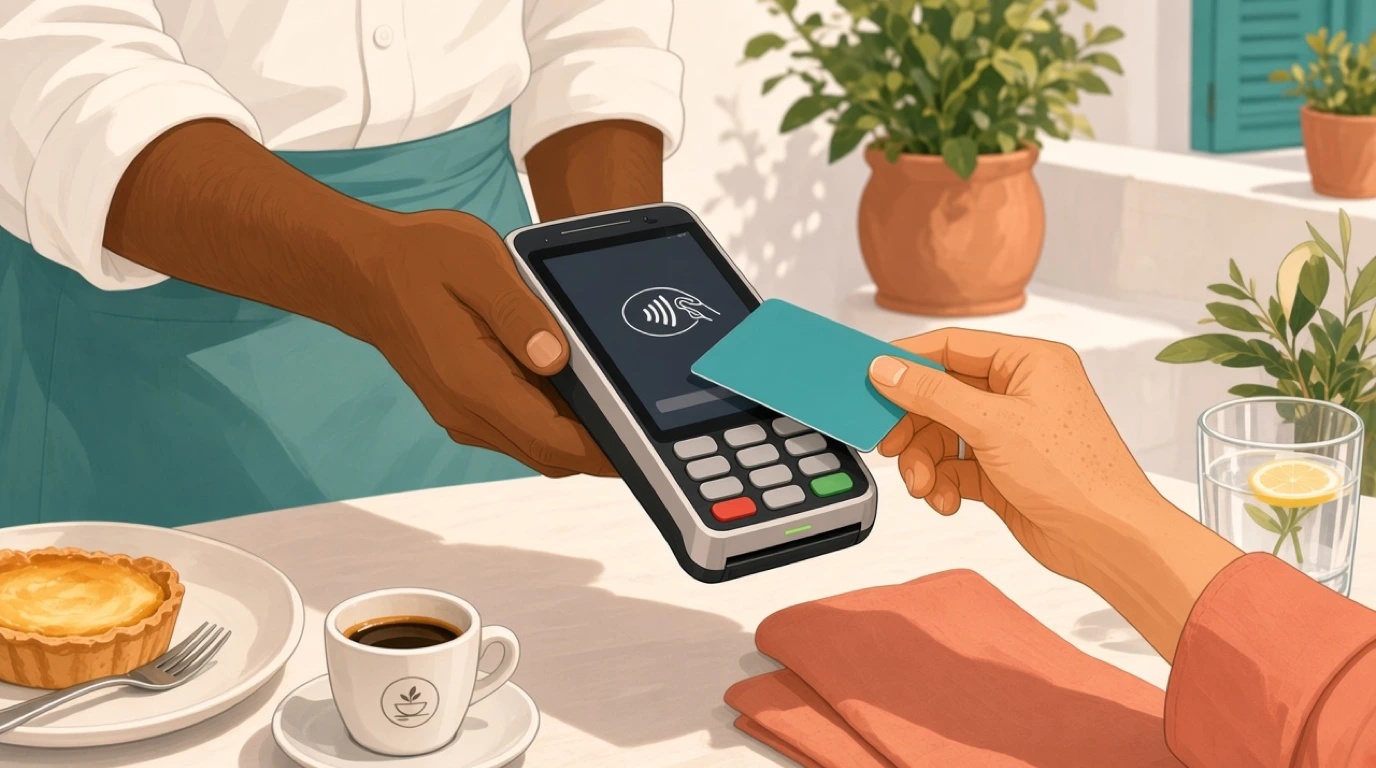
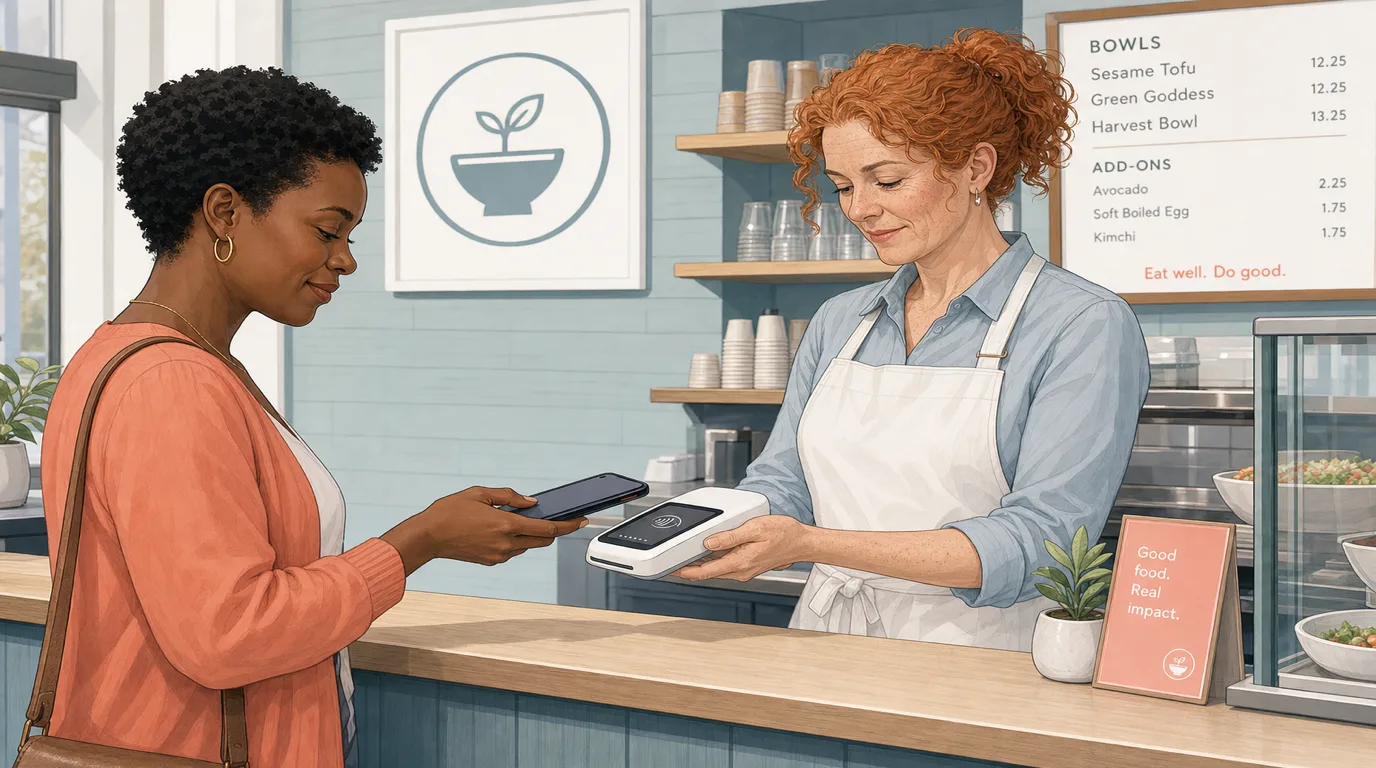
Somewhere between the tip jar and the tap-to-pay terminal, cash stopped being the default way guests pay for food. Card and mobile payments now carry the overwhelming majority of restaurant transactions, and a growing number of operators have asked the obvious next question: why keep the drawer at all? The arguments are real on both sides, counting cash costs unglamorous labor every single day, while refusing it turns away real guests and is actually illegal in a lengthening list of cities. The answer runs through your payment stack and your POS reports, not through opinions, because the cashless decision is ultimately arithmetic wearing a culture-war costume.
This guide does the arithmetic in the open. We will count what cash handling genuinely costs (it is not zero, and it is not small), what card processing costs in its place, where the law stands, what happens to tips, which guests a no-cash policy excludes and what that costs in goodwill, and the cash-light middle paths that capture most of the savings without most of the risk. At the end there is a decision framework you can run against your own tender report. For the wider payments picture, our processing fees guide pairs directly with this one.
What going cashless actually means
Definitions first, because three different policies get called cashless. Fully cashless means the venue does not accept banknotes at all: every transaction is card, mobile wallet, or digital channel, and there is no cash drawer to count. Cash-light means cash is accepted but deliberately minimized: card-first prompts, limited cash tills, policies like no bills over fifty, and digital channels that never touch cash anyway. And channel-cashless describes the quiet version most restaurants already run: online orders, QR ordering at the table, and kiosks are card-only by nature, so a growing slice of revenue is cashless regardless of counter policy.
The distinction matters because the costs and benefits scale differently. The big savings, no drawer counts, no deposits, no float, no skim risk, only arrive when cash is fully gone; a single cash-capable till preserves most of the handling overhead at lower volume. The big risks, legal exposure and excluded guests, also only attach to the full version. That asymmetry is why the honest analysis usually lands somewhere on the spectrum rather than at either pole, and why the right question is not cash or no cash but how much cash infrastructure does this operation still earn its keep.
The case for going cashless
Speed is the visible benefit. A card tap completes in seconds; a cash payment involves announcing the total, receiving notes, counting change, and the fumble in between, an eternity at a busy counter. Shaving even ten seconds off a meaningful share of transactions adds real throughput at peak, which for line-driven formats is revenue, not convenience. Checkout speed compounds with the other line-killers, kiosks, QR ordering, order-ahead, which is why high-volume counter concepts went cashless first: the whole model is built on flow, and cash is the slowest thing left at the register.
The invisible benefit is bigger. Cash generates a daily tax of labor and risk that operators stop seeing because it has always been there: opening floats counted, drawers reconciled at shift change, discrepancies chased, deposits built, bank runs made or armored pickups paid for, counterfeit notes eaten, and the permanent low-grade shrinkage that cash invites, both the register variety and the robbery variety, a safety issue for the closing crew as much as a financial one. Studies of cash handling in food service consistently land between 4 and 15 percent of cash revenue once all of it is counted. Eliminating the drawer also eliminates a whole category of reconciliation from the nightly close, and the books get cleaner: every transaction arrives timestamped and matched in the accounting flow, which shortens month-end and removes the oldest audit headache in the industry.
There are softer gains stacked on top. Closing staff leave earlier and safer, with no deposit bag in anyone's car. Hygiene improves at food-handling counters where the same hands passed notes and plates. Forecasting sharpens, because digital tender data is complete and immediate rather than reconciled days later. And the guest data layer, which cash keeps anonymous by nature, starts feeding loyalty and repeat-visit tools. Individually each of these is minor; collected, they explain why operators who go cashless rarely reverse the decision voluntarily, the reversals that happen are almost always legal or community-driven, not operational regret.
Counting the true cost of the drawer
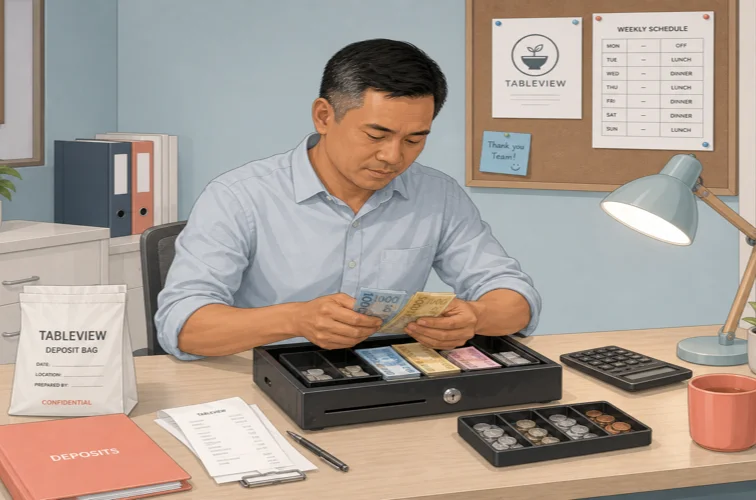
Because the cash costs hide in labor, most operators have never actually totaled them, so do the inventory once, honestly. Daily counting: opening float verification, mid-shift drops, shift-change counts, and the nightly close, at a realistic 30 to 60 manager-minutes a day, that is 180 to 365 hours a year of your most expensive hourly labor doing arithmetic a processor does for free. Banking: either armored pickup fees (commonly 50 to 150 dollars a month) or the unpriced version, a manager driving deposits to the bank, with the detour risk that entails. Float capital: two hundred to a thousand dollars per till sitting in drawers earning nothing. Discrepancies: the five-dollar shortages that get shrugged off nightly compound to four figures a year, and chasing them costs more manager time than the money itself.
Then the loss categories. Counterfeit notes are eaten whole by the restaurant. Skimming, the unrecorded sale, the voided-then-pocketed transaction, is the oldest fraud in food service and is only possible where cash is; every audit-trail feature in a modern POS exists because of it. And robbery targets cash businesses specifically, which makes the drawer a safety exposure for the closing team, not just a financial one. Put a number on each line for your own operation, divide the total by your cash revenue, and you have the handling rate that the processing fees must beat. For most full-service independents the honest figure lands between 5 and 9 percent of cash taken; for cash-heavy, low-check formats it can run past 12. Almost nobody who runs this exercise keeps thinking of cash as the free tender.
The case against: fees, exclusion, and fragility
The first argument against is the one on your processor statement: every dollar that moves from cash to card pays 2.4 to 3.5 percent plus a fixed per-transaction fee, and the fixed fee bites hardest exactly where cash was most common, small checks. On a 4 dollar coffee, a 30-cent flat fee is 7.5 percent before the percentage even starts. If your cash handling costs 7 percent of cash revenue and your blended processing costs 3 percent, cashless wins; reverse the numbers at low volume with a lean cash process, and it does not. This is why the decision is arithmetic: both sides have real costs, and the ratio differs by operation. Negotiating the processing side matters too, and our card machine guide covers where the hardware and rate leverage is.
The second argument is the guests. Around 4 to 5 percent of US households are unbanked, concentrated among lower-income, elderly, and immigrant communities, and teenagers, tourists with declined cards, and privacy-preferring cash users extend the list. A no-cash sign refuses all of them, which is a values statement as much as a policy, and in some neighborhoods a self-inflicted wound. The third argument is fragility: cash is the payment system that works when the power flickers, the internet drops, or the processor has a bad afternoon. A cashless restaurant with an offline-capable POS can queue card payments through an outage, this is a feature to verify explicitly, per our cloud POS guide, but a venue with no cash path and no offline mode is simply closed. None of these arguments is decisive alone; together they are why the law keeps intervening, which deserves its own section.
What the adoption data actually shows
Strip the headlines and the numbers tell a steadier story than either camp claims. Cash's share of US restaurant payments has fallen to roughly 10 to 15 percent of transactions, from about double that a decade ago, and skews small-check, quick-service, older, and regional; card, wallet, and app payments carry the rest, with contactless the fastest-growing slice. Fully cashless restaurants remain a minority even in card-heavy cities, partly because of the bans, partly because operators discovered the same thing this guide argues: cash-light delivers most of the value quietly. The pattern among big chains is instructive, several tested fully cashless stores, met the political backlash, and settled on card-first operations that still technically take notes.
Meanwhile the channel mix does the converting on its own. Delivery and online orders are card-native; QR menus and kiosks are card-native; reservations with card guarantees are card-native. As those channels grow their share of revenue, the cashless percentage of your business rises without a single policy meeting. The trend line matters more than the snapshot: every year, the drawer serves a smaller slice of guests at the same fixed daily cost of counting it, which is why the arithmetic that said keep cash in 2019 increasingly says otherwise now, and why re-running the numbers annually is part of the framework at the end of this guide.
Where refusing cash is illegal
Cashless bans are the fastest-moving piece of this decision, and they exist because the exclusion argument won politically in city after city. In the United States, New York City, Philadelphia, San Francisco, and Washington DC ban cashless food retail, as do New Jersey, Massachusetts, Colorado, Rhode Island, and Delaware at the state level, with fines per violation and, in some cases, per transaction. Enforcement is complaint-driven and real. Several more states have bills pending in both directions, some banning cashless commerce, some preempting cities from banning it, so the map shifts year to year. Outside the US, the picture inverts by country: several European jurisdictions protect cash acceptance strongly, while the Nordics, the Netherlands, and Australia tolerate cashless venues widely.
The operational takeaways are short. Check the current rule for your exact city and state before any policy change, with your lawyer or your local restaurant association, not a two-year-old blog post. Multi-location operators must check per venue: a group can legally run cashless in one market and be fined in the next, one more thing to standardize carefully in a multi-location setup. And where a ban applies, the game becomes cash-light rather than cashless: the law requires accepting cash, but nothing requires making it convenient, and every mechanism in the middle-ground section below remains available.
Tips, staff, and the cashless back office
Payment policy is also compensation policy. Digital tipping generally lifts tip percentages, screen prompts anchor at 18 to 25 percent where cash jars collected loose change, and counter formats often see the biggest gains. But the money moves differently: card tips flow through payroll rather than leaving in a pocket at midnight, which delays access unless you add same-day payout tooling, makes tips fully tax-visible, and forces the pooling and distribution rules into writing, where, frankly, they always belonged; our tips and service charges guide covers the structures and the legal boundaries, including whether processing costs may be deducted from tips in your jurisdiction (rules differ, check before touching a cent).
For managers, the cashless back office is the quiet payoff: shift changes without drawer counts, closes without deposit-building, no safe, no float, no discrepancy log, commonly 30 to 60 minutes of management labor returned per day, which over a year outweighs many line items operators fight harder about, as our labor cost guide would frame it. Train for the new failure modes instead: the declined-card conversation handled graciously, the offline procedure when the network drops, and the policy for the guest holding only a twenty, because how the team handles that one guest, and how the story sounds when they retell it, is where a payments policy becomes a hospitality reputation.
The cash-light middle ground
Most independents should start here, because cash-light collects the bulk of the savings without the legal risk or the turned-away guest. The mechanics: make card the path of least resistance (terminals facing the guest, tap enabled everywhere, digital tip prompts), consolidate cash to a single designated till so one drawer gets counted instead of four, shrink the float and count it with a bill counter, set friction policies, no notes over fifty, exact change appreciated, and let the card-only channels (online orders, QR tableside, kiosks, delivery) grow their natural share. Each step removes a slice of handling cost while the no-cash sign stays in the drawer.
Measured this way, cash usually completes the argument on its own. Operations that go card-first commonly watch cash fall below 5 to 8 percent of transactions within a year, at which point the remaining drawer costs little and the political question evaporates. Watch the tender-type report quarterly in your KPI review: when cash dips low enough that the single till itself is mostly idle, you can make the final call with data, and in a ban jurisdiction, cash-light simply becomes the permanent, compliant answer. A reverse ATM, a machine converting notes to a prepaid card, is the last-mile tool for high-volume venues that want the fully cashless line speed while technically honoring cash.

What a cashless operation demands from the tech stack
Removing cash removes the payment system that needed no technology, so the systems that remain have to be genuinely dependable. The non-negotiables: terminals with tap, chip, and the major mobile wallets, because in a cashless venue a payment type you do not accept is a guest you cannot serve; an offline mode that queues card transactions locally when the internet drops and settles them when it returns, tested for real, not taken from the brochure; and a second connectivity path, a cellular failover router costs less than one lost dinner service. Redundancy in terminals matters too: with cash gone, a single broken card reader at the counter is no longer an inconvenience but an outage.
Beyond survival, the integration is where the payoff lives. Payments that flow natively into the POS mean every tender is matched to a ticket automatically, which is what makes the no-reconciliation close real rather than theoretical; a standalone terminal that requires typing totals by hand reintroduces exactly the error-and-discrepancy class that going cashless was supposed to kill. Tips need a clean path from prompt to payroll. Reporting needs tender-type detail by daypart, the data this whole decision runs on. And if the roadmap includes kiosks, QR ordering, or order-ahead, choosing a payment platform those channels share saves re-negotiating rates and re-learning dashboards later. None of this requires exotic software, it is the standard checklist for a modern stack, but cashless removes the margin for error: the drawer was the backup plan, and now the plan has to be good.
Implementing the change without a backlash
However far along the spectrum you move, the rollout decides whether the story becomes we pay faster now or that place refused my money. Announce before you enforce: signage at the door and the register, a line on the website and the Google profile, and a grace period where staff explain rather than refuse. Write the scripts, the two sentences a cashier says to the guest with only cash, and the fallback that follows (a reverse ATM, a one-time exception, a manager empowered to comp rather than humiliate). The guest you cannot serve should leave with the impression the policy was inconvenient, not that they were unwelcome; in the review economy, one bad refusal story outruns a hundred smooth taps.
Sequence the mechanics like any systems change. Verify the offline behavior of your terminals before removing the cash fallback, and document the outage procedure where the whole crew can find it. Update the cash-handling sections of the opening and closing checklists, they get dramatically shorter, retrain the close, and re-point the saved manager time at something guest-facing. Move the tip policy into writing and payroll before the first cashless shift, not after the first dispute. Then watch three dashboards for a quarter: the tender report (is the residual cash trending where you expected), the review stream (any refusal stories), and average tips (they usually rise). If all three behave, take the next step on the spectrum; if one misbehaves, you have found your operation's honest limit, and staying there is a perfectly good answer.
Running the numbers for your operation
The decision framework fits on an index card. First, pull 90 days of tender data from the POS: cash percentage of transactions and of revenue, by daypart. Second, cost your cash process honestly: minutes per day of counting and reconciliation at manager rates, banking fees or trip labor, float capital, average monthly discrepancies, and a shrinkage allowance; divide by cash revenue for your true handling rate. Third, set it against your blended card cost, percentage plus per-transaction fees at your average check, from the processor statement, not the sales pitch. Fourth, overlay the non-arithmetic factors: the law in your city, your neighborhood's cash culture, your concept's line sensitivity, and your appetite for the occasional turned-away guest.
Then decide by profile rather than fashion. High-volume counter service, card-heavy area, legal jurisdiction, checks above 8 to 10 dollars: fully cashless likely pays, implement it with clear signage, staff scripts, and an offline payment plan. Full service or mixed formats: cash-light captures nearly everything, and the fully cashless question can wait for the data. Cash above 15 to 20 percent of transactions, or a ban on the books: keep the drawer, streamline it hard, and revisit annually, the trend line only moves one direction. Whichever branch you take, make the change boring: announce it plainly, train the edge cases, watch the tender report and the reviews for a quarter, and fold the result into the same stack thinking that governs every other systems choice in the building. Payment policy is not an identity; it is plumbing, and the best plumbing is the kind nobody at the table ever has to think about.