Every restaurant kitchen, from a food truck to a hotel banquet operation, is assembled from the same catalog: something to cook on, something to keep food cold, something to move the smoke out, something to wash the aftermath, and the thousand smaller tools in between. What changes is the size of the checks. Equipping a full-service kitchen new runs 80,000 to 200,000 dollars, a compact cafe 30,000 to 80,000, and the three purchases that dominate every budget, the hood system, the walk-in, and the cooking line, are also the three where mistakes are most expensive to reverse. The hardware list has a software shadow, too: the modern line runs on a kitchen display system instead of a ticket rail, and what the kitchen buys and burns flows through stock management, so the technology layer belongs on the equipment list rather than as an afterthought.
This guide is the complete list with 2026 prices: the hot line, specialty cooking, combi ovens, refrigeration and ice, prep equipment, smallwares, ventilation and fire suppression, warewashing, storage, and kitchen technology, followed by the new-versus-used strategy that saves the most money with the least risk, and three worked budgets by concept. It pairs with our startup costs guide for the full opening budget and our floor plan guide for where all of it goes.
Before the list: three rules that save five figures
First, the menu buys the equipment, not the other way around. Write the menu, map every dish to the stations that produce it, and buy for those stations; kitchens equipped from generic checklists end up with a 4,000 dollar charbroiler under the hood producing nothing on the menu. Second, the infrastructure decides the budget before the first appliance is priced: gas capacity, electrical service, water lines, floor drains, and above all the ventilation situation. A second-generation space with a working hood, walk-in shell, and grease trap can save 50,000 dollars against a raw space, which is why the equipment budget starts with the lease. Third, capacity should be bought for the realistic busy night, not the fantasy one: oversized equipment wastes capital, energy, and line space, and undersized equipment caps revenue, so size from projected covers and the mise en place model the menu implies. With those rules set, the list follows the food through the building: cooking, cold, prep, small, air, water, storage, and signal.
The hot line: ranges and ovens
The commercial range is the kitchen's anchor and the first real check: a six-burner gas range with a standard oven base, the default workhorse, runs 2,000 to 6,000 dollars new, with heavy-duty and European brands climbing past 10,000. Configuration matters more than brand: burner count against the menu's saute load, oven bases versus storage bases, and add-ons like a griddle section or a salamander broiler mounted above. Convection ovens, whose fans cook faster and more evenly than static ovens, run 2,500 to 8,000 and are the baking and roasting standard; deck ovens for pizza and bread run 3,000 to 15,000 and up, a category our pizza restaurant guide covers in detail.
Two decisions shape the line. Gas versus electric versus induction: gas remains the default where the infrastructure exists, but induction, at a premium of roughly 20 to 50 percent, is gaining ground fast for its speed, control, cooler kitchens, and the growing number of jurisdictions and landlords pushing all-electric buildings, so any kitchen planning a fifteen-year horizon should at least price it. And modularity: countertop equipment on stainless stands, induction hobs, fryers, griddles, costs less than integrated ranges and reconfigures as the menu evolves, an approach compact kitchens and ghost kitchens use to fit a full menu into half the footprint.
Specialty cooking: fryers, griddles, broilers
Around the range cluster the specialists. Deep fryers, 1,000 to 4,000 dollars per bank new, are near-universal; size the oil capacity to the fried share of the menu, and note that oil management, filtration systems and disposal contracts, is an operating cost the purchase price conceals. Flat-top griddles, 1,500 to 5,000, own breakfast concepts and burger lines; chrome-top versions cost more and radiate less heat at the cook. Charbroilers, 1,500 to 5,000, buy the sear marks and smoke flavor steakhouse and grill menus sell. Salamanders and cheese melters, 1,200 to 3,500, finish and hold from above the line without occupying floor space.
Beyond those, the specialty bench goes as deep as the concept demands: countertop induction hobs at a few hundred dollars each, panini presses and conveyor toasters for sandwich programs, rice cookers and steam tables, pasta cookers at 2,000 to 6,000 for Italian volume, rotisseries at 4,000 to 15,000 that double as front-of-house theater, and smokers from 3,000 to 20,000 for barbecue programs. The discipline is the same everywhere: every specialist under the hood must earn its footprint in menu items sold, because hood space is the most expensive real estate in the building, a fact the ventilation section below makes concrete.
Combi ovens and accelerated cooking
The combi oven, convection heat plus injected steam in one programmable cabinet, is the most consequential equipment decision in modern kitchen planning. At 10,000 to 30,000 dollars it can replace a convection oven, a steamer, a holding cabinet, and part of the range, roasting at precise humidity for measurably better yields, steaming vegetables in minutes, regenerating plated banquet food, and running overnight programs unattended. High-volume operations, banquet kitchens, and labor-squeezed teams get the clearest payback: a few points of protein yield improvement on a busy roast station genuinely compounds into five figures a year, and programmed cooking lowers the skill floor a shorthanded line needs. A small a la carte kitchen with a skilled brigade can skip it without regret.
The adjacent category is accelerated cooking: high-speed ovens combining microwave, convection, and impingement, 5,000 to 15,000 dollars, that toast, melt, and finish in seconds without a hood in many configurations, which is why cafes, bars, and kiosks build entire hot menus around them. Ventless operation, where certified, deserves emphasis: for spaces where a Type I hood is impossible or ruinous, ventless combis, high-speed ovens, and ventless fryers can carry a surprising menu, and the premium they command is routinely cheaper than the ductwork they avoid. As with everything in this category, utility requirements, many combis want three-phase power and water treatment, belong in the decision before the purchase order, not after delivery.
Refrigeration: the cold backbone
Refrigeration fails differently from cooking equipment: when a range dies you cook on the next burner, and when a walk-in dies you throw away the inventory. That asymmetry should drive the buying. The walk-in cooler, 6,000 to 15,000 dollars for standard prefab sizes plus installation, is the backbone; size it generously, since the delivered-goods volume implied by the menu and the inventory model always exceeds the estimate, and organize it for FIFO rotation from day one. Reach-in refrigerators, 2,000 to 5,000 per unit, and undercounter and worktop units at 1,500 to 4,000, bring the cold to the stations; prep rails and pizza prep tables with refrigerated wells, 2,500 to 6,000, keep the line's ingredients at temperature and at hand.
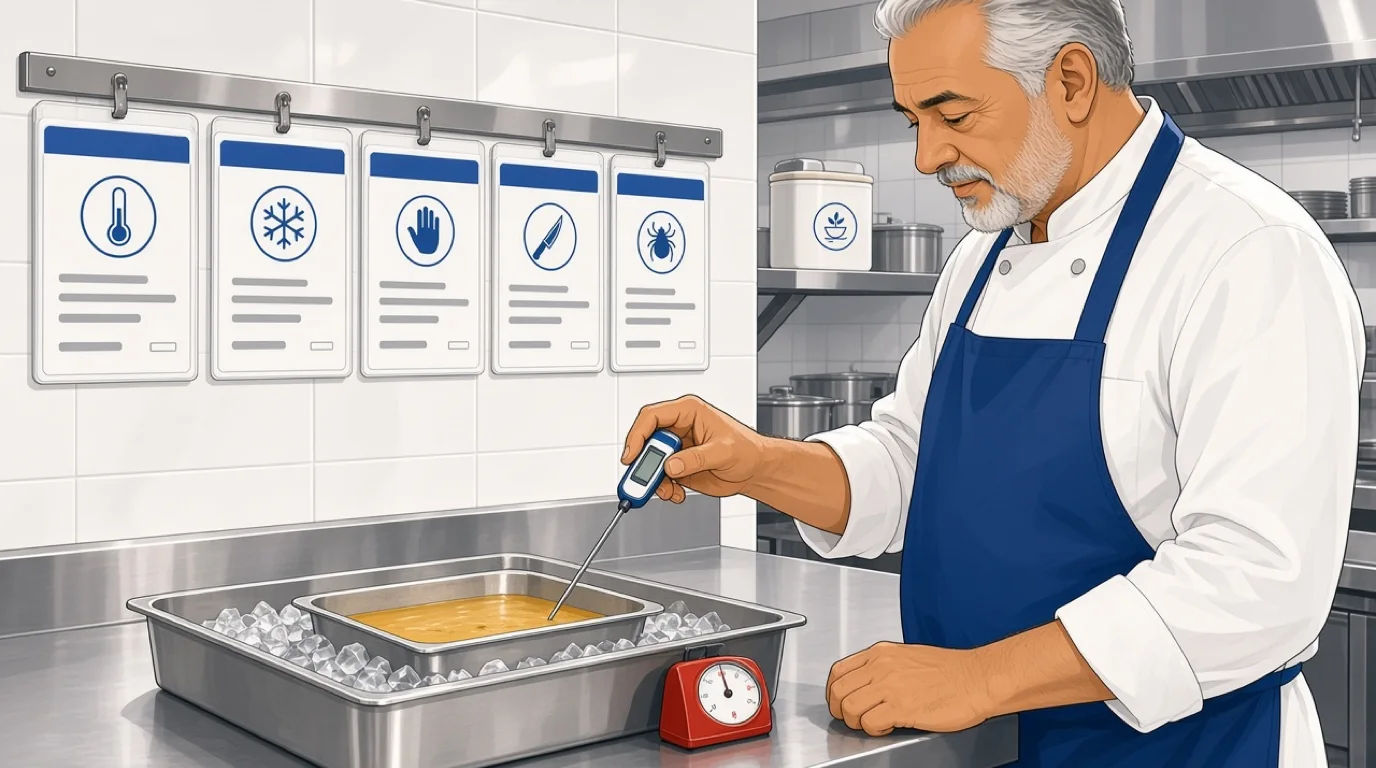
Buy refrigeration new or lightly used from dealers with warranties, never at auction, and check compressor location, self-contained versus remote, against the kitchen's heat and noise budget. Two practical notes: energy-efficient models carry premiums that utility rebates and running costs usually repay within a few years, and every unit needs a temperature log for the health inspector, a chore modern sensors automate, as our HACCP guide details. Freezers follow the same tiers, walk-in sections, reach-ins at 2,500 to 6,000, undercounters, sized to the menu's frozen share, and the ice machine, 2,000 to 6,000 plus bin, rounds out the cold plant; buy it slightly larger than the calculation says, filter its water, and put it on a cleaning schedule, because ice is food and inspectors treat it that way.
Prep equipment and mixers
Prep is where labor hours concentrate, so prep equipment is really labor equipment. The planetary mixer is the anchor: countertop 5-to-8-quart units at 400 to 1,500 dollars suit sauce and small-batch work, while floor models, 20 to 80 quarts at 2,000 to 8,000, are mandatory for pizza, bakery, and volume programs; buy used floor mixers with confidence, they are nearly indestructible. Food processors, 500 to 2,500, and immersion blenders sized for stockpots, 200 to 800, cover the daily chopping and pureeing load. Slicers, 1,500 to 5,000 for the automatic models delis depend on, repay their price in yield consistency and portion control. Vegetable prep machines, robot-style cutters and choppers at 1,500 to 4,000, replace hours of knife work in high-volume prep lists.
The supporting cast is stainless: prep tables at 200 to 800 per run, with undershelves and drawers worth the upgrade; a dedicated prep sink, required by most codes and separate from handwash and warewash sinks; scales at every station, receiving scales to check deliveries and portion scales to hold the spec, a habit our food cost guide connects directly to margin; and for programs doing sous vide or extended shelf-life prep, immersion circulators at 200 to 800 and chamber vacuum sealers at 1,000 to 4,000. One capital purchase deserves special mention for volume kitchens: the blast chiller, 4,000 to 15,000, which takes hot food through the danger zone in minutes, extends prep shelf life safely, and converts batch-cooking from a food safety risk into a production strategy.
Smallwares: the five-figure drawer
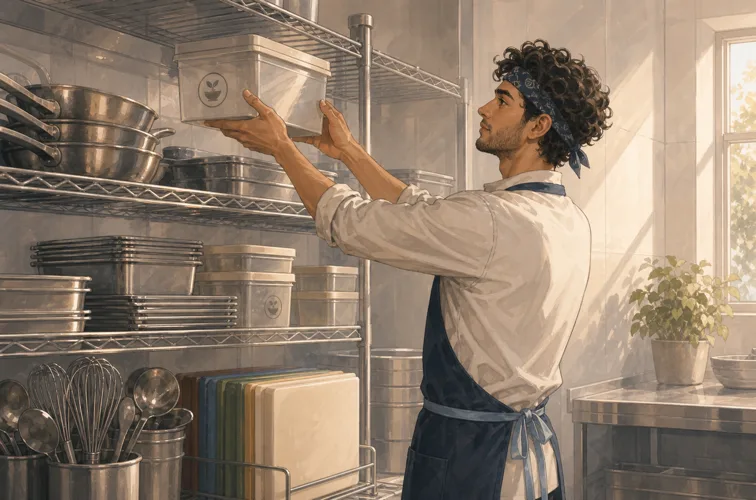
Nobody budgets properly for smallwares, and everybody pays for them: the pots, pans, containers, knives, spoons, whisks, sheet trays, cutting boards, and squeeze bottles that fill every drawer and shelf typically total 5,000 to 15,000 dollars for a full-service opening. The load-bearing items: sauce and stock pots in commercial gauge, saute pans bought in quantity because the dish pit always has a third of them, full and half sheet pans by the dozen, hotel pans and their fractional sizes as the universal container language of the walk-in and steam table, food storage boxes with color-coded lids, and cutting boards in the color-coded set that food safety demands. Cambro-style containers deserve their reputation: buy more than seems reasonable.
Then the hand tools, tongs, spatulas, ladles and portion spoons in marked sizes, whisks, spiders, fish turners, thermometers at every station including instant-read probes for the line, and the knife program, which most kitchens handle as a house set of commercial knives plus whatever cooks bring, with a sharpening service on contract. Add table-side smallwares if the concept plates for service, ramekins, monkey dishes, sizzle platters, and the front's glass, flatware, and china, a parallel five-figure list that belongs in the same budget. The practical rule: order smallwares from the menu's station lists, not from a supplier's opening package, then add 15 percent, because week two always reveals the missing spider and the too-few ninth pans, and plan for continuous replacement, since smallwares are consumables on a slow burn.
Ventilation and fire suppression
The hood is the least glamorous and most decisive purchase in the kitchen. Code requires a Type I grease hood, with fire suppression, exhaust ducting to the exterior, and makeup air, over ranges, fryers, griddles, charbroilers, and most cooking that produces grease-laden vapor; Type II condensate hoods cover dishwashers and some ovens. Installed costs run 8,000 to 30,000 dollars and beyond, driven less by the hood steel than by the duct run: a ground-floor space with a straight shot to the roof is cheap, and a mid-building space needing a rated duct chase through other tenants is the expensive surprise that kills deals. This is the concrete reason second-generation restaurant space trades at a premium and why the hood question belongs in lease negotiation, not equipment ordering.
The fire suppression system, 3,000 to 6,000 installed within the hood package, requires semi-annual professional inspection and automatically cuts gas and power when it discharges. Around it sits the compliance cluster: portable K-class extinguishers, the grease trap or interceptor the plumbing code sizes to the fixture count, and the exhaust cleaning contract, since hood and duct degreasing on a code-mandated schedule protects both the building and the insurance policy. Budget makeup air honestly: exhausting conditioned air without replacing it makes doors whistle and kitchens unbearable, and retrofitting makeup air costs multiples of designing it in. None of this section is optional, and all of it belongs in the first conversation with the landlord, the architect, and the fire marshal.
Warewashing and sanitation
Dishwashing is a production line with its own equipment list. The machine itself: undercounter units at 3,000 to 6,000 dollars for cafes and bars, door-type upright machines at 8,000 to 15,000 as the full-service standard, and conveyor machines at 15,000 to 40,000 for banquet and institutional volume. High-temperature machines sanitize with 180-degree rinse water and need a condensate hood; low-temperature machines sanitize chemically and cost less up front but put a chemical contract on the operating budget. Many operators skip the purchase entirely: dish machine leasing programs bundle the machine, chemicals, and service for a monthly fee, trading ownership for uptime, an arrangement worth pricing against purchase plus a service contract.
Code fills in the rest of the pit and the stations: the three-compartment sink for manual washing even where a machine exists, pre-rinse faucets, drainboards and dish tables sized so clean and dirty never cross, racks and peg systems for glassware, and handwash sinks, separate, dedicated, soap-and-towel equipped, wherever staff work food, in the count the plan review dictates. Mop sinks, chemical storage with proper separation, sanitizer buckets and test strips, and the trash and recycling infrastructure complete the sanitation plant. It is the least exciting section of the budget and the one the health department reads first, and a kitchen that gets warewashing right, as our opening and closing checklists argue, buys itself calm inspections and faster table turns in the same purchase.
Storage, shelving, and receiving
Dry storage is bought by the shelf foot and never feels sufficient. Wire shelving in NSF-rated chrome or epoxy runs 100 to 300 dollars per unit; polymer shelving costs more and survives walk-in humidity better; dunnage racks keep bulk bags and cases off the floor as code requires. Ingredient bins on casters for flour, rice, and sugar, label systems and airtight containers, and a first-in-first-out layout that makes rotation the path of least resistance turn the storeroom from a shrinkage source into a system, the physical half of the discipline our SKU guide describes digitally.
The receiving area earns equipment too: a receiving scale to verify deliveries against invoices, a hand truck and platform cart sized to the door and corridor widths, and a staging table where deliveries are checked, dated, and broken down before they enter storage. Utility and transport gear rounds out the list, sheet pan racks at 150 to 400 dollars, worth owning in numbers, insulated food carriers for catering and off-site events, banquet carts and queen marys for volume operations, and lockers or shelving for staff belongings that keeps personal items out of food zones. None of these purchases is over 500 dollars, and their absence is felt daily; this is the section where a spare 3,000 dollars in the budget converts most directly into operational smoothness.
Kitchen technology
The modern equipment list ends with the layer that connects the rest. The kitchen display system replaces the printer rail with screens that route, time, and sequence tickets across stations, 300 to 800 dollars per screen plus software, and pays for itself in ticket-time visibility and the end of lost paper, as our KDS guide details; kitchens keeping printers still budget 300 to 500 per impact printer for the ticket stations. Around the pass, digital probe thermometers, timers, and label printers for date coding, a few hundred dollars each, tighten execution, and connected temperature sensors in every cold unit, 100 to 300 per sensor with a monitoring subscription, stand a permanent watch that has saved more inventory than any compressor warranty.
Behind the line sits the software that the hardware feeds: back-of-house platforms handling recipes, prep lists, and counts on kitchen tablets, 200 to 500 dollars each in rugged cases, and integrations tying the KDS, the POS, and purchasing into one flow. Budget the technology layer at 2 to 5 percent of the equipment total and resist the temptation to cut it: it is the only section of this list that gets cheaper and more capable every year, and the only one that tells you what the rest of the kitchen is actually doing tonight.
New, used, or leased: the buying strategy
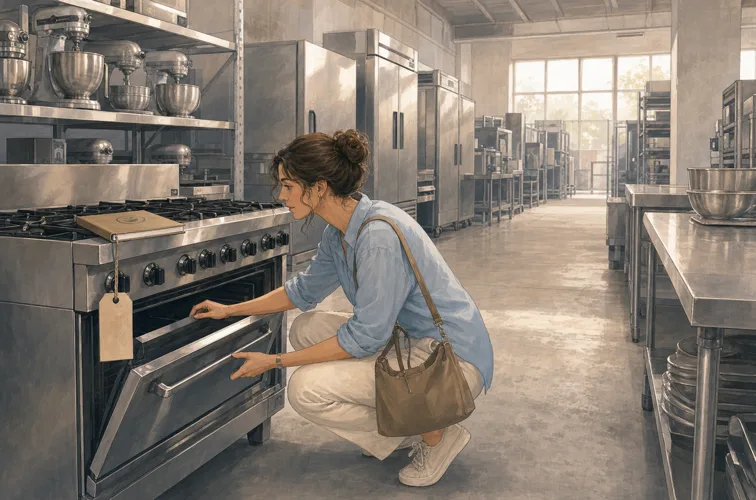
The used market is the equipment budget's best friend, selectively. Buy used with confidence where machines are mechanical and failure is survivable: ranges, griddles, charbroilers, floor mixers, stainless tables, shelving, and sheet pan racks routinely sell at 40 to 70 percent off new and last decades; a reputable dealer's refurbished line with a 30-to-90-day warranty is the sweet spot between auction risk and retail price. Buy new where failure is expensive or the technology matters: refrigeration, ice machines, dishwashers, combi and high-speed ovens, and everything in the technology section. Auctions and restaurant closures offer the deepest prices with zero recourse, appropriate for smallwares lots and stainless, gambling for anything with a compressor or a circuit board.
Leasing and financing round out the toolkit. Equipment financing spreads major purchases over three to five years at the cost of interest, sensible for long-lived assets when the cash protects working capital; leases run cheaper monthly but usually cost more in total, with dish machine and ice machine rental programs as the exception where bundled service justifies the premium. Two closing disciplines: check energy-rated models against local utility rebates before every major purchase, since the incentives frequently cover the efficiency premium, and put every asset over a few hundred dollars on a maintenance calendar the day it arrives, because the lifespan tables in every buying guide assume the coils get cleaned. The full financial context, what the equipment budget does to the opening number and the break-even math, lives in our break-even guide.
Three worked budgets
A 20-seat cafe with a ventless hot program: espresso machine and grinders 8,000 to 15,000 dollars, high-speed ventless oven 6,000, two undercounter refrigerators and a one-door reach-in 6,000, panini press and induction hob 1,500, undercounter dishwasher 4,000, ice machine 3,000, prep table, sinks, and shelving 4,000, smallwares 4,000, KDS and sensors 2,000. Total: roughly 38,000 to 45,000, with the espresso program, correctly, as the biggest line.
An 80-seat full-service restaurant, buying strategically: hood and fire suppression installed 18,000; cooking line, six-burner range, double fryer, griddle, charbroiler, salamander, convection oven, mixed new and refurbished, 16,000; walk-in cooler with freezer section 14,000; line refrigeration, prep rails, and reach-ins 12,000; door-type dishwasher and pit 11,000; ice machine 4,500; mixers, slicer, processor, and prep equipment 6,000; stainless, sinks, and shelving 7,000; smallwares and china 14,000; KDS, printers, tablets, and sensors 5,000. Total: roughly 107,000 dollars, comfortably inside the 80-to-200 range and 30,000 cheaper than the same list bought entirely new. A high-volume 150-seat operation with banquet capability adds a combi oven at 20,000, a blast chiller at 8,000, a conveyor dishwasher upgrade, doubled refrigeration, and crosses 250,000 without extravagance. In every case the sequence is the same: menu, stations, infrastructure, then equipment, and the budget survives contact with reality because it was built from the food up.
Bringing it together
A commercial kitchen is a catalog of a few hundred decisions, but the money concentrates in a handful: the hood and its ductwork, the walk-in, the cooking line, the dish machine, and the smallwares layer everyone underestimates. Let the menu write the list, let the lease and its infrastructure set the budget's floor, buy used where machines are simple and new where failure is expensive, and hold back 10 to 15 percent of the total for the second wave, the missing pans, the extra shelving, the sensor kit, that every opening discovers. Equipped that way, the kitchen stops being a cost center on a spreadsheet and becomes what it actually is: the production plant the entire business runs through, sized to the food it exists to cook.