Somewhere in your processor statement, between the interchange fees and the monthly minimums, there is a line most operators skim past: chargebacks. Each one is a sale you already made, food you already cooked and served, being pulled back out of your bank account by a cardholder's bank, with a penalty fee stapled on top and a mark against your merchant record. Restaurants historically saw few of them, dine-in cards are physically present and disputes were rare, but online ordering and delivery changed the mathematics, and many operators now bleed hundreds or thousands of dollars a month through disputes they never contest and could largely prevent. The fix runs through your payment stack and the order records inside your POS, plus a playbook that fits on two pages.
This guide is that playbook. We will cover how the chargeback process actually works and what each dispute truly costs, why restaurants get hit and which channel is doing most of the hitting, the prevention moves that eliminate the majority of disputes before they are filed, the evidence that wins the ones you fight, and the ratio arithmetic that decides whether the card networks consider you a merchant in good standing or a problem to be managed. It pairs with our processing fees guide, because chargebacks are the other half of what your payment setup silently costs you.
How a chargeback actually works
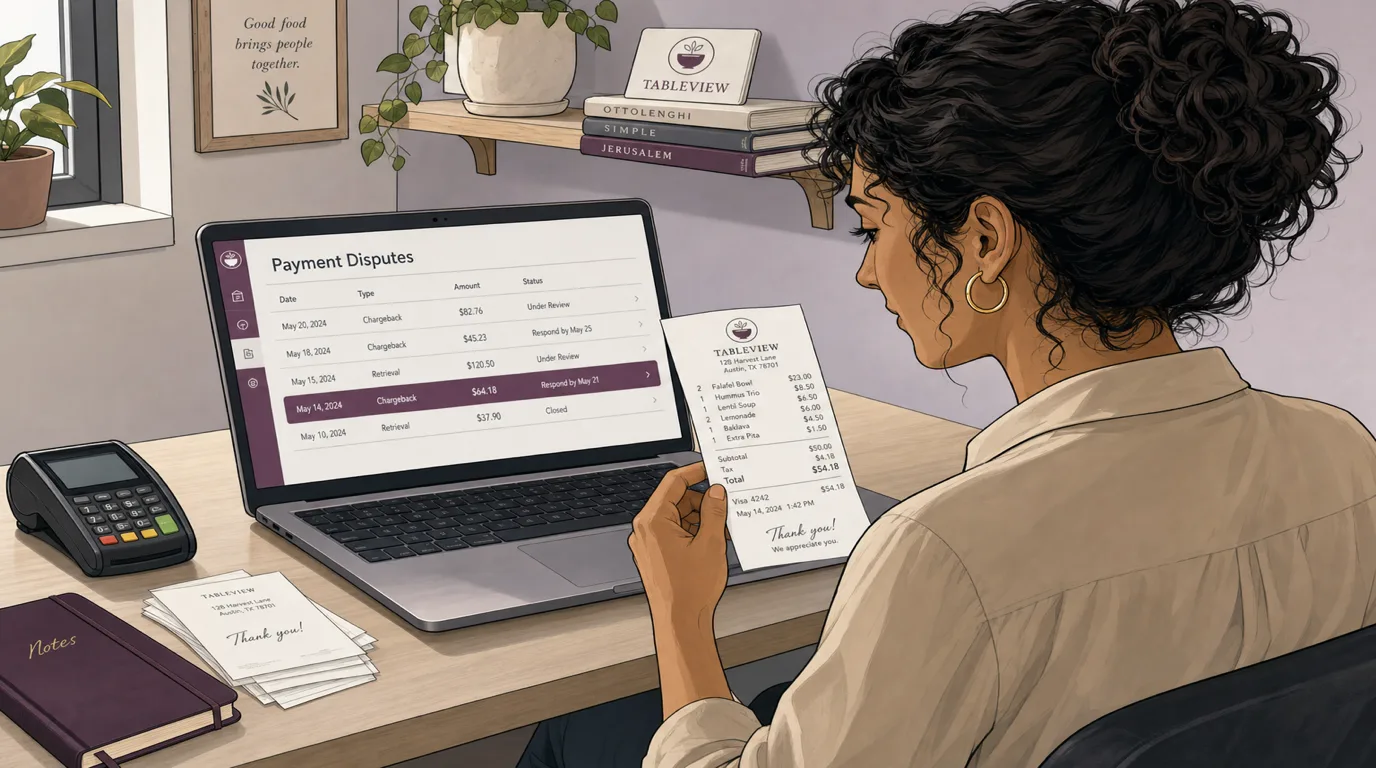
A chargeback begins when a cardholder disputes a transaction with their bank, not with you. The issuing bank assigns a reason code (fraud, product not received, not as described, duplicate processing), provisionally refunds the cardholder, and claws the money back from your account through the card network and your processor, which adds a chargeback fee, typically 15 to 100 dollars, win or lose. You then have a short window to respond: accept the dispute and eat the loss, or fight it through a process called representment, submitting evidence that the charge was legitimate. The issuer reviews and decides; further appeals (pre-arbitration, arbitration) exist but carry fees that rarely make sense for a restaurant check.
Two structural facts shape everything downstream. First, the deck is tilted: the cardholder files with a phone tap, while you respond with paperwork against a deadline, so prevention beats disputing at almost any exchange rate. Second, every chargeback counts against your dispute ratio regardless of whether you win it, which is why winning disputes is not the goal, not having them is. Understand those two asymmetries and the rest of the playbook, clean descriptors, fast refunds, tight evidence, channel monitoring, follows logically. The good news: restaurants that run the full playbook routinely cut disputes by more than half and win a large share of what remains.
What a chargeback really costs
The visible cost is the sale plus the fee, but the honest ledger is longer. Take a 60-dollar delivery order that becomes a chargeback: you lose the 60 dollars, the food cost behind it, the delivery fee you paid, the original processing fee (non-refundable with most processors), and a 25-dollar chargeback fee, then spend 30 to 60 minutes of manager time assembling a response. Industry estimates put the true cost of a dispute at two to three times the transaction amount, which means a restaurant absorbing ten 50-dollar chargebacks a month is not losing 500 dollars, it is losing something closer to 2,500, quietly, in a line item nobody owns.
Then there is the ratio. Card networks divide your monthly chargebacks by your transaction count, and past roughly 0.9 to 1 percent you enter formal monitoring programs with remediation requirements and escalating fines, with account termination as the endgame. Dine-in volume keeps most restaurants far from the threshold, but a small online channel can breach it on its own: a ghost-kitchen brand doing 800 orders a month needs only eight bad disputes to hit 1 percent. This is why the ratio must be tracked per channel, not blended, and why it belongs on the same monthly sheet as your core KPIs: the blended number can look healthy while one channel burns.
Where restaurant chargebacks come from
Nearly every restaurant dispute lands in one of four buckets. True fraud: a stolen card or account number used to order, concentrated almost entirely in card-not-present channels, online ordering, phone orders, and stored-card tabs. Friendly fraud: the real cardholder disputing a real charge, by confusion (an unrecognizable statement descriptor, a family member's order) or by opportunism (dinner was eaten, then disputed), which industry studies put at half to three-quarters of all disputes. Service disputes: the guest genuinely believes something went wrong, the order never arrived, arrived cold, or was not what they ordered, and used the bank instead of calling you. Processing errors: duplicate charges, wrong amounts, tips added incorrectly, the smallest bucket and the most preventable one.
The channel split matters more than the reason split. Dine-in, card-present transactions with chip or tap authorization generate very few disputes, and the liability rules favor you when they happen. The delivery and online channel generates the overwhelming majority: no card present, no signature, an address instead of a face, and a marketplace intermediary muddying who the guest thinks they paid. If your restaurant runs third-party delivery, note that disputes on marketplace orders are usually the platform's problem, they are the merchant of record, but orders through your own online ordering are entirely yours, which is exactly why the prevention section that follows is mostly about that channel.
Reading reason codes like an operator
Every dispute arrives wearing a reason code, and the code tells you both what the cardholder claimed and how winnable the fight is. The codes vary by network (Visa's 10.x fraud and 13.x consumer-dispute families, Mastercard's 48xx series), but they cluster into the same practical groups. Fraud codes ("transaction not authorized") are near-unwinnable on keyed or non-authenticated online orders, and near-unlosable on chip or tap transactions, because EMV authorization certifies the genuine card was present. Not received codes live and die on delivery proof. Not as described codes are service disputes where documentation of what was ordered and any recovery offer decides it. Duplicate or incorrect amount codes are processing errors: winnable when your records are clean, and a signal to fix a workflow when they are not.
Use the codes as a diagnostic, not just a filing label. A cluster of fraud codes on your own online channel means your checkout needs CVV, AVS, or 3-D Secure tightened. A run of not received disputes points at a delivery handoff with no photo trail. Repeated not as described codes from one daypart often trace to a real operational problem, a station sending out inconsistent food, worth fixing for reasons far bigger than disputes. And duplicate-processing codes almost always mean a staff member is resolving card-reader hiccups by charging again instead of checking the transaction log. The dispute queue, read this way, is a free audit of your weakest payment workflows; expensive, but the findings are actionable the same week.
Prevention at the terminal: the dine-in defenses
Card-present prevention is mostly about letting modern hardware do its job. Always dip or tap, never key in a card number because the reader is finicky, a keyed transaction abandons the EMV liability shift and turns an unwinnable dispute into your loss; if a chip fails repeatedly, ask for another card. Keep the authorization tight to the final amount: the tip-adjustment flow (authorize, then adjust with tip) is standard in the US but generates disputes when the final charge surprises the guest, so make tip lines legible, print the total clearly, and consider on-screen tipping where the guest confirms the final amount themselves on the terminal, which produces a cleaner record than a scrawled line, as covered in our card machine guide.
Fix the descriptor, the cheapest prevention in the entire playbook. A statement line reading "TV*HOLDCO 8842" gets disputed by honest cardholders who simply do not recognize it; "TABLEVIEW BISTRO AUSTIN" does not. Call your processor and set the descriptor to the name on your awning plus your city and a phone number if the format allows. Then close the human gaps: bar tabs need the card dipped at open (pre-authorization protects you and speeds close-out), duplicate-charge errors need a void-versus-refund training moment, and split checks need care that each card is charged once. None of this is exotic; it is the payment equivalent of mise en place, small disciplines that make the busy hours error-proof.
Prevention online: where the money actually leaks
Card-not-present orders carry both the fraud and the friendly fraud, so they get the full toolkit. Turn on AVS (address verification) and require the CVV on every order; enable 3-D Secure where your ordering platform supports it, it shifts fraud liability to the issuer on authenticated transactions. Send an immediate, itemized confirmation by email or text, the same document that later becomes evidence, and make the charge recognizable: the descriptor again, plus the restaurant's name in the confirmation subject line. Watch for the classic fraud patterns on your own channel: unusually large first-time orders, multiple cards on one device, rush orders to addresses far from the restaurant, and set platform rules to flag or hold them for a phone confirmation.
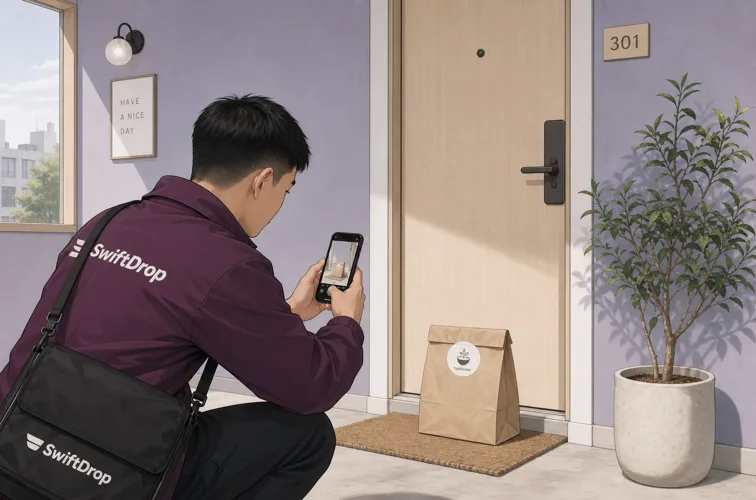
For delivery, proof-of-delivery is the entire game. A timestamped photo of the order at the door, standard in most delivery apps and worth requiring from your own drivers, converts "item not received" disputes from automatic losses into routine wins. Log the handoff time against the order time in the POS so the timeline is one export away. And engineer the refund path to be easier than the dispute path: a reply-to-this-receipt refund flow, a phone number that answers, and staff empowered to resolve a cold-food complaint on the spot. Every guest who gets a two-minute refund is a chargeback that never happens, at a fraction of the cost, and the goodwill compounds in your reviews instead of your dispute queue.
Bar tabs, tips, and the dine-in edge cases
Dine-in generates few disputes, but the ones it does generate follow patterns worth closing. Bar tabs top the list: a card handed over at open and charged hours later, sometimes after the guest forgot the tab existed, produces both genuine confusion and opportunistic disputes. The fixes are pre-authorization at tab open (the guest sees the hold immediately, and you hold real funds), itemized receipts at close, and a printed or texted copy for anything above a modest threshold, standard practice in the operations covered by our bar management guides. Tip adjustments are the second pattern: a guest who wrote 10 on the tip line but reads a total 15 higher than they remember will sometimes dispute the whole charge. Digital tip confirmation on the terminal screen eliminates the handwriting ambiguity entirely, and where paper survives, train staff to enter tips same-day while the slips are fresh and legible.
Large parties and events deserve their own paragraph in the playbook. A 900-dollar private-dinner check is exactly the transaction a monitoring program notices when it goes bad, so treat event and catering payments with contract-grade paperwork: a signed agreement or confirmed email trail, a deposit charged on an authenticated card, the cancellation policy stated on the confirmation, and the final balance itemized against the agreed menu. Deposits disputed after a no-show event are winnable precisely to the degree the policy was documented and acknowledged in advance. None of this slows hospitality down; it simply means the paper trail for your largest checks matches the stakes.
Fighting back: representment that wins
When a dispute does arrive, triage it in one look: is it winnable, and is it worth it? Processing-error and friendly-fraud disputes with good records are worth fighting almost always; true-fraud disputes on keyed or non-3DS online orders are usually lost causes, accept them and fix the hole instead. For the fights, speed and packaging decide outcomes. Respond inside 48 hours against a 7-to-30-day deadline. Build one clean PDF per dispute: a three-sentence summary up top (who ordered what, when, and why the charge is valid), then labeled exhibits, the itemized ticket, the authorization record showing chip or tap or AVS/CVV match, the confirmation email, the delivery photo, the refund-offer trail if there was one. Reviewers decide stacks of these daily; the case they can verify in a minute is the case that wins.
Make it cheap to do by templating everything: a folder of evidence-pack templates per dispute type, a standing POS report that pulls the order detail by transaction ID, and one named owner of the process, a manager or bookkeeper who gets the notifications and owns the deadline, with escalation to the operator only for large checks. Track outcomes in the same sheet: reason code, channel, amount, fought or accepted, won or lost. That log is more than bookkeeping; after a quarter it tells you exactly which door the losses walk through, and it becomes the remediation evidence your processor will want to see if your ratio ever draws attention. Ten minutes per dispute, fully systematized, is achievable, and at that cost, fighting the winnable ones is always positive expected value.
When to eat it: the economics of not fighting
Not every dispute deserves a fight, and knowing when to fold is part of the discipline. The clear accept-and-move-on cases: true fraud on a keyed transaction or an unauthenticated online order (the liability is structurally yours and the win rate is negligible), disputes where your own records are incomplete (no itemized ticket, no delivery proof, nothing to submit but indignation), and amounts so small that even a templated ten-minute response costs more than the check, most operators set that floor somewhere between 15 and 25 dollars. Accepting is not passive, though: every accepted dispute still gets logged with its reason code and channel, still counts toward the pattern analysis, and still triggers the question what would have prevented this one.
There is also the repeat-offender wrinkle. Ordering platforms and POS systems can flag a phone number, email, or address associated with a previous dispute, and a guest with two friendly-fraud chargebacks does not get a third stored-card order, they can pay attended, card in hand, or not at all. Handle it quietly and without accusation ("our system needs payment confirmed at handoff for this order"), but handle it: serial disputants exist, they talk to each other about which restaurants are easy, and a modest verification step is enough to move them along to a softer target. The goal is not to punish anyone; it is to make sure your generosity budget, comps, refunds, benefit-of-the-doubt, flows to real guests rather than to the small population that has learned to farm the dispute button.
Training the team: the human layer
Most chargeback prevention is executed by hourly staff during a rush, which means it lives or dies on training, not on policy documents. The front-of-house curriculum is short: dip or tap, never key; one card, one charge, check the log before re-running anything; open bar tabs with a pre-auth; enter tips same-day; and know who to call when a terminal misbehaves mid-service. For the phone and online channel, teach the fraud tells, the oversized first-time order, the caller who cannot confirm the billing address, the rush delivery to the other side of town, and give staff a non-awkward script for verification. Fold all of it into onboarding alongside the other systems training, and keep the one-page version taped inside the server station like any other checklist.
The service-recovery half matters just as much, because a guest complaint handled in the room is a dispute that never reaches a bank. Staff need explicit authority, a defined comp ceiling any server can use for a genuine food problem, and managers need the habit of surfacing at tables where something visibly went sideways. The math is lopsided in your favor: a comped 14-dollar entrée costs a fraction of a 60-dollar chargeback plus fees plus ratio damage, and it usually earns a better review on the way out, the same logic our customer service guide applies to every recovery moment. Teach the team to see the dispute queue as the scoreboard for problems that escaped the dining room, and the number becomes a shared standard rather than a back-office mystery.

The monitoring habit and the monthly close
Chargebacks are a ratio game played monthly, so give them a monthly ritual. Pull three numbers per channel, dine-in, own online ordering, phone orders: dispute count, dispute ratio, and dollars lost, and put them next to the win rate on your one-page scorecard. Healthy looks like a ratio under 0.3 percent with most disputes fought and most fights won; a channel drifting past 0.5 percent gets a root-cause review while there is still runway before the network thresholds at roughly 0.9 to 1 percent. The fixes are almost always among the ones above, a descriptor, a confirmation email, a delivery photo, a refund path, and the log tells you which. Reconcile the dollars into your books properly as well, disputed sales, fees, and recoveries each land differently in the accounting flow, and a bookkeeper who tags them cleanly turns the chargeback line from a mystery into a managed cost.
Zoom out and the chargeback playbook is four sentences long. Make every charge recognizable and every record complete, from the statement descriptor to the delivery photo. Make refunds easier than disputes, because the guest will take whichever path has less friction. Fight the winnable ones fast, from templates, with one named owner of the process. Watch the ratio by channel every month, and treat a drifting channel as a fire alarm rather than a rounding error. A restaurant that does those four things converts chargebacks from an unbounded, morale-sapping leak into a small, predictable cost of accepting cards, usually well under a tenth of a percent of revenue, and gets back the manager hours and the margin that the dispute queue used to eat. The money you already earned should stay earned; the systems above are how it does.