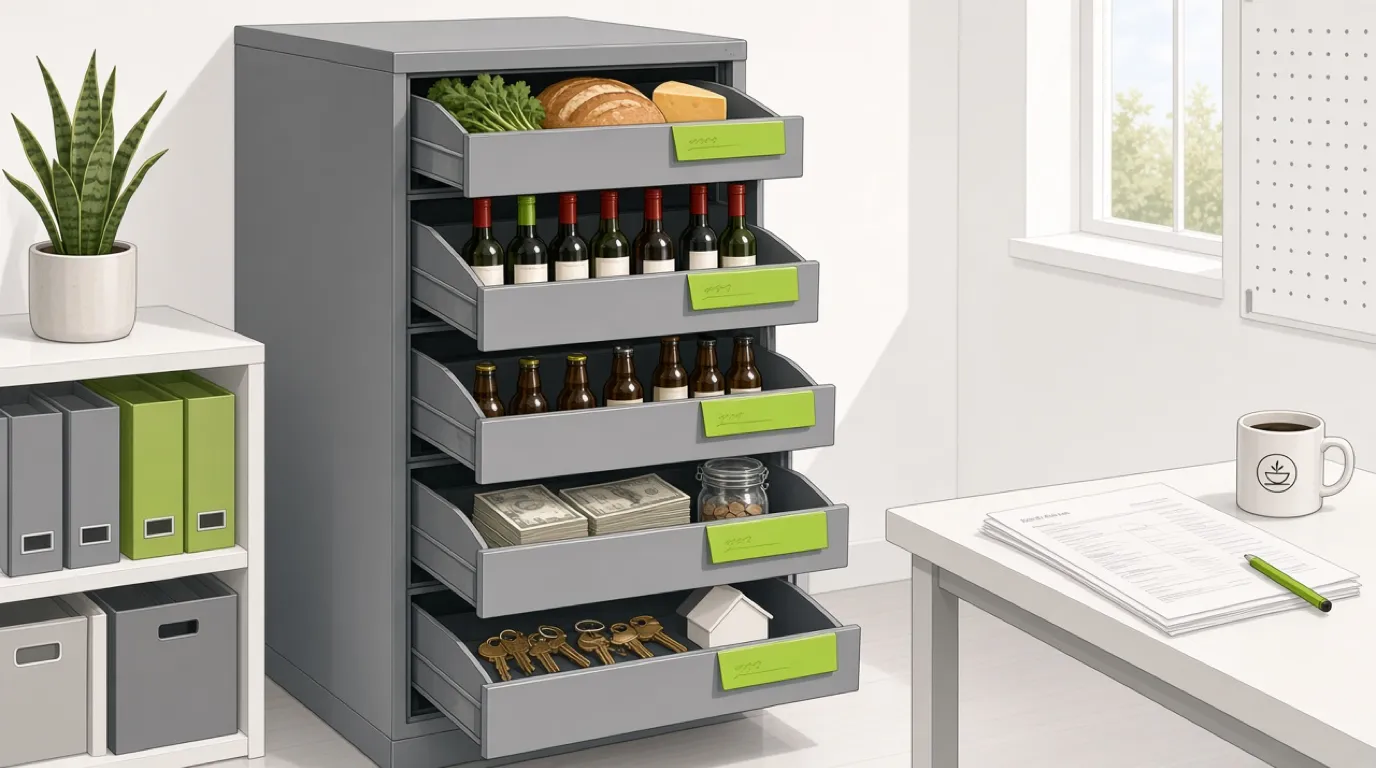

Nobody opens a restaurant because they love paperwork, yet paperwork is the gate every restaurant walks through before the first ticket prints. There is no single "restaurant license": a typical full-service opening needs eight to twelve separate approvals from four or five different agencies, city, county, state, and federal, each with its own application, fee, inspection, and renewal clock. Miss one and the consequences range from opening-day fines to a padlocked door. This checklist walks through every license and permit you are likely to need, what each one costs, how long it takes, and the sequence that keeps the slow ones off your critical path, so the legal side of your opening runs as cleanly as the POS setup and the restaurant accounting.
One framing note before the list: requirements vary by city and state more than any other topic in hospitality. The same taqueria concept might need nine permits in Austin and thirteen in Chicago, at triple the cost. Treat this guide as the master checklist that tells you what to ask your city clerk, health department, and state alcohol authority, and pair it with our guides on opening a restaurant and startup costs, because licensing is one of the startup lines first-time owners most consistently underestimate.
Why there is no single restaurant license
Restaurants sit at the intersection of more regulatory domains than almost any other small business. You handle food (health department), employ people (state labor and federal tax agencies), occupy and modify a building (building, zoning, and fire departments), sell taxable goods (state revenue agency), possibly pour alcohol (state alcohol board, sometimes federal TTB), play music (performing rights organizations), and put a sign on the street (city planning). Each domain issues its own approval on its own timeline, and no agency coordinates with the others. That fragmentation is why openings slip: the critical path is invisible until you map it, and the slowest approvals, liquor licenses and certificates of occupancy, are the ones you can least afford to start late.
The practical mindset is to treat licensing as a project with dependencies rather than a pile of forms. Three tracks run in parallel: the entity track (business structure, EIN, business license, seller's permit), which is fast and unlocks everything else; the building track (zoning verification, plan review, build-out inspections, certificate of occupancy), which follows your construction schedule; and the operations track (food service permit, food handler cards, liquor license, fire permit), which gates your actual opening. Map your dates backward from the target opening and the sequence writes itself, and the rest of this guide follows those tracks in order.
The entity track: business license, EIN, and seller's permit
Start with structure. Form your legal entity, most independent restaurants choose an LLC for liability protection, and register it with the state before applying for anything else, because nearly every subsequent application asks for the entity name and formation documents. Then get the EIN, the federal employer identification number from the IRS: free, online, issued in minutes, and required for payroll, bank accounts, and most other applications. With those in hand, apply for the general business license from your city or county, the basic permission to operate a business at your address, typically 50 to 500 dollars and issued in days to a few weeks. Some cities fold this into a "business tax certificate"; the function is the same.
The seller's permit (sales tax license) comes from the state revenue agency and authorizes you to collect sales tax on every check, it is usually free and fast, and operating without it is a tax violation rather than a paperwork slip, so do not let it fall through the cracks. If you plan to buy inventory wholesale, the same registration typically lets you purchase without paying sales tax on goods for resale. This entire track can be finished in two to three weeks of light effort, and completing it early smooths everything downstream, from the bank account to the business plan's licensing appendix that lenders and landlords increasingly ask to see.
The building track: zoning, plan review, and the certificate of occupancy
Before you sign anything, verify zoning. The single most expensive licensing mistake in this industry is leasing a space where your concept is not permitted as-of-right: a bar in a zone that caps alcohol occupancy, a late-night concept where operating hours are restricted, a location whose parking count cannot legally support a dining room. A one-hour conversation with the city planning office, or a zoning verification letter, costs almost nothing and has saved operators from six-figure lease liabilities. If the use requires a variance or conditional use permit, understand that timeline (often months, with public hearings) before committing, not after.
Once the lease is signed and design starts, most health departments require plan review before construction: they approve your kitchen layout, hand-sink placement, ventilation, and finishes on paper, so build the review into the architecture phase rather than discovering a non-compliant layout during final inspection, a discipline that pairs naturally with the decisions in our floor plan guide. The build-out then accumulates its own inspections, building, electrical, plumbing, mechanical, and fire, which culminate in the certificate of occupancy (CO), the document declaring the space legal to occupy for your use. The CO is the keystone: no CO, no final health inspection, no opening. Budget two to six months for this track depending on construction scope, and remember that grease interceptor requirements and hood suppression systems are the two build-out items that most often surprise first-time operators late.
The food track: service permit, handler cards, and the health inspection
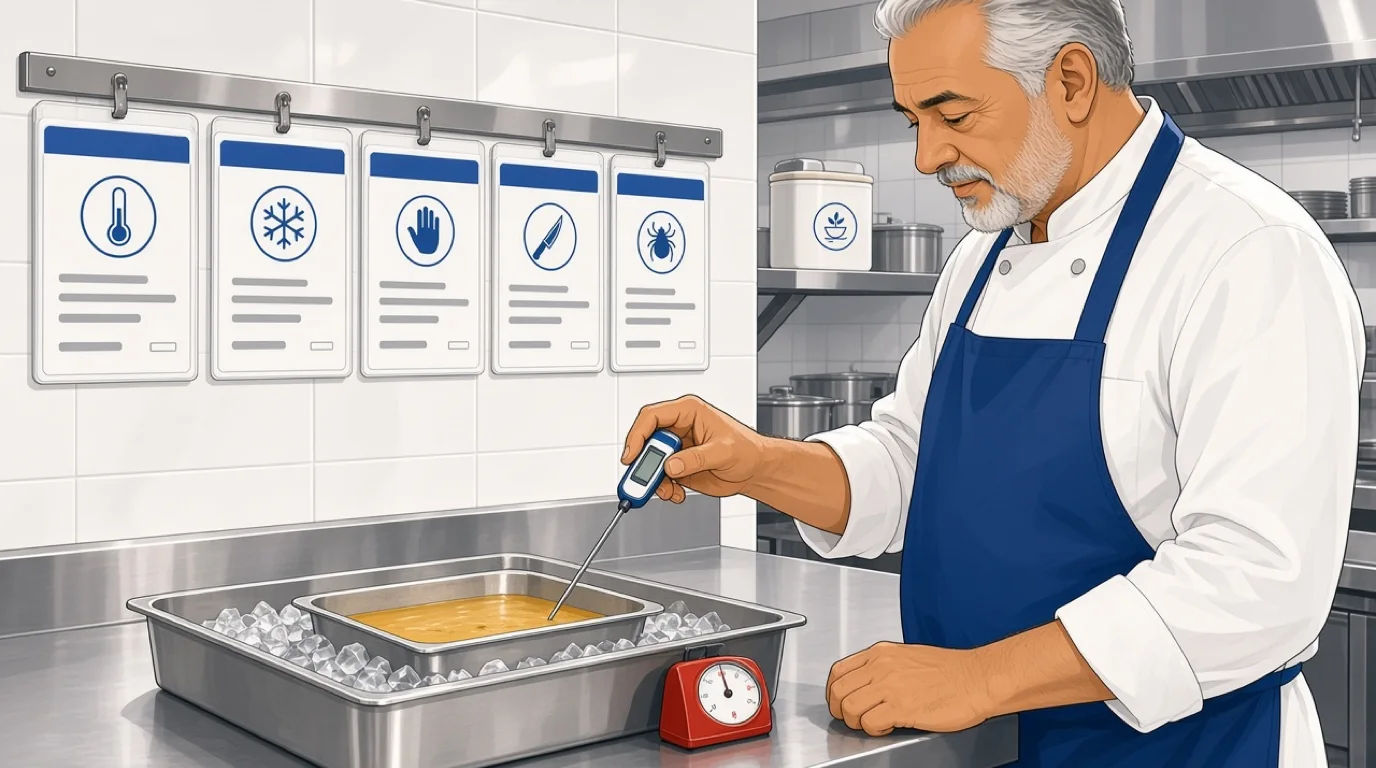
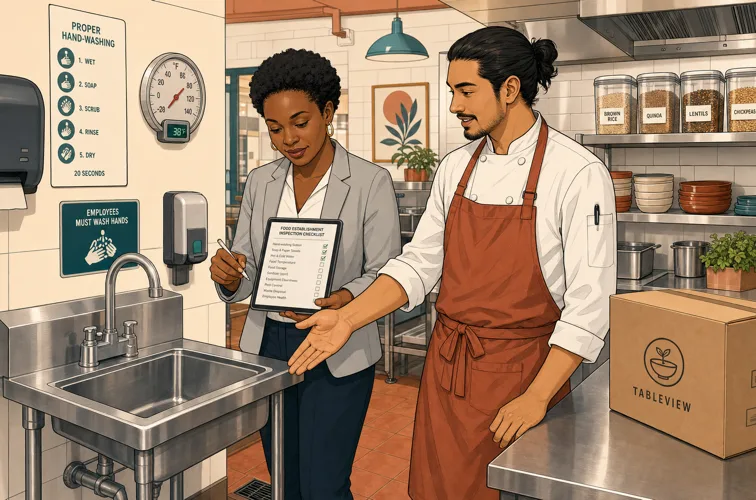
The food service establishment permit, issued by your county or city health department, is the license most people mean when they say "restaurant license." Costs run 100 to 1,000 dollars annually, often scaled to seat count or risk category, and issuance depends on passing the pre-opening health inspection, which examines everything from refrigeration temperatures and hand-washing stations to food storage hierarchy and pest control. Schedule this inspection two to four weeks ahead; inspectors' calendars fill, and a failed or delayed inspection with a fully hired staff on payroll is among the most expensive waits in the business. Run your own mock inspection first using your state's actual checklist, the same discipline our food safety and HACCP guide builds into daily operations.
Alongside the establishment permit come the people credentials. Most states require every food-handling employee to hold a food handler card, a short certified course plus exam, typically 10 to 20 dollars per person, and at least one certified food protection manager (ServSafe Manager or equivalent) on staff, often required on premises during all operating hours. Track both like inventory: they expire per-person on rolling schedules, and missing cards are one of the most common inspection violations precisely because nobody owns the tracking. Add them to onboarding for every new hire, keep digital copies centrally, and note that some jurisdictions also require allergen training or specific certifications for staff who serve alcohol, which bridges into the next track.
The liquor license: the long pole in the tent
If your concept includes alcohol, the liquor license defines your licensing timeline, and often your site selection. Every state runs its own system through an alcohol beverage control agency, but the shapes repeat: license classes (beer and wine versus full liquor, on-premises versus off), background checks on owners, public notice requirements, distance rules from schools and churches, and in many states, quotas that cap licenses per capita. In quota states, new licenses may simply be unavailable, and existing ones trade privately for 20,000 to several hundred thousand dollars, a market that makes the license itself one of the largest assets in the deal when restaurants change hands. Application fees and annual renewals vary from a few hundred dollars to 14,000-plus depending on state and class.
The timeline is the operational headline: 30 to 180-plus days, with hearings and postings you cannot compress. File the week you sign the lease. Two more planning notes: first, consider whether beer-and-wine (cheaper, faster, no quota in many states) serves the concept adequately at launch, with a full license as a later upgrade, our bar opening guide covers that economics in depth; second, remember the adjacent obligations that come with pouring: responsible beverage service training for staff where mandated, dram shop liability exposure, and the federal TTB registration that applies to all alcohol retailers. None of it is difficult, but all of it is sequenced, and the sequence starts earlier than intuition suggests.
The operational permits: sign, fire, music, and the rest
A cluster of smaller permits rounds out the stack, individually minor, collectively capable of delaying an opening or generating fines. The sign permit from city planning governs size, illumination, and placement of exterior signage, and installing before approval is a classic avoidable fine, doubly painful when the city also makes you take the sign down and resubmit. Historic districts and landmarked buildings add design review on top, so ask early if your address qualifies. The fire department permit covers occupancy load, extinguishers, exits, and your hood suppression system, usually with an annual inspection. If you play recorded or live music, performing rights licenses from ASCAP, BMI, and SESAC (or a blanket service that bundles them) are legally required, and the infringement letters that arrive at unlicensed venues are not bluffs; budget a few hundred to a couple thousand dollars annually depending on capacity and format. Outdoor seating typically needs a sidewalk cafe or patio permit, valet needs its own permit in most cities, and dumpster placement, grease hauling manifests, and waste recycling plans each carry municipal paperwork.
Concept-specific additions deserve a scan: delivery operations may require commercial vehicle registrations; food trucks need mobile vendor permits, commissary agreements, and per-location approvals; ghost kitchens split building permits from operator permits; live entertainment, pool tables, and extended-hours operation each trigger their own licenses in many cities. The pattern to internalize: any time the concept adds a revenue stream or changes the use of space, ask "does this need a permit?" before launching it, because retroactive permitting always costs more than asking first.
The labor side: payroll registrations and required postings
Hiring triggers its own regulatory layer that sits beside the licensing stack and is just as inspectable. Registering as an employer with the state unlocks unemployment insurance contributions and state payroll tax withholding; workers' compensation insurance is mandatory for restaurants in nearly every state from the first employee, and proof of coverage is routinely requested during permit renewals and after any incident. If you hire anyone under 18, minor work permit rules govern hours and equipment (slicers and some fryers are commonly restricted), and the penalties for violations have climbed sharply in recent enforcement cycles. New-hire reporting to the state within a set window, typically 20 days, rounds out the registrations that most first-time employers discover late.
Then there are the posters. Federal and state labor law postings, minimum wage, OSHA, workers' comp, anti-discrimination, and in many states tip-credit notices, must be physically displayed where staff can see them, and the all-in-one laminated posters sold by compliance vendors are a legitimate shortcut. Tipped-wage documentation deserves particular care: if you take a tip credit, most states require written notice to employees, and if you pool tips, the policy should live in your employee handbook with signed acknowledgments. None of this is a license in the strict sense, but inspectors, auditors, and plaintiffs' attorneys treat it with the same seriousness, and the fix costs an afternoon.
How to research your exact stack in one week
Because every jurisdiction differs, the checklist above becomes actionable only when you localize it, and there is an efficient sequence for that. Day one: your city or county's business portal, most now publish a restaurant-specific licensing wizard or checklist (the larger the city, the better the tooling), which gives you the municipal layer. Day two: the county health department's food establishment page for permit categories, fees, plan-review requirements, and inspection checklists. Day three: the state alcohol authority for license classes, quotas, fees, and current processing times, plus the state revenue agency for the seller's permit. Day four: a call, not an email, to the city planning desk to confirm zoning, signage rules, and patio permissions for your specific address. Day five: reconcile everything into one spreadsheet with fees and lead times, and you have your project plan.
Three research habits separate smooth openings from chaotic ones. Ask each agency "what do operators most commonly miss?", inspectors and clerks answer that question generously and their answers are gold. Get requirements in writing or from official published sources, because secondhand advice from other operators is frequently outdated or from a different jurisdiction. And when the stack looks genuinely complex, multi-concept spaces, historic buildings, quota-state liquor, a few hours of a local hospitality attorney's or permit expediter's time is among the highest-ROI spends in the entire opening budget; they know which desks move slowly and which applications get kicked back for which omissions.
The mistakes that cost the most
A short catalog of expensive lessons, all preventable. Signing a lease before zoning verification: the concept-killer, and the reason "verify before you sign" appears twice in this guide. Filing the liquor application after build-out instead of at lease signing: two to four months of rent paid on a room that cannot legally pour. Building the kitchen before health plan review: relocated hand sinks, re-run plumbing, and a failed final inspection. Ordering the sign before the sign permit: a custom fabrication you may not be allowed to hang. Forgetting the grease interceptor until the plumbing inspection: a five-figure retrofit in the worst cases. Letting food handler cards lapse across a rolling staff: the most common repeat inspection violation in the industry. And treating the CO as a formality: it is the single document that gates everything, and its dependencies reach back through every construction inspection.
The meta-mistake underneath all of these is assigning licensing to nobody. Openings have a chef, a GM, a contractor, and an accountant, and the permits fall between them. Name one owner of the licensing project on day one, give them the checklist from this guide localized to your city, and have them report dates weekly alongside the construction schedule. The role costs nothing to create and pays for itself the first time a filing happens on the correct week instead of the panicked one.
What it all costs, and when
For budgeting, group the stack into three tiers. Tier one, the near-universal basics: business license (50 to 500 dollars), EIN (free), seller's permit (free to nominal), food service permit (100 to 1,000), food handler and manager certifications (10 to 20 per person plus 100 to 200 for the manager credential), sign permit (20 to 200), fire permit (tens to low hundreds). A no-alcohol restaurant typically lands between 1,000 and 5,000 dollars all-in for initial licensing, before build-out-related fees, a range wide enough that pricing your specific city early is worth an afternoon of calls. Tier two, the building costs that scale with construction: plan review fees, inspection fees, CO issuance, and grease infrastructure, which ride your build-out budget rather than a licensing line. Tier three, alcohol: from a few hundred dollars in generous states to six figures in quota markets, plus annual renewals.
Two financial practices keep licensing from becoming a recurring surprise. First, capture every fee, initial and renewal, in your startup budget and operating calendar the day you learn about it; scattered renewal fees are small individually but they arrive year-round and unbudgeted, which is how they turn into late penalties. Second, treat license fees as the compliance line in your books rather than burying them in miscellaneous, so year over year you can actually see what compliance costs and when, the same visibility principle that drives the rest of your P&L discipline. Operators who track it are also the ones who notice when a city fee change or a new requirement lands, before it becomes an inspection finding.
The sequence that protects your opening date
Here is the order of operations that experienced operators follow, mapped backward from opening day. Six-plus months out: verify zoning before signing the lease, form the entity, get the EIN, and, the moment the lease is signed, file the liquor license application and submit health department plan review, the two slowest approvals in the entire stack and the two that operators most often start late. Four months out: business license, seller's permit, and construction inspections rolling per the build-out schedule. Two months out: schedule the pre-opening health inspection, complete fire inspection prerequisites, order signage only after the sign permit clears, and enroll staff in food handler courses as hiring ramps. One month out: certificate of occupancy in hand, final health inspection passed, food service permit issued, music licensing active, and every certificate scanned into a shared folder plus posted where required, most jurisdictions mandate visible posting of the health permit and occupancy load.
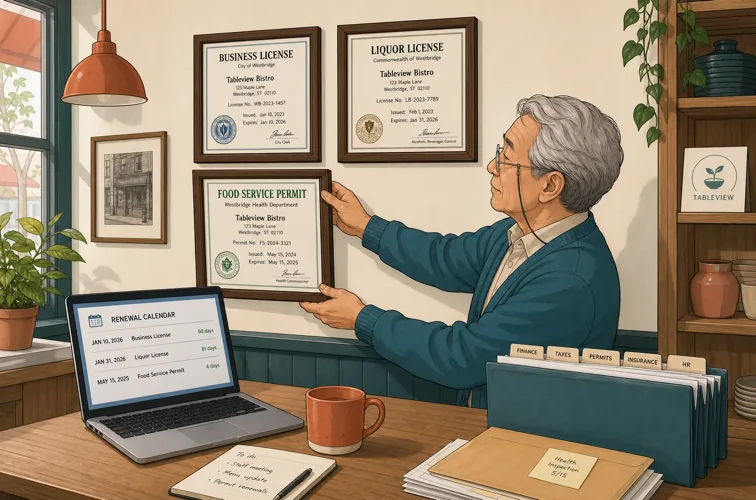
Then build the renewal machine, because licensing is a lifecycle rather than a launch task, and the stack you assembled over six months must now maintain itself indefinitely. One compliance calendar with every license number, issuing agency, renewal date, fee, and named owner; sixty-day advance reminders so a missed mail notice never becomes a lapsed permit; and a monthly ten-minute review alongside the close, where the calendar gets the same attention as the numbers. Bake handler-card verification into onboarding and card-expiry checks into your operating checklists cadence. When you eventually renovate, add a bar, extend hours, or open a patio, return to this checklist, because changes of use re-trigger permits, and the operators who ask first keep their momentum while the ones who ask forgiveness fund the city's fine revenue. Paperwork never cooked a meal, but done in the right order, it is the difference between opening on schedule and paying rent on a dining room the law will not let you fill.