Portion control has an image problem. Say the phrase out loud in a kitchen and half the brigade hears "the owner wants us to serve less food", which is neither what it means nor what it fixes. What it means is that a dish leaves the pass at the same size every time, whoever cooked it, at eight o'clock on a dead Tuesday and at half past nine in the middle of a Saturday rush. Consistency is the goal. The cost saving is a side effect, and it is a large one, because the gap between what a recipe says a plate costs and what that plate actually costs is where a serious share of a kitchen's margin quietly disappears. That gap shows up in restaurant stock movement weeks before it shows up on the profit and loss.
The uncomfortable part is that portion drift is almost never one dramatic act of over-portioning. It is two extra grams of protein per plate, a scoop pressed down rather than levelled, a ladle filled to the lip instead of the line. None of it is visible, nobody remembers doing it, and no single instance is worth mentioning. It only becomes legible when you compare what the sales mix says you should have used against what your counts and purchasing records say you actually consumed. This guide covers how to write a usable spec, how to run a yield test, how to design a station so the correct portion is also the fast one, which items to control first, and the weekly variance check that catches drift while it is still small enough to fix.
Portion control is a consistency problem, not a stinginess problem
Start with the guest, because that is the argument that actually wins the kitchen over. A regular who receives a generous plate on their first visit and a mean one on their third does not conclude that portions vary. They conclude that the restaurant has slipped. Inconsistency reads as decline even when the average portion is perfectly fair, and the version guests remember is always the smaller one. You are not protecting a cost line by holding a standard, you are protecting the promise the plate made last time.
The second argument is arithmetic. Every price on your menu was set against an assumed portion, whether or not anyone wrote that assumption down. If the assumption is wrong, the price is wrong, and no amount of clever menu engineering repairs a number built on a spec the kitchen never followed. The same applies in reverse: a menu pricing strategy that assumes a tight portion will look mysteriously unprofitable if the line is running loose, and the operator will spend months blaming suppliers for a problem that lives on their own prep bench.
Chefs push back on this, and the pushback is usually some version of "we are not a chain". It is a fair instinct and the wrong conclusion. Nobody is asking a cook to stop cooking. A spec constrains quantity, not craft, and independent kitchens can hold quantity without turning into a franchise manual. The chains simply worked out earlier that consistency is cheaper than generosity that varies.
Where portions actually drift
Drift enters at four points, and it helps to know which one you are dealing with before you start buying scales.
The first is receiving. If a case arrives light, or a supposedly trimmed cut arrives untrimmed, you have paid for weight that will never reach a plate, and every downstream calculation inherits the error. Weighing deliveries against the invoice is dull and it catches more money than most portion initiatives. This is a purchasing discipline as much as a kitchen one, which is why it belongs in the same conversation as vendor management.
The second is prep. A batch that should divide into a known number of portions divides into fewer, because the recipe was scaled by eye or the pan was filled to a different depth than last week. Prep drift is the most expensive kind, because it multiplies before service even starts.
The third is the line during service, and it is driven almost entirely by speed. Under pressure, people stop measuring, because measuring is slower than not measuring. A cook who portions accurately at six will portion generously at eight, not out of carelessness but because the accurate move costs seconds they do not have. Any solution that ignores this loses.
The fourth is the pass: remakes, staff food that never gets logged, and the plate sent back and rebuilt. These are real consumption and they belong in the same bucket as voids and comps rather than being written off as noise.
Layered across all four is the new starter, whose eye was calibrated in a different kitchen with different plates. Every hire arrives with someone else's idea of what a portion looks like, which is why induction matters more than most kitchens allow for. A line cook can be excellent and still be wrong about your portion size for a month.
Start with the spec, not the scale
Buying scales before writing specs is the most common way this project stalls. A scale enforces a number, and if the number does not exist in writing, the scale simply makes people slower while they guess.
A usable spec states six things: the ingredient, the state it is in when portioned, the quantity with its unit, the tool used to measure it, where it sits on the plate, and the finished yield the recipe assumes. Most kitchen recipes state one and a half of those. "A handful of rocket" and "a drizzle of oil" are not specs, they are vocabulary, and they guarantee that two cooks produce two different plates while both believe they followed the recipe.
Use weight rather than volume for anything dense, expensive, or compressible. Volume is fine for liquids and honest for uniform items, but a cup of shredded cheese can vary substantially depending on how firmly it was packed, and that variance lands directly on your food cost percentage. Where volume genuinely is the right unit, name the tool: a numbered scoop or a specific ladle removes the ambiguity that a bare measurement leaves behind.
Specs need a version and a date, and they need to live somewhere a cook can reach in ten seconds during service. A binder in the office is a spec nobody follows. Kitchens that keep recipes inside their back of house software at least have one current copy rather than four contradictory laminates. And write them with the people who cook them. A spec imposed from the office gets ignored roughly as fast as it gets printed.
Yield testing: what you buy against what you serve
Yield testing is the part most operators skip, and it is the part that makes the numbers true. There is a difference between what you purchase and what you can actually serve, and the difference is trim, bone, peel, drain weight, and cooking loss.
The mechanics are simple. Weigh the item as it arrives, process it exactly as your kitchen processes it, then weigh what is usable. Usable weight divided by purchased weight gives the yield percentage. Divide the purchase cost per unit by that yield, expressed as a decimal, and you get the true cost of the weight that reaches a plate. A whole fish yielding a little under half its purchased weight as fillet means the fillet costs more than twice the price per kilo you think you paid for it. Kitchens that cost proteins at the invoice price are systematically underpricing their most expensive dishes.
Do not yield test everything. Test the items where loss is meaningful and the ingredient is expensive: whole proteins, whole fish, produce with heavy trim, anything drained, anything that shrinks noticeably in the pan. For the rest, invoice weight is close enough that the exercise costs more in labour than it returns. Our food cost percentage calculator is a reasonable place to sanity check what the corrected figures do to a dish once you have them.
Re-test when something changes: a new supplier, a different cut specification, a seasonal shift in produce size, a brand change on a canned or frozen line. Yields are not permanent facts about ingredients, they are facts about a specific product handled by a specific kitchen, and both of those move.
Choosing the tool that matches the job
Portioning tools are cheap and the wrong one is expensive. Match the tool to the item rather than buying scales for everything and hoping.
Digital scales belong where the ingredient is costly and the tolerance is tight, which in most kitchens means proteins and a small number of premium garnishes. Numbered portion scoops handle starches, grains, mash, and anything soft enough to level, and the number on the handle is the point: it tells the cook which scoop without a conversation. Ladles handle sauces and soups, provided the spec names the ladle and the fill line rather than saying "a ladle". Ring moulds hold shaped items to size. Small portion cups take dressings and dips out of the argument entirely.
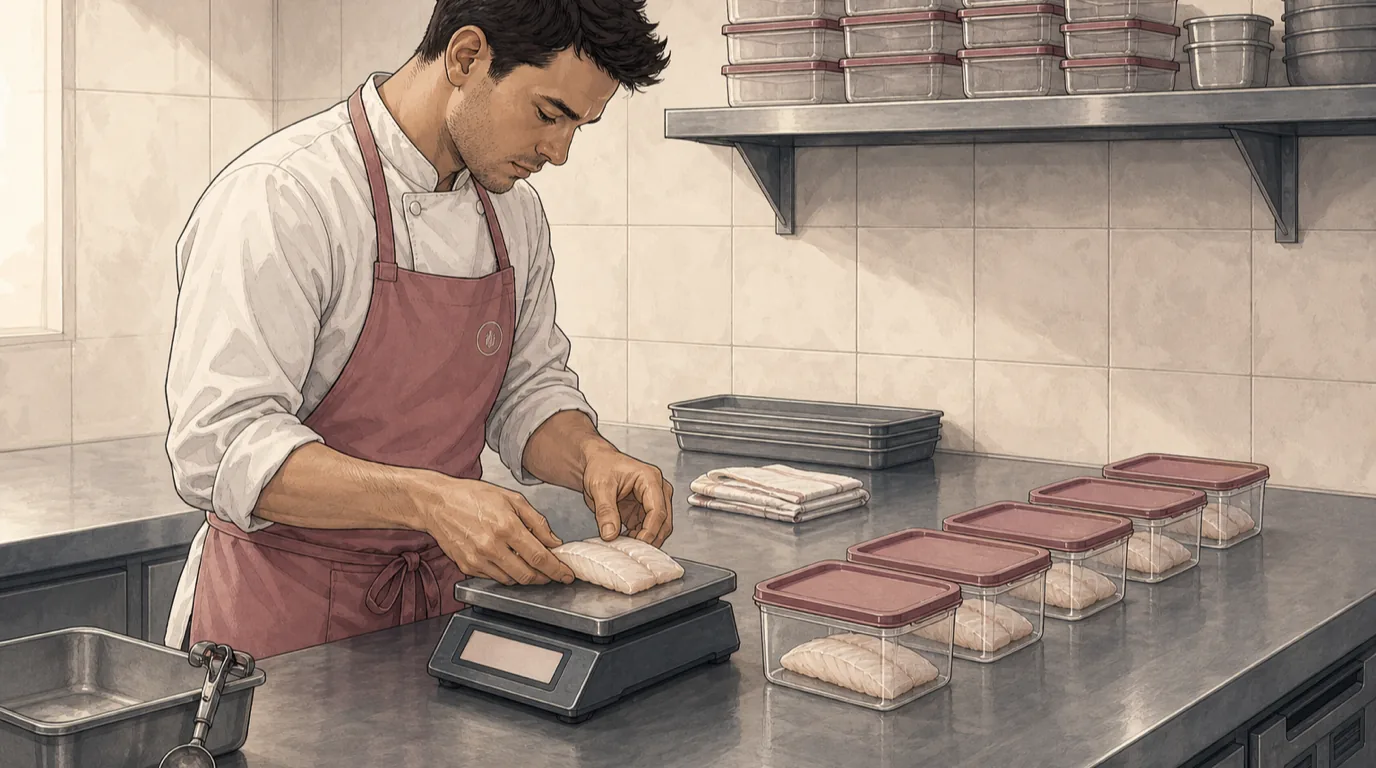
Pre-portioning during prep is the strongest tool available, and the one most kitchens underuse. Weighing proteins into trays during the quiet hours moves the measurement out of service, which is exactly where it needs to be, since service is when accuracy loses to speed. Pre-portion for peak periods only. Doing it all day creates a holding and rotation problem that costs more than the drift it prevents, and it does your food safety discipline no favours.
One practical detail worth more than it sounds: tether tools to their pans. A scoop that lives clipped to its container is a scoop that gets used. A scoop that lives in a drawer across the kitchen is a scoop that gets replaced by a hand. When you are specifying a commercial kitchen equipment list, buy duplicates deliberately so that no station ever has to share.
Designing the station so the correct portion is the fast one
This is the section that decides whether any of the above survives a Friday. The governing principle is behavioural rather than culinary: if the accurate move is slower than the inaccurate one, accuracy will lose during a rush, every time, in every kitchen, regardless of how the briefing went. So stop asking people to be disciplined and redesign the station until discipline is the path of least resistance.
That means the scale sits at working height where the plate is built, not on a shelf behind the cook. It means pre-portioned trays sit in the low boy in the order the tickets come, so the correct count is the one already in reach. It means one tool per pan, sized to the spec, so the cook never chooses between two scoops. It means garnishes arrive pre-counted in the numbers the spec calls for rather than loose in a tub, because a loose tub is an invitation to estimate.
Removing decisions is the whole game. Every choice you leave on the line during service will be resolved in favour of speed. This is the same logic that makes mise en place work as a discipline rather than a slogan, and it is why station design belongs to whoever runs the kitchen brigade rather than to whoever ordered the scales.
Prep, batching and the freestyling problem
Batch recipes need a stated finished yield in portions, not just a batch size. "Makes one large pan" tells a cook nothing about how many plates that pan owes, so nobody notices when it produces fewer, and the shortfall is absorbed by serving a bit less at the end of the night or opening a second pan too early. Write the portion count on the recipe and on the label.
Labels should carry the production date, the batch size, and the portions the batch is supposed to yield. That last field turns every container into a self checking unit: if the pan is empty and the tally says thirty portions went out when the batch was specified for thirty six, you have found drift without running a single report. It also keeps FIFO rotation honest, since a label detailed enough to portion against is a label detailed enough to date properly.
Watch the scaling arithmetic too. Doubling a batch does not double every component: seasoning, thickeners, and acid rarely scale linearly, and a cook who scales them anyway produces a batch that is technically the right weight and wrong on the plate, which quietly invites the next cook to compensate by adjusting the portion. And be careful with shared tools across batches. A scoop moving between containers is a portioning convenience and an allergen management problem at the same time.
The plate standard and photo builds
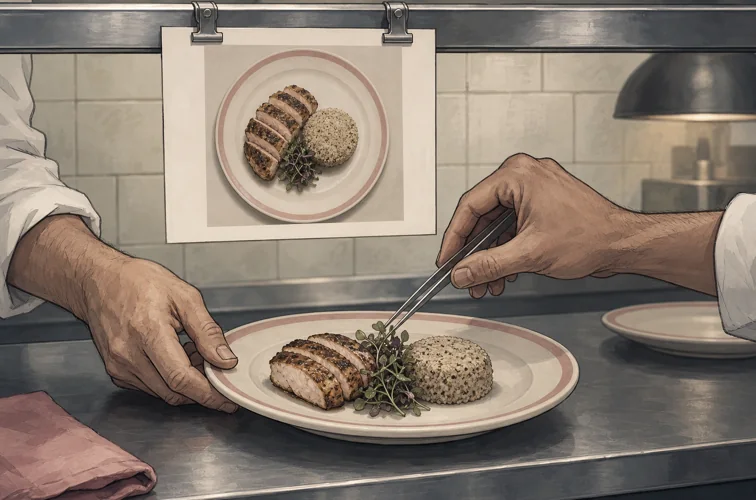
A photograph settles arguments that prose cannot. Written specs describe quantity well and appearance badly, and appearance is what a cook is actually matching against when they build a plate at speed. A build sheet clipped above the station, showing the finished dish on your actual plate with your actual garnish, gives the line something to check against in the second and a half they have available.
Shoot the photographs properly or do not bother. Guest eye level, the plate you really use, the portion weighed to spec before it was photographed, and no styling that the kitchen cannot reproduce on a Saturday. An aspirational photo is worse than none, because the line learns within a week that the sheet is fiction and stops looking at it.
Then keep them current. Build sheets rot: the plate changes, the garnish gets dropped for cost, the supplier switches and the component looks different. An out of date sheet is an active instruction to build the wrong dish. Whoever owns the menu owns the refresh, and if your tickets already run through a kitchen display system, the screens are a reasonable second home for the current build rather than another laminate to lose.
Theoretical against actual usage: the number that catches drift
Everything above is prevention. This is detection, and without it you are guessing.
Theoretical usage is what your specs say you should have consumed: every item sold, multiplied by the quantity its spec calls for. The sales mix comes out of your restaurant POS system, so the calculation is only as good as the specs behind it. Actual usage is what you really consumed: opening stock plus purchases minus closing stock. The difference between the two is your variance, and it is most useful expressed as a percentage of theoretical rather than as an absolute quantity, because a percentage is comparable across items of wildly different value.
Run it weekly on a short list rather than monthly on everything. A monthly full count produces a number so old and so aggregated that nobody can trace it to a cause, whereas a weekly count on your highest exposure items points at a specific station in a specific week. This is the argument for treating inventory management as an operating rhythm rather than an accounting chore, and it is far more practical once counts live in a restaurant inventory system instead of a spreadsheet that only one person understands.
A variance has six plausible causes and they are worth ranking before anyone gets accused of anything. The spec is wrong. The yield assumption is wrong. Receiving was short. Waste went unlogged. Consumption went unrecorded, including staff meals and remakes. Or product left the building, which is the rarest explanation and the one operators jump to first. Check your own paperwork before you reach for the employee theft conversation, because in most kitchens the first two causes explain the majority of the gap and the accusation is both wrong and expensive to retract.
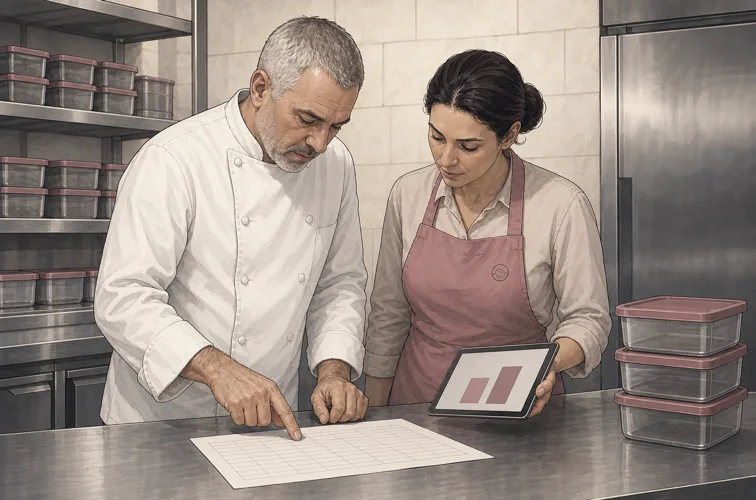
Which items to control first
Nobody has the appetite to spec an entire menu in one go, and the attempt is how these projects die. Sequence it by exposure.
Rank items by cost contribution, meaning the spec cost of the ingredient multiplied by the number of units you sell, rather than by unit cost alone. This ordering surprises people. An expensive ingredient in a dish that sells twice a week matters far less than a moderately priced one in your best selling plate, and kitchens routinely tighten the truffle while ignoring the chicken. In most venues a handful of items covers the large majority of the exposure, which means a fortnight of focused work on five or six specs captures most of the available benefit.
Once that list exists, it doubles as your variance watch list and your lineup check list, which keeps the whole programme small enough to actually sustain. Pair it with the restaurant KPIs you already review so it becomes part of an existing meeting rather than a new one, and read it alongside average check, since portion changes move perceived value and perceived value moves what guests order next.
Portioning behind the bar
Bars drift faster than kitchens and get inspected less. Free pouring is the culprit, and the defence of it is always that jiggers slow service down, which is true and beside the point when the overpour on a standard spirit measure runs at a fifth again over spec. Speed pourers with a counted pour, or jiggers where the drink justifies them, and periodic weighing of a bottle against the drinks rung through it will tell you more about your beverage margin than any supplier conversation. The full arithmetic sits in bar pour cost.
Wine by the glass deserves its own attention, because the number of glasses a bottle owes is a decision rather than a fact, and a bar that pours generously by habit will run several glasses short per case without anyone logging a thing. Mark the glassware or specify the pour and check it. Garnish and ice matter too, more for consistency than cost: a drink built with a different garnish is a different drink, and guests notice on the second visit.
Training, lineup checks and the coaching loop
Specs do not hold themselves. What holds them is a short, repeated check that costs almost nothing.
Take ten seconds at lineup on your top three sellers: portion one to spec, put it on the pass, weigh it in front of whoever is on that station. Not as theatre and not as discipline, just as calibration. Eyes drift, and the cheapest correction is a visual reference at the start of every shift rather than a conversation at the end of a bad month.
The blind test is the other tool worth having. Ask a cook to portion an item by eye, then weigh it without comment. Most people are surprised, most people are over rather than under, and almost everybody corrects immediately once they have seen the number. Run it occasionally rather than routinely so it stays a calibration exercise rather than an inspection. Fold it into staff training for new starters and expect to repeat it, because calibration decays within weeks. The check also needs a home in the daily routine: attaching it to shift handover or to your opening and closing checklists is what stops it being the first thing dropped in a busy week.
When tightening the portion is the wrong answer
Portion control is a consistency tool, and operators reach for it as a cost tool in situations where it will not help. Worth being honest about those.
If your food cost is high but your portions are already consistent, portioning is not your problem. Your problem is purchase price, menu mix, or a price that has not moved while costs have, and tightening a spec that is already being followed just makes the plate meaner without moving the number. Test the pricing question first with the menu price recommender before you touch the plate.
And be very careful with signature dishes. The plate a restaurant is known for is the worst possible place to find a few points of margin, because that portion is the reason a segment of your regulars came back at all. Shrinking it is quietly the fastest route to a run of reviews complaining that the place is not what it was, which lands squarely in reputation management and costs more than the saving. Recomposing a plate, changing what surrounds the protein, or repricing are all less visible to a regular than a smaller centrepiece. If cost pressure is genuinely the driver, the wider options in increasing restaurant sales are a better place to start than the scale.
The weekly cadence and who owns it
Ownership is what separates the kitchens where this works from the ones where it lasted a month. Split it in two: the chef owns the spec, the station, and execution on the line, and the manager owns the count, the variance report, and the follow up. When one person owns both, the same person investigating the variance is the person whose line caused it, and the report gets softer every week.
A workable rhythm looks like this. Count the watch list on the same morning each week and produce the variance. The next day, investigate the two worst lines and nothing else, checking spec and yield before anything else. Run the lineup check daily on the top three sellers. Once a month, re-yield one expensive item and review whether the watch list is still the right list, since sales mix moves. Once a quarter, read variance next to prime cost and your profit and loss statement so the kitchen sees where the drift actually landed. Feeding your sales forecast into prep quantities closes the loop from the other direction, since a batch sized for a night that never arrived becomes waste rather than a portioning problem.
What portion control will not do for you
It will not fix bad buying. If you are paying above market or accepting short deliveries, tighter specs simply portion an expensive ingredient accurately. It will not rescue a dish priced below its true cost, which is a menu decision and needs margin work rather than a scale. It will not substitute for a prep schedule, and it will not survive in a kitchen where nobody ever checks, because an unchecked spec reverts to habit within about three weeks.
What it does do is remove one large and genuinely fixable source of uncertainty. When portions are held, the numbers on your recipes start describing reality, waste becomes visible as waste rather than hiding inside a vague food cost, and the arguments about why margin moved get shorter and better informed. That is worth the fortnight it takes to set up, and it pairs naturally with reducing food waste and the broader list of restaurant improvement ideas that only work once the underlying measurements can be trusted.