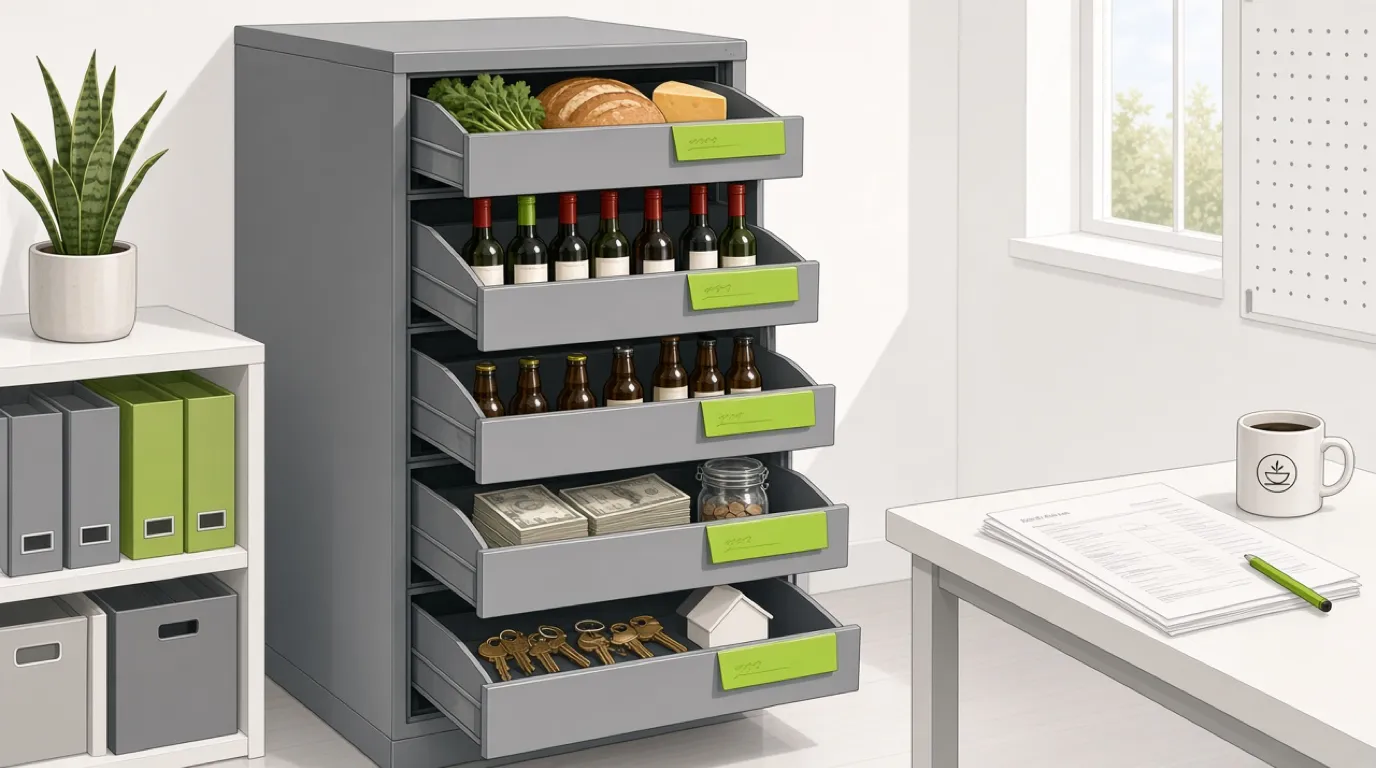

Insurance is the purchase every restaurant owner makes reluctantly and understands fully only on the worst day of their career, the kitchen fire, the slip-and-fall lawsuit, the delivery accident, the week the walk-in died in August. Get it right and a catastrophic event becomes a managed interruption; get it wrong and a single uncovered claim can erase years of margins. The problem is that "restaurant insurance" is not one product but a stack of six to ten policies, each covering a different failure mode, priced by different logic, and riddled with exclusions that matter precisely when you need the coverage. This guide walks the full stack, what each policy covers, what it costs, and where the gaps hide, in the same practical spirit as the operational systems in your POS and accounting setup: boring infrastructure that decides outcomes.
Two framing points before the policy-by-policy tour. First, insurance sits beside licensing in the pre-opening critical path, your lease, lender, and liquor license all demand proof of coverage before you serve a single guest, so price it during planning, not after signing; it belongs in your startup budget next to the permits. Second, the goal is not maximum coverage but matched coverage: a delivery-heavy pizzeria, a late-night bar, and a daytime cafe carry meaningfully different stacks, and the art is knowing which policies are structural for your concept and which are optional.
General liability: the foundation everyone requires
General liability (GL) is the policy the outside world interacts with: it covers third-party bodily injury and property damage arising from your operations, the guest who slips on a wet floor, the food that allegedly caused an illness (via the products-completed operations component), the server who spills scalding coffee, the patio umbrella that blows into a parked car. Standard limits are 1 million dollars per occurrence and 2 million aggregate, which is also what nearly every commercial lease requires, along with naming the landlord as additional insured, so treat those numbers as the floor of the market rather than a choice you are making. Cost for an independent restaurant typically runs 100 to 300 dollars a month standalone, less inside a bundle, driven by square footage, sales volume, and claims history.
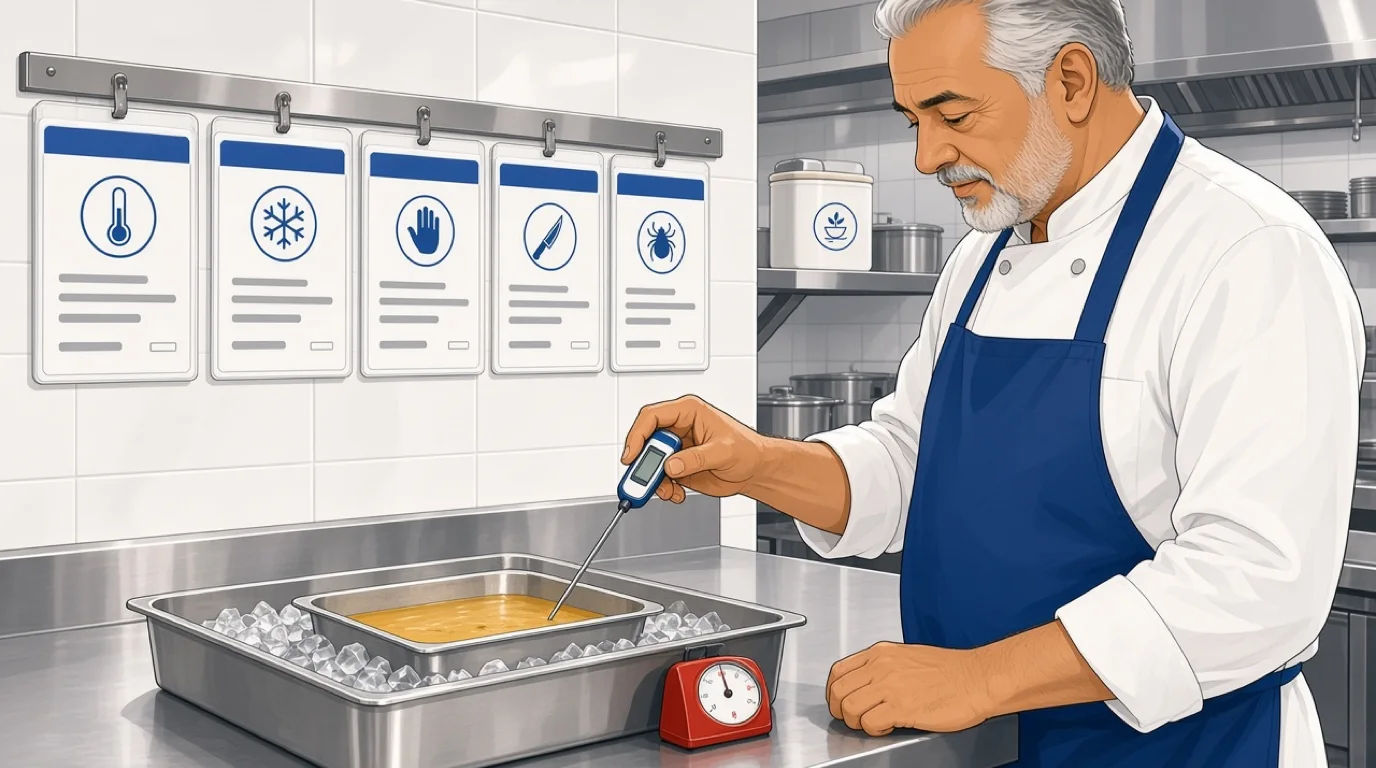
Understand what GL is really buying: a legal defense machine. The duty to defend means the insurer pays the lawyers from dollar one even for meritless claims, and in a business where slip-and-falls are the most frequent liability claim and foodborne illness allegations arrive whether or not your kitchen erred, that defense funding is the working value of the policy. Two operational notes: report incidents immediately (late notice is a classic coverage fight), and maintain the documentation habits, incident logs, camera retention, cleaning schedules, temperature records from your food safety program, that turn a he-said-she-said claim into a defensible file. The restaurants that win claims are the ones whose paperwork was ready before the claim existed.
Property coverage and the business owner's policy
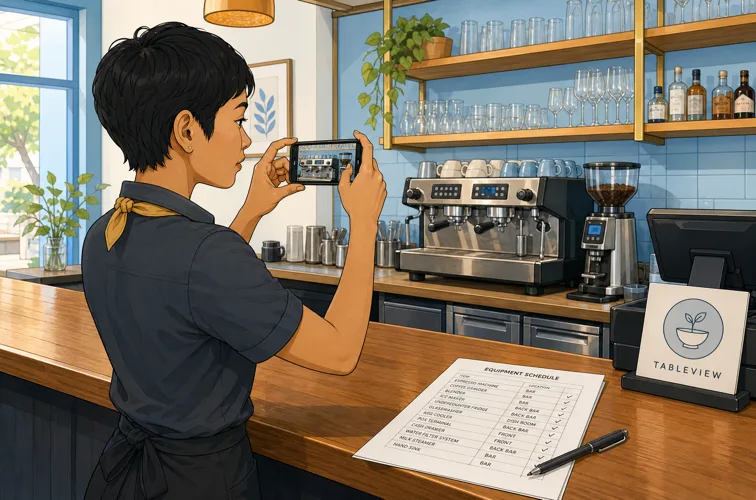
Commercial property insurance covers the physical restaurant, build-out, equipment, furniture, inventory, signage, against fire, theft, vandalism, water damage, and the other named perils. Restaurants are property-heavy businesses in disguise: between the hood system, the cook line, refrigeration, the dining room build-out, and the POS hardware, even a modest location carries several hundred thousand dollars of replaceable assets, and fire remains the industry's signature property peril. Insure to replacement cost rather than actual cash value (depreciation on a six-year-old range will disappoint you), keep an updated equipment schedule with serial numbers, and understand your policy's water damage boundaries, since the sewer-backup and flood exclusions are where restaurant property claims most often die.
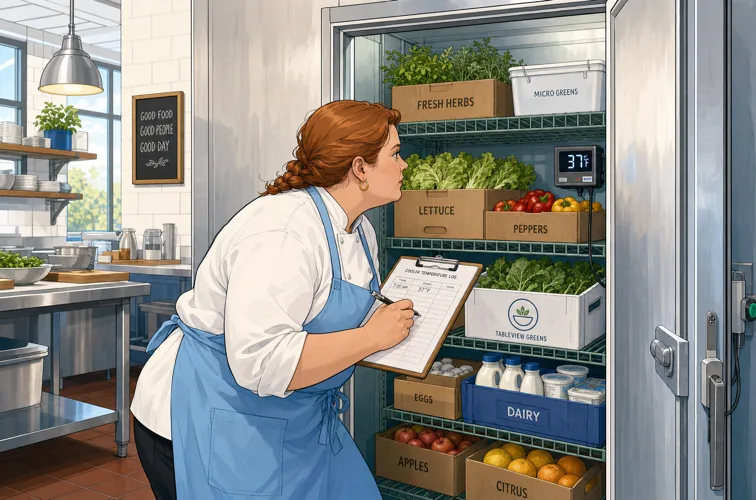
Most independents buy property and GL together in a business owner's policy (BOP), which bundles the two with business interruption coverage at a 10 to 30 percent discount and one renewal date. The restaurant move is to dress the BOP with the endorsements the standard form lacks: equipment breakdown (mechanical and electrical failure of compressors, HVAC, and kitchen equipment, distinct from the fire-and-theft perils), food spoilage (the walk-in full of product that dies with the compressor or a power outage), utility service interruption, and money and securities if meaningful cash moves through the building. Each endorsement is cheap relative to the loss it covers, and the walk-in failure alone, a five-figure inventory loss that also closes the kitchen, pays for years of the rider.
Workers' compensation: the biggest line and the most regulated
Workers' comp covers employee injuries, medical costs, lost wages, and rehabilitation, and shields you from most injury lawsuits by employees; it is legally mandatory in nearly every state from your first hire. Kitchens earn their comp rates honestly: cuts, burns, slips on greasy floors, and lifting injuries make food service a higher-rated class than office work, with premiums typically running 2 to 5 dollars per 100 dollars of payroll. On a full-service restaurant's payroll, comp is usually the single largest insurance line, often exceeding everything else combined, which also makes it the line where management effort pays the largest premium dividends.
The mechanics reward attention. Your premium starts from your class codes and payroll, then gets multiplied by an experience modifier that tracks your claims history against similar businesses, run clean for a few years and the mod drops below 1.0, cutting the bill; stack claims and it climbs. The levers: a written safety program with documented training (knife handling, floor care, burn prevention, lifting), immediate incident reporting paired with light-duty return-to-work options that keep small claims from becoming large ones, and accurate payroll classification, since misclassifying a prep cook as clerical staff saves pennies now and detonates in an audit later. Fold safety into onboarding and your employee handbook, and treat the comp mod as a KPI alongside your labor cost, it is, functionally, a labor cost.
Liquor liability: non-negotiable if you pour
If alcohol crosses your bar, you carry liquor liability, full stop. Dram shop laws in most states make establishments financially responsible for damage done by patrons they overserved, the drunk-driving accident after last call is the nightmare scenario, and standard GL policies explicitly exclude liquor liability for businesses that sell alcohol, so the coverage must be bought separately or as an endorsement. Many states require proof of it for the liquor license itself, and premiums scale with your alcohol percentage of sales, operating hours, and concept: a wine-with-dinner bistro might add 50 to 150 dollars a month, a late-night bar 300 to 400 or more, economics covered alongside everything else bar-related in our bar opening guide.
Premium and risk here respond to the same controls: responsible beverage service certification for every pourer (TIPS, ServSafe Alcohol, or the state equivalent, often legally required anyway), documented cut-off procedures and incident logs, ID scanning at the door for late-night concepts, and camera coverage of the bar. Insurers ask about all of it on the application, and discount for it. One structural note: assault-and-battery coverage, the claims arising from altercations on premises, is frequently sub-limited or excluded in bar-heavy policies, and it is precisely the claim a late-night venue is most likely to see; read that clause before binding, and buy the limit back if your concept needs it.
Business interruption: the coverage that pays the rent
Property insurance rebuilds the kitchen; business interruption (BI) coverage, usually included in a BOP, replaces the income the closed kitchen was supposed to earn, and funds the payroll, rent, and loan payments that continue while you rebuild. After a serious fire, BI is routinely the difference between reopening and folding: restaurants run thin margins with heavy fixed costs, and a three-month closure with zero revenue but full rent and loan payments kills more concepts than the fire itself, which is why adjusters privately call BI the policy that saves restaurants. Understand the policy's period of restoration (how long it pays), whether it includes extended business income (the ramp-back period after reopening, when the dining room is open but sales have not recovered), and extra expense coverage for the costs of operating temporarily from elsewhere.
The operator's homework for BI is documentation: the policy pays based on demonstrated lost income, which means your sales history is the evidence. Clean, granular records, daily sales by revenue center exported from the POS, seasonal patterns, growth trajectory, are what your claim adjuster works from, and operators with tidy books settle faster and higher than those reconstructing revenue from bank statements. Note also the trigger: standard BI requires physical damage to your property, so a closure from a neighboring fire, utility outage, or civil order needs specific endorsements (civil authority, utility interruption, dependent property). Ask about each; the endorsements are cheap and the scenarios are not exotic.
Commercial auto and the delivery gap
Delivery has quietly become the largest uninsured exposure in the industry. The mechanics of the gap: GL excludes autos; commercial auto covers vehicles the business owns; and an employee delivering in their own car is covered by neither, while their personal auto policy almost certainly excludes commercial use. The at-fault accident on a Friday-night run can therefore arrive at a restaurant with no responding policy, and plaintiffs' attorneys know to sue the business. The fix is hired and non-owned auto (HNOA) coverage, an inexpensive endorsement that picks up the business's liability for employee-driven personal vehicles, plus a hiring discipline of verifying licenses and personal insurance for anyone who delivers.
If the business owns vehicles, each needs commercial auto with real limits, state minimums are a rounding error against an injury judgment, and if delivery is core to the concept, price the insurance into the channel's economics from the start. Third-party platforms shift this exposure: marketplace drivers are covered by the platform's policy during active deliveries, which, as our delivery guide discusses, is part of what the commission actually buys. Many operators run a hybrid, platforms for reach and their own drivers for the loyal-customer radius, and the insurance program should mirror that split explicitly rather than assuming one policy stretches across both.
Cyber liability: small restaurants, real target
Restaurants process thousands of card transactions, store guest data in reservation and loyalty systems, and run on cloud software, which makes them targets not despite their size but because of it: attackers automate, and small businesses with payment volume and thin IT defenses are the efficient hunting ground. Cyber liability coverage responds to the breach lifecycle, forensic investigation, guest notification (legally required in every state), credit monitoring, PCI fines and reassessment costs after a card-data compromise, ransomware response, and liability claims, and typically costs 50 to 150 dollars a month at restaurant scale. If your concept leans on online ordering and stored guest profiles, the exposure is structural, not theoretical.
Insurers increasingly underwrite cyber like comp: they ask what controls you run and price accordingly. The basics that both reduce premiums and actually protect you: multi-factor authentication on email and admin accounts, unique credentials per employee with immediate deactivation at offboarding, current software and PCI-compliant payment flows (point-to-point encryption on terminals does heavy lifting), staff phishing awareness, and tested backups held separately from the network. Most restaurant breaches begin with a phished email or a shared password, not sophisticated intrusion, which is good news: the defense budget is mostly discipline. Pair the policy with the payment-side hygiene covered in our chargebacks guide, the two exposures share controls.
The supporting cast: EPLI, umbrella, and key person
Three more policies earn their premium in specific situations. Employment practices liability insurance (EPLI) covers claims by employees, wrongful termination, discrimination, harassment, wage-and-hour disputes, and the restaurant industry generates these claims at above-average rates, a function of young workforces, tipped-wage complexity, and high turnover; EPLI with wage-and-hour defense coverage is worth a serious look for any operation past a handful of employees. Umbrella (excess liability) coverage sits above your GL, liquor, and auto limits and extends them, typically 50 to 100 dollars a month per million; it exists for the tail event, the multi-victim accident or the verdict that blows through 1 million, and it is the cheapest coverage per dollar of protection in the entire stack.
Key person coverage and buy-sell funding matter for partnerships: if the chef-owner whose name carries the concept dies or is disabled, key person life insurance funds the transition, and a buy-sell agreement backed by insurance prevents a deceased partner's estate from becoming your new business partner. None of these are glamorous, and each is skippable right up until it is the only thing that matters. The discipline is to revisit the supporting cast annually as the business grows: the stack that fit a 30-seat opening is undersized for the three-location group with 60 employees, and coverage reviews should track the same milestones as your KPI reviews.
Reading the policy: exclusions, limits, and the fine print that decides claims
Every policy is a promise with boundaries, and claims are won or lost at the boundaries, so learn to read the three load-bearing sections. Limits: per-occurrence versus aggregate (a 1 million/2 million GL policy pays at most 1 million for one event and 2 million across the policy year), and sub-limits buried in endorsements, the spoilage rider capped at 10,000 when your walk-in holds 25,000 of product is a discovery you want at purchase, not at claim. Deductibles: higher property deductibles are often an efficient trade for lower premiums, but only if your cash reserves can genuinely absorb them on a bad week. Exclusions: the standard restaurant landmines are flood and sewer backup (separate coverage), earthquake where relevant, mold, employment claims (that is EPLI's job), liquor liability on the GL form, autos, and intentional acts.
Three fine-print habits pay for themselves. First, read the definitions section, whether a power outage counts as utility interruption, or a health-department closure triggers civil authority coverage, turns entirely on defined terms. Second, check notice requirements and comply obsessively: policies require prompt notice of incidents and claims, and late notice is among the most common reasons otherwise-valid claims get denied, so report the ambiguous slip-and-fall today rather than waiting for the lawyer's letter. Third, review certificates annually: the lease that demands 2 million aggregate, the lender that requires listing them as loss payee, the franchisor with its own schedule, each certificate is a contractual obligation, and a lapsed or mismatched one is a default you can cure in an afternoon now or litigate later.
The claims playbook: what to do when something happens
Claims reward preparation and speed. The immediate sequence after any incident: people first (medical attention, never an admission of fault, staff trained to express concern without conceding liability), then evidence, photos of the scene from multiple angles before anything is cleaned or repaired, witness names and contacts, camera footage pulled and preserved that day (most systems overwrite within weeks), and the incident logged in writing with time, conditions, and responders. Then notice: call the broker and carrier promptly, even for incidents that may never become claims, because the insurer's playbook works best when it starts early, and late notice is a coverage killer. For property losses, mitigate immediately, tarp the roof, move the inventory, start drying, since policies require reasonable steps to prevent further damage and reimburse the cost of them.
Through the claim itself, document like an accountant and communicate like a professional. Keep a claim file: every receipt for emergency expenses, a running log of calls with adjusters, the equipment schedule and sales exports you prepared in peacetime. Do not settle repairs or discard damaged property before the adjuster inspects, and for large or contested losses, know that public adjusters and policyholder-side attorneys exist and are sometimes worth their fee. Above all, treat honesty as strategy: inflated or embellished claims void policies entirely, while clean, well-documented ones settle faster and preserve the claims history that keeps your future premiums sane. The operators who navigate claims well all did the same thing: they built the file before the loss, so the worst week ran on paperwork that already existed.
What the full stack costs, by concept
Composite monthly figures for planning, assuming a single location with clean history. A daytime cafe or QSR without alcohol or delivery: BOP 100 to 250, workers' comp on a lean payroll 300 to 800, cyber 50 to 100, total roughly 450 to 1,150 a month. A full-service restaurant with a wine-and-beer program: BOP 150 to 300, comp 600 to 1,500, liquor liability 50 to 200, cyber 50 to 150, umbrella 50 to 100, total roughly 900 to 2,250. A bar or late-night venue: expect the liquor line to triple, assault-and-battery buy-backs, and higher GL rating, 1,500 to 4,000-plus is common. Delivery adds HNOA (modest) or commercial auto per vehicle (150 to 300 each). Across concepts, insurance generally lands between 0.5 and 2 percent of revenue, a real line in the P&L but a small one against what it absorbs.
Buy the stack like an operator rather than a form-filler. Use a broker who specializes in hospitality, they know which carriers actually want restaurant risk this year and which endorsements matter for your concept, and a generalist broker quoting a restaurant off a standard small-business form will miss half the items in this guide. Bring documentation to the application: safety program, training records, inspection history, fire suppression contracts, since underwriters price the file in front of them, and a well-documented submission routinely quotes 10 to 20 percent below a bare one for the identical restaurant. Re-quote every two to three years, align all renewal dates onto one calendar (the same compliance calendar as your licenses), and rehearse the claim before you have one: photos of the premises today, an equipment schedule, sales exports, and your broker's cell number make the worst day survivable. Insurance never sold a single cover, but it is the reason a bad night stays a bad night instead of becoming the end of the story, and the operators who treat the stack as living infrastructure, reviewed yearly, documented daily, get both the cheaper premiums and the faster recoveries.