Take a third off a spritz that sells for 9.50 and costs 1.90 to pour, and you keep 4.60 a glass instead of 7.60. To earn the same gross profit you now have to sell 65% more spritzes, and most happy hours never get close. If you want to improve your happy hour menu, start there: the discount is a cost, and every item on the list has to earn it back in extra drinks, extra food or guests who stay for dinner. A POS for bars and clubs will show you, hour by hour, whether yours does.
The usual happy hour is the full drinks list with a flat discount bolted on between five and seven. It's easy to set up, which is why it's everywhere, and it's the version that loses the most money. The premium gin gets discounted along with the house wine, the bartender spends the busiest stretch of the early evening muddling cheap mojitos, and nobody orders food. A better menu is shorter, priced item by item and switched on and off by the restaurant POS at the right minute, so nobody has to remember to change the prices back.
If you're still deciding whether to run one at all, our piece on happy hour basics covers the idea and where it came from. Everything below assumes you already have a happy hour and want it to pay.
How to improve your happy hour menu
You improve a happy hour menu by keeping only the items that still make money at the lower price, giving the hour one clear job and measuring it.
- Pull the sales for the window by hour and weekday
- Pick one job for the hour
- Cost every item at its happy hour price
- Cut the list to a few drinks and bites
- Fix the window, the days and the rules
- Measure for four weeks, then change one thing
The menu is a promotion with a cost, so each item is judged by what it adds in covers, check size or dinner bookings, not by how cheap it looks.
In short: fewer items, priced one by one, measured against the same hours before the change.
A happy hour menu vs a discount on the bar
Owners use the two phrases as if they meant the same thing. They don't, and the difference decides whether the early evening makes money.
A discount on the bar
Every drink, or every drink in a category, drops by a fixed amount or percentage for two hours. Simple to explain and simple to set up. It also discounts the drinks people would have bought anyway, at the price they'd have happily paid.
A happy hour menu
A short, separate list with its own prices, chosen because each item is cheap to make, quick to serve and likely to lead to a second order. It can include food, it can leave the premium bottles at full price, and it can change every season without anyone reprinting the main menu.
Key distinction:
- A bar discount lowers your prices. A happy hour menu chooses which prices to lower and why.
- Only the menu lets you control pour cost, kitchen load and what guests order next.
Step by step: rebuilding a happy hour menu
None of these steps needs a consultant. They need your sales data, a costing sheet and the discipline to leave the menu alone for a month once it's live.
1. Pull the numbers for the window
Before changing anything, get four weeks of sales for the happy hour window and the hour either side of it, split by weekday. You want covers, average check, the share of the check that's food, and the top ten items by quantity. Tuesday at five and Friday at five are different businesses, so don't average them together.
Look at the hour after happy hour ends as well. If covers fall off a cliff at seven, your happy hour is attracting people who leave when the prices go up. That isn't always bad, but you should know it.
2. Decide what the hour is for
Pick one job. Filling a dining room that's empty until half seven is a different job from building a regular after-work crowd, and both differ from selling through a keg of seasonal beer before it turns. One job gives you one number to watch:
- Fill seats: covers in the window
- Build a habit: repeat guests, week on week
- Feed dinner: tables still ordering after the window closes
- Move stock: units of the item you need to shift
A happy hour that tries to do all four usually does none of them, because every item gets added for a different reason.
3. Cost every item at its happy hour price
Work out the pour cost or food cost of each candidate at the discounted price, not the regular one. A cocktail running at 18% at full price might sit at 26% on happy hour, which is fine. A premium spirit that was already at 28% jumps towards 40%, which usually isn't. The formula and sensible targets by drink type are in our article on bar pour cost, and the pour cost calculator does the arithmetic for a whole list at once.
4. Cut the list
Six to eight drinks and four to six bites is plenty. Keep the ones that pass the costing, are fast to make and lead somewhere: a house cocktail that sells a second round, a plate of croquetas that makes the table look at the dinner menu. Drop anything that takes the bartender more than a minute or the kitchen more than five.
5. Fix the window, the days and the rules
Choose the days, the start and end times, whether it runs in the whole room or only at the bar, and what happens at the end. Write those rules on the menu itself. The most argued-over one: a guest who ordered at 6:58 keeps the happy hour price on that round, and the next round is at full price.
6. Measure, then change one thing
Run the new menu unchanged for four weeks and compare it with the same weekdays before. Then change one variable (a price, an item, the end time) and measure again. Change three things at once and you'll never know which one worked.
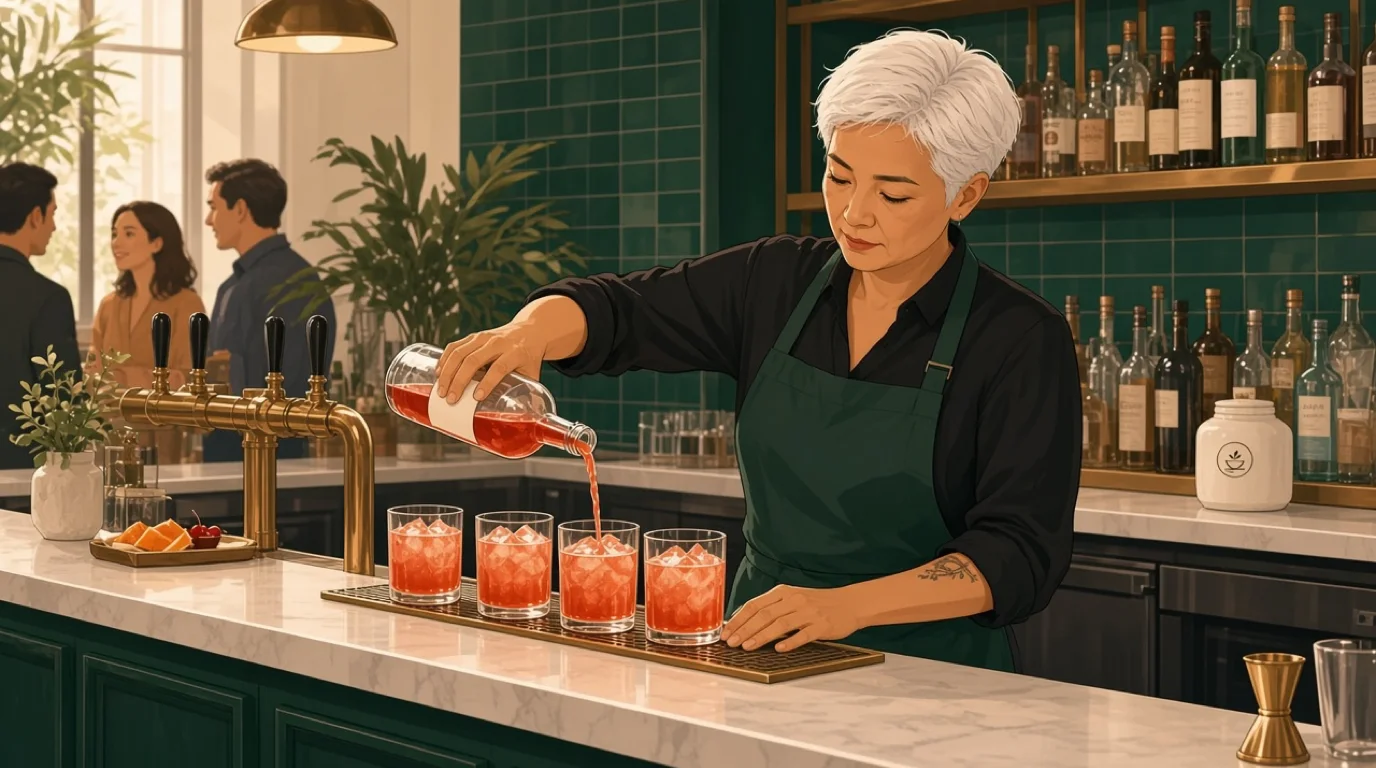
Here's how those steps play out for a 64-seat neighbourhood bistro with a 12-seat bar. Its happy hour ran Tuesday to Friday, 4:30 to 6:30, with 30% off all draught beer, house wine and cocktails. Over four weeks the window averaged 19 covers a night, an average check of 13.20 and almost no food, and the bar's pour cost for those two hours came out at 31%. Fewer than one table in three was still ordering at 7 pm.
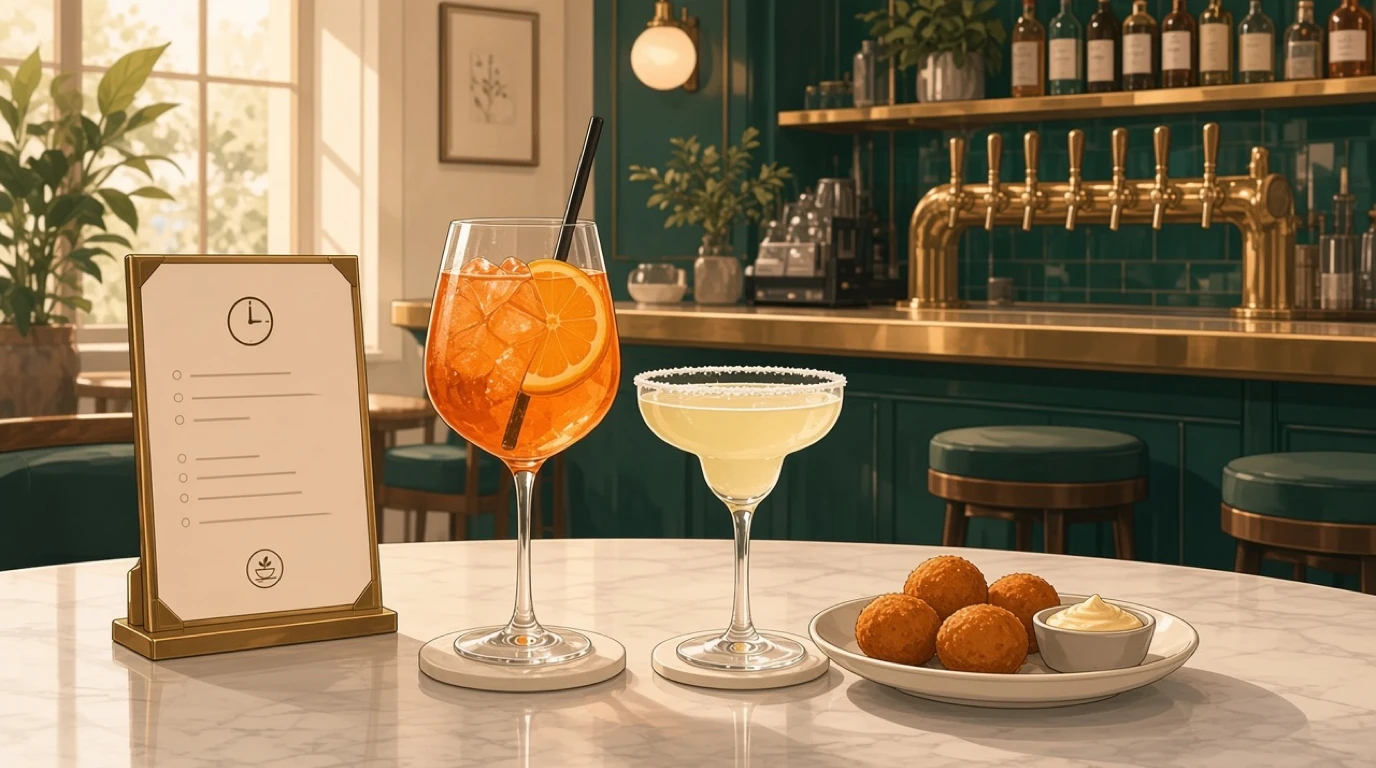
The owner picked one job: feed dinner. The new menu had seven drinks and five small plates. Two batched house cocktails, a spritz, one draught lager, house red and white by the glass and an alcohol-free spritz, all at around 25% off. The small plates came from the dinner kitchen: fries with aioli, croquetas, a half flatbread, marinated olives and a smaller portion of the most popular starter. Premium spirits and the craft taps stayed at full price.
Four weeks later the window was averaging 27 covers and an average check of 17.60, because most tables ordered at least one plate. Happy hour revenue went from about 251 a night to about 475. Pour cost in the window fell to 25%, since the batched cocktails cost little and took seconds to serve. The number the owner cared about moved most: 41% of happy hour tables were still ordering after 7 pm, against 28% before. On the POS's hourly sales view, the 6:30 to 7:30 hour became the second busiest of the night instead of the quietest.
What drinks to put on a happy hour menu
The best happy hour drinks share three traits: low cost per serve, fast to pour and good enough that a guest orders a second. Price comes after that.
Batched house cocktails. A margarita or a negroni batched before service costs less than two units of spirit plus citrus, and the bartender pours it in ten seconds. Two batched cocktails will carry most happy hours. Avoid anything that needs muddling, egg white or a blender, because the line at the bar grows faster than the margin.
A spritz or highball. Long drinks with a low spirit content cost little and look generous. They also suit the early evening better than a stiff drink, which matters if you want people to stay and eat.
One draught beer. Pick the lager with the best cost per pint, not every tap. Discounting the craft taps mostly gives money to people who'd have paid full price anyway.
House wine by the glass. One red, one white, maybe a rosé in summer. Make sure the glass size on the happy hour menu matches the one on the main list, or someone will ask.
A proper alcohol-free option. More and more people come out after work and don't drink, and a fruit soda at full price tells them happy hour isn't for them. An alcohol-free spritz or a house soda at a happy hour price costs you very little and keeps the whole table ordering.
Leave off premium spirits, bottles of wine and anything you're short of. If a supplier delivery is late and the house red runs out at six, a printed menu still promises it, which is one more reason to keep the list where you can change it in seconds.
Happy hour food that earns its place
Food is the part of a happy hour menu most bars skip and the part that does the most for the check. A guest with a plate in front of them stays longer, drinks more slowly and is far more likely to stay for dinner than one standing with a pint.
Good happy hour food has a low food cost, uses ingredients the kitchen already prepares for dinner and goes out in under five minutes. That usually means fried, cured, baked or assembled cold: fries with a good dip, croquetas from the freezer, a flatbread cut into slices, a cheese or charcuterie board in a small size, wings, a smaller portion of a dinner starter. Aim for a food cost under 30% at the happy hour price, and check it on the food cost calculator rather than guessing.
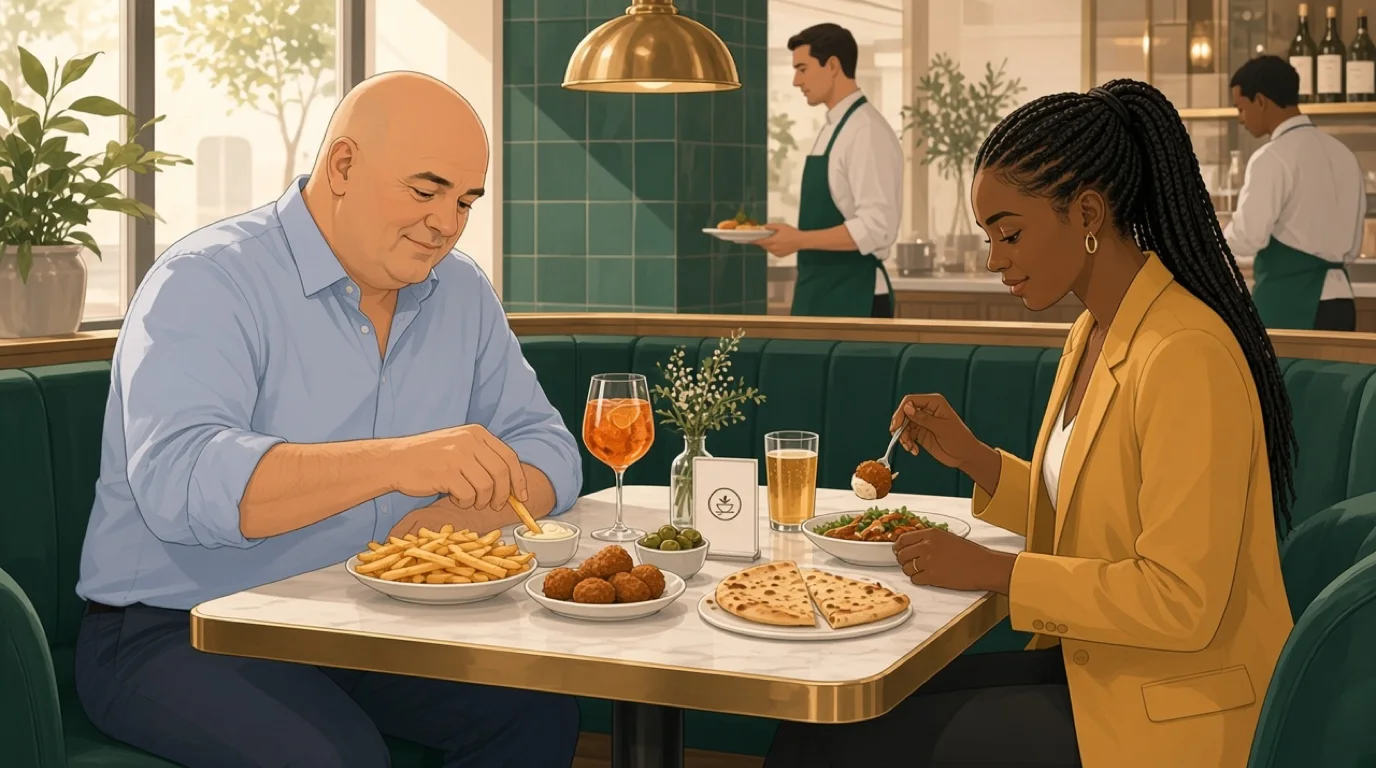
The smaller portion of a dinner starter deserves a special mention. It costs you a few minutes of prep and gives the guest a free trial of your dinner menu. If they like it, the full-size version is right there on the next page. That one item does more to feed dinner than any discount on drinks.
Talk to the kitchen before adding anything. Happy hour often lands just as the kitchen is setting up for dinner, and five extra tickets for fiddly bites at 5:45 can delay the first dinner tables. If the dishes go to a kitchen display system, put them on a station that isn't busy with dinner prep, or keep them to things the bar can plate itself.
How to price a happy hour menu
Most happy hours knock 20% to 35% off. Shallower than that and nobody notices; deeper and the volume you need to break even is rarely there. The useful question isn't the percentage but what each item earns per serve at the new price.
Here's a typical list, regular price against happy hour price, before tax. Work on prices net of VAT or sales tax when you do this for real, since that's what pour cost is measured against.
| Item | Cost | Regular price | Happy hour price | Cost % at happy hour |
|---|---|---|---|---|
| Batched margarita | 1.80 | 10.00 | 7.00 | 26% |
| House spritz | 1.90 | 9.50 | 6.50 | 29% |
| Draught lager, pint | 1.35 | 6.00 | 4.50 | 30% |
| House red, 175 ml | 1.70 | 7.50 | 5.50 | 31% |
| Fries with aioli | 0.80 | 5.00 | 3.50 | 23% |
| Premium gin and tonic | 3.10 | 11.00 | 8.00 | 39% |
The first five stay under about a third, so they can go on the menu. The premium gin and tonic would cost almost 40% to serve, and anyone ordering it at happy hour would probably have paid full price anyway, so it stays off.
Some other pricing habits that work:
- Price tiers instead of discounts. A 5, 7 and 9 list is easier to read than "25% off selected drinks", and it hides the discount on items with the most room.
- Show the regular price. Printing the normal price next to the happy hour one makes the offer clear and stops it looking like your real prices.
- Don't discount food and drink by the same amount. Food often has more room, and a cheap plate is what keeps people in the room.
- Round the numbers. 6.50 reads better than 6.65, and nobody at the bar wants to work out 30% of 9.50.
If you want a starting price for a new item rather than a discount off an old one, the menu price recommender works from plate cost and your target margin. For where the happy hour list sits against the rest of the menu, the stars and plowhorses method in menu engineering applies just as well to a list of twelve items.
Timing, days and the rules on the menu
Run happy hour when you're quiet, not when you're already busy. That sounds obvious, yet plenty of bars run it on Friday at six, when the room would be full at full price. Check the hourly numbers from step one and put the window in the dip, typically late afternoon on weekdays.
Two hours is the norm. Ninety minutes creates more urgency; three hours tends to drift into dinner and drag full-price orders down with it. Many venues skip Friday and Saturday altogether and add a late slot on a slow weeknight instead, say 9 to 11 on Wednesdays, which suits industry staff coming off shift.
The end of the window needs a rule everybody knows. A guest who ordered at 6:58 keeps that price on that round, and the next round is at full price. If prices change by hand, someone forgets and sells happy hour prices until eight, or a server charges a table full price for a round they ordered at 6:45. That's why many casual dining and bistro venues let the POS switch menus at a set time, with open tabs keeping the prices they started with.
Where happy hour is restricted or banned
Check your licence before you print anything. In Ireland, cutting the price of alcohol at certain times of day is illegal, so happy hours are banned outright, along with short price promotions of under three days (Citizens Information). In Scotland, a licence condition says a change to on-sale drink prices can only take effect at the start of licensed hours and can't be changed again for 72 hours, which rules out a daily happy hour (schedule 3 of the Licensing (Scotland) Act 2005). Several US states restrict or ban drink discounts by time of day too. Where alcohol happy hours aren't allowed, a food-led early evening menu at full drink prices is usually still fine, but check with your licensing authority first.
How to tell if your happy hour menu is working
Gut feel says a busy bar at six is a successful happy hour. Your numbers might disagree. Compare the four weeks after a change with the four weeks before, on the same weekdays, and look at these:
- Covers in the window, against the same hours before the change.
- Average check in the window, and the share of it that's food.
- Pour cost in the window, not across the whole night, where it gets diluted.
- Tables still ordering after the window closes, if feeding dinner is the job.
- Revenue in the hour after, to check you're not just moving full-price sales earlier.
- Labour in the window, because an extra bartender on a slow afternoon changes the whole sum.
Your POS should give you most of this without a spreadsheet: sales by hour, product mix by hour and the average check for a time range. Average check is the one that moves most when food goes on the menu, and our article on raising the average check has more ways to push it up.
Watch for one pattern in particular. If covers in the window go up and revenue for the whole night stays flat, your happy hour is just moving people who'd have come anyway to a cheaper time. That's the most common way a happy hour that looks busy ends up losing money.
Common happy hour menu mistakes
Most weak happy hour menus fail in the same few ways.
Too many items. A happy hour menu as long as the main menu isn't a promotion, it's a price cut. Guests take longer to choose and the bar can't prepare for anything.
Discounting what already sells. If your best-selling pint flies out at full price at 5:30, putting it on happy hour mostly gives away margin.
No food. Drinks-only happy hours fill the bar with people who leave at seven. Food keeps them and gives the kitchen a reason to want happy hour too.
Manual price changes. Two price lists switched by hand twice a day will go wrong, usually on the busiest night and usually in the guest's favour.
Never changing it. The same list for three years gets stale for regulars. Rotate one cocktail and one plate each season, and use the change as a reason to post about it. Our article on restaurant social media marketing has ideas for getting the word out.
Treating it as the fix for a slow night. Happy hour helps a quiet hour. It doesn't fix a quiet night caused by the wrong location, the wrong price point or a menu nobody talks about. If the whole evening is slow, start with the wider ideas in our article on slow restaurant nights.
Where Tableview fits, and where it does not
In Tableview the happy hour menu is a set of scheduled pricing rules on your normal menu. You choose the items, the happy hour price, the days and the times, and prices switch on and off by themselves on the till. Deals and combos follow the same time-of-day and day-of-week rules, so a cocktail and a plate for a fixed price can run only on weekday afternoons. When the window ends and the bar menu switches to dinner, open tabs keep the prices they started with. The same schedule applies to the QR menu and mobile ordering, so guests ordering from their phone see the right price at the right time.
To measure it, the live sales dashboard has an hourly breakdown, and the product mix and margin reports show what each item earned at its happy hour price. Bars can see the hourly product mix while the shift is still running and track every pour against what's left in the bottle or keg. Cocktail recipes deduct their ingredients automatically, and recipe costing in restaurant stock management compares the cost of every recipe with its selling price, so you can see straight away when a happy hour price pushes an item's cost too high.
Where something else is the better choice:
- Tableview runs the prices, not the promotion. If you want SMS campaigns or app notifications announcing happy hour, you'll need a marketing tool alongside it.
- It won't design or print your menu. Table cards and chalkboards are still yours to make.
- A chain with hundreds of sites and a central promotions team is better served by an enterprise system built around that team.
Key takeaways
- A good happy hour menu is a short list of items that still make money at the lower price, not a discount across the whole bar.
- Give the hour one job, such as filling seats or feeding dinner, and measure the number that matches it.
- Cost every item at its happy hour price. Premium spirits usually fail that test; batched cocktails usually pass.
- Put food on the menu. A small plate keeps guests longer and gives them a reason to stay for dinner.
- Let the POS switch prices on schedule, and keep the old price on rounds ordered before the window closes.
- Check your local licensing rules first. Happy hours are banned in Ireland and effectively ruled out in Scotland.
Read next: menu pricing strategy for the rest of the list, restaurant profit margins for the wider numbers, and increasing restaurant sales for what to try next.