Most restaurants already have standard operating procedures. They just live in the head chef's memory, in a group chat from 2023 and in whatever the closing manager remembers on a tired Sunday. A restaurant SOP takes one of those habits, the way your best person does a job, and writes it down so the newest person can do it the same way. Some procedures barely need paper at all, because a well-configured restaurant POS system puts the right modifiers in front of the server, sends the ticket to the right station and limits who can void a dish.
The rest need writing, and writing them well is less work than most owners expect. The trick is to start with the handful of tasks where a mistake costs money, hurts someone or breaks the law, keep each one to a page, and tie it to the systems your team already uses. A portioning SOP means little if the recipe in your restaurant inventory software says 180 grams and the line is plating 220.
What is a restaurant SOP?
An SOP is a short written procedure for one recurring task: the steps, in order, who does them, and what "done properly" looks like. Cooling a batch of stock, cashing up a till, receiving a fish delivery, taking an allergy order. A restaurant operations manual is simply all of those SOPs gathered in one place, organised so people can find the one they need.
A good SOP for restaurant work has the same parts every time:
- A name that matches what staff call the task ("Closing the fryer", not "Thermal equipment shutdown").
- Who does it, when, and roughly how long it takes.
- The tools and products needed, so nobody starts and then goes looking.
- Numbered steps, each starting with a verb.
- The standard: a temperature, a weight, a photo, a count that proves it was done.
- What to do when something is wrong, and who to tell.
- A date and an owner, so everyone knows it is current and who to ask.
If a document has all seven and fits on one page, it will get used. If it runs to four pages of background, it will sit in a binder.
SOP, checklist, handbook: which document does what
Three documents get confused constantly, and mixing them up is the main reason restaurant manuals end up unreadable.
The employee handbook is about employment. Pay, tips, breaks, uniform, phones, discipline, how to resign. It answers "what are the rules of working here?" and it is partly a legal document. The detail is in writing a restaurant employee handbook.
The checklist is a reminder of what to do, not how to do it. "Fryer filtered" is a checklist line. It assumes the person already knows how. Daily lists for opening and closing are covered in restaurant opening and closing checklists.
The SOP is the how. "Filtering the fryer" walks through switching off, letting the oil drop below a safe temperature, fitting the filter, draining, cleaning the pot and refilling to the line. A checklist line can point to an SOP. The new starter reads the SOP once, practises it with someone watching, and from then on the checklist is enough.
Recipe cards are a special kind of SOP for the plate, and they deserve their own section later. Training plans use SOPs as material but are a separate thing again.
Which restaurant SOPs to write first
Nobody writes eighty procedures in a week, and nobody should try. Rank your tasks on two questions. How bad is it when this goes wrong? And how often does it go wrong, or how often is it done by someone new?
The top of that list looks similar in almost every restaurant:
- Taking and passing an allergy order, from the guest to the plate.
- Cooling and reheating cooked food.
- Receiving deliveries and checking temperatures.
- Cash-up and end of day at each till.
- Voids, comps and refunds.
- Portioning the ten best-selling dishes.
- Opening and closing the kitchen equipment that can hurt someone: fryers, slicers, combi ovens.
- Refusing service: alcohol, age checks, an aggressive guest.
- Handling a complaint at the table.
- What to do when the power, the internet or the card terminals go down.
- Cleaning and sanitising food contact surfaces.
- Locking up: alarms, doors, safe, the walk-in.
Twelve procedures, each a page, is a weekend's writing for one manager. It covers most of the risk in a typical 60-seat restaurant. Once those are in use, add procedures as problems show up. Every time something goes wrong twice, it has earned an SOP.
How to write a restaurant SOP that people follow
Writing from a desk produces procedures nobody recognises. Write from the floor.
Watch your best person do it
Pick whoever does the task best and watch them do it, start to finish, during a real shift. Write down every step, including the ones they skip mentioning because they're obvious to them. Those are usually the steps new people miss. Ask why at each one. If the answer is "no idea, we've always done it", that step may not belong in the SOP at all.
One task, one page
"Kitchen closing" is not an SOP. It is ten. Split it until each document covers one job that one person does in one go. Short documents get read. And when the fryer changes, you rewrite one page instead of hunting through a long chapter.
Start every step with a verb
"Check the probe is calibrated" beats "Probe calibration should be verified." Use the words your team uses. If everyone calls the walk-in "the big fridge", the SOP can say both once and then stick to the one staff say. Keep steps to one action each. Ten short steps are easier to follow than four long ones.
Define what finished looks like
This is the part most SOPs leave out, and it's the part that makes them useful. "Clean the flat-top" means different things to different people. "Flat-top scraped to bare metal, no carbon at the edges, oiled, as in the photo" means one thing. Numbers do the same job: core temperature, weight on the scale, the count in the drawer. A photo of the correct result, taken on your own equipment, saves a paragraph of description.
Say what to do when it goes wrong
Every SOP needs a short "if" section. If the delivery is above temperature, refuse it and note it on the invoice. If the till is out by more than a set amount, recount with a second person and call the manager. Without this, people improvise, and improvising under pressure is how small problems become expensive ones.
Test it on someone new
Give the draft to the newest person on the team and ask them to do the task from the page alone while you watch. Don't help. Every time they hesitate or ask a question, the SOP needs another line or a clearer one. Two rounds of this usually fixes it.
A restaurant SOP template you can copy
The format matters less than using the same one every time, so people know where to look. This restaurant SOP template fits on one page:
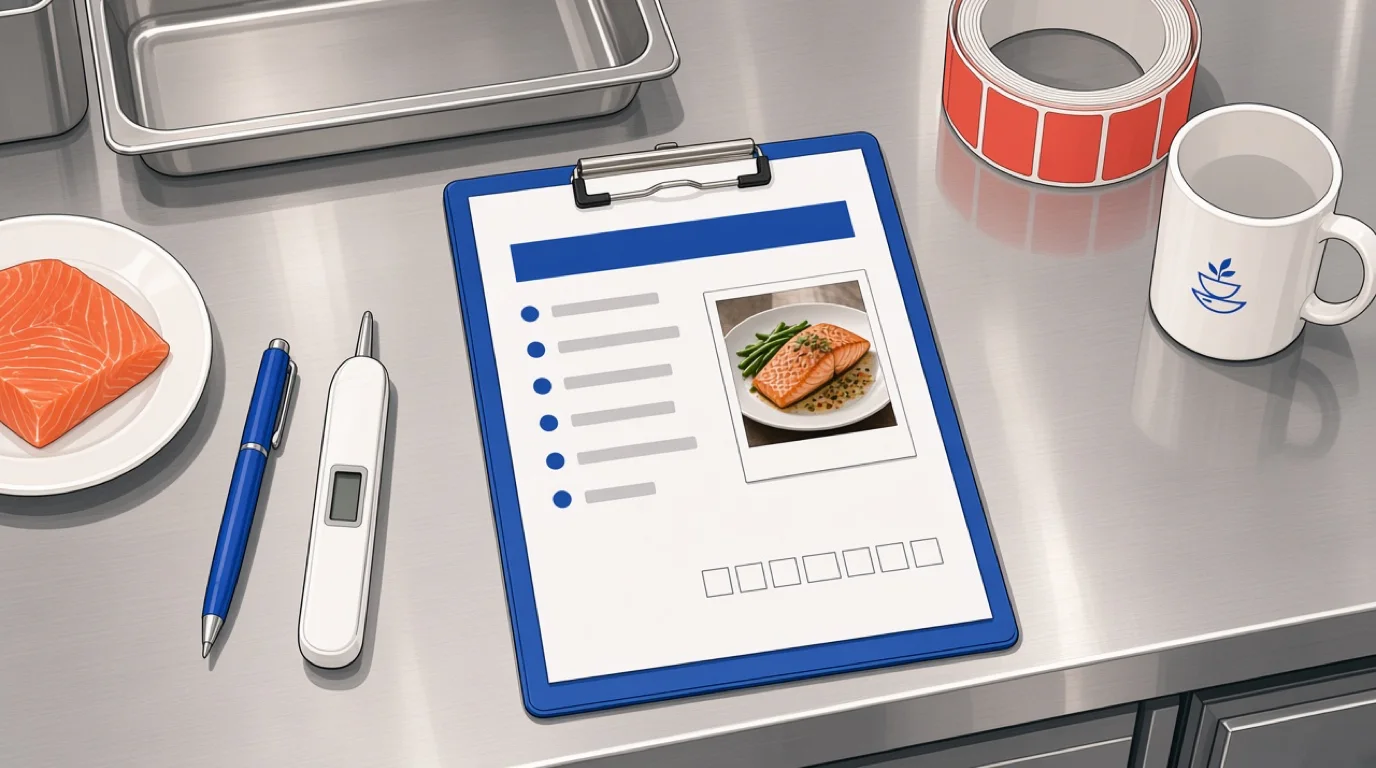
- Title and number: K-04 Cooling cooked food.
- Applies to: all kitchen staff, every shift.
- When: any cooked food that will not be served within the hour.
- Time needed: 10 minutes of work, plus cooling time.
- You need: shallow gastronorm trays, ice bath or blast chiller, calibrated probe, cooling log.
- Steps: numbered, verb first.
- Standard: the number, weight or photo that proves it's right.
- If something is wrong: the fix and who to tell.
- Why it matters: one sentence. People follow rules they understand.
- Owner and last review date: name, role, month and year.
12 restaurant SOP templates for a restaurant and bar
The twelve SOPs below are written for Marlow, a fictional 70-seat restaurant with a 12-seat bar, open for lunch and dinner six days a week. They cover the highest-risk tasks from the list above, plus opening and closing. Copy them into a document, change the names, times and equipment to match your place, and test each one on a new starter before you print it. Where a number comes from regulation, it is the US FDA Food Code unless stated otherwise; check the rules where you trade.
- Manager: M-01 Opening, M-02 Cash-up, M-03 Closing and locking up
- Kitchen: K-01 Receiving deliveries, K-02 Cleaning schedule, K-03 Reheating, K-04 Cooling
- Floor: F-01 Allergy orders, F-02 Complaints
- Bar: B-01 ID checks, B-02 Spirit pours, B-03 Glass washing and ice
M-01 Opening the restaurant
| Applies to | Opening manager |
|---|---|
| When | Every day, 90 minutes before the first booking |
| Time needed | 30 to 40 minutes |
| You need | Keys, alarm code, temperature log, till floats, the day's bookings |
| Owner | General manager, reviewed October 2026 |
- Disarm the alarm, open the staff door only, and walk the whole building before anyone else comes in: doors, windows, toilets, storerooms and the yard.
- Check that power, gas, hot water and the extraction fans are working.
- Read the thermometer on every fridge and freezer, including the bar fridges, and write each reading on the temperature log.
- Check that every handwash sink has hot water, soap and paper towels.
- Take the till floats from the safe, count each one with a second person and sign the float sheet.
- Switch on the tills, card terminals, kitchen screens and printers, and send one test order from a till to the kitchen.
- Read last night's handover note and today's bookings. Note large tables, allergies flagged in advance and anyone off sick.
- Brief the team 15 minutes before doors open: covers, specials, dishes that have run out, allergens in the specials, sections.
Standard: every fridge at 41°F (5°C) or below, freezers frozen hard, floats correct and signed, the test order shows on the right station, briefing done before doors open. If something is wrong: if a fridge is above 41°F, move its contents to a working unit and tell the head chef before anything from it is used; if a float is short, don't open that till and call the general manager. Why it matters: a problem found at ten in the morning costs far less than the same problem found at eight at night.
M-02 End-of-day cash-up
| Applies to | Closing manager and each till holder |
|---|---|
| When | After the last check of the day is closed |
| Time needed | About 15 minutes per till |
| You need | End of day report, float sheet, cash bags, a second person |
| Owner | General manager, reviewed October 2026 |
- Close all open tabs and checks on the till. Nothing carries over without a manager's say-so.
- Print or open the end of day report.
- Count the drawer with a second person present, by denomination, and take out tomorrow's float.
- Compare cash counted with cash expected on the report and write down the difference.
- Match card totals against the terminal batch.
- Bag the takings, seal the bag, write the till, date and amount on it, and both sign it.
- Put the bag and the float in the safe and lock it.
Standard: each drawer matches the report within five dollars. If something is wrong: recount together, check for refunds and items that were served but never rung up, then log the difference and tell the general manager. Why it matters: small gaps found the same night can be explained; found a week later they can't. What each line of the report means is covered in reading the Z report.
M-03 Closing and locking up
| Applies to | Closing manager, last to leave |
|---|---|
| When | After cash-up, every night |
| Time needed | 20 minutes |
| You need | Signed station closing lists, keys, alarm code, handover log |
| Owner | General manager, reviewed October 2026 |
- Collect the signed closing list from each station: kitchen, floor and bar.
- Walk the kitchen line and check every appliance is off. Fridges and freezers stay on.
- Check the walk-in: nobody inside, food covered and labelled, door shut, temperature written on the log.
- Check that toilets, storerooms and the yard are empty, and that the back door and fire exits are shut. Never chain or block a fire exit.
- Confirm the cash bags and floats are in the safe and the safe is locked.
- Write the handover note for the morning: anything broken, anything running low, any incident or complaint.
- Switch off the lights, set the alarm, lock the front door and check it from outside.
Standard: every closing list signed, the alarm confirms it is set, and the handover log has an entry for the night. If something is wrong: if the alarm will not set, find the open zone and close it; never leave the building unset, and call the general manager if it still fails. Why it matters: the last person out is responsible for everything left switched on, open or insecure overnight.
K-01 Receiving deliveries
| Applies to | Chef on duty or the nominated receiver |
|---|---|
| When | Every delivery, food or drink |
| Time needed | 10 to 15 minutes |
| You need | Probe thermometer, sanitising wipes, the purchase order, receiving log, date labels |
| Owner | Head chef, reviewed October 2026 |
- Stop what you are doing and meet the driver. Chilled food left by the back door is warming up.
- Check the delivery against the purchase order before signing anything: items, quantities and prices.
- Probe chilled goods between two packs, without piercing sealed packaging, and write the temperature on the receiving log.
- Check frozen goods are frozen hard, with no wet boxes or large ice crystals that show they thawed and refroze.
- Check use-by dates, damaged packaging and dented cans, and the look and smell of fish and meat.
- Weigh anything priced by weight.
- Put chilled and frozen goods away first, within 15 minutes, dated and with new stock behind old.
- Note shortages and rejected items on the invoice, sign it and record the quantities received.
Standard: chilled food at 41°F (5°C) or below, frozen food frozen solid, hot food at 135°F (57°C) or above. The Food Code allows a few exceptions, such as milk and shell eggs, at up to 45°F (7°C). If something is wrong: refuse the item, write the reason and temperature on the invoice, have the driver sign it and tell the head chef the same day. Why it matters: once you sign, a warm delivery is your problem rather than the supplier's. Credits, supplier scorecards and ordering are covered in procurement and vendor management.
K-02 Kitchen cleaning schedule
| Applies to | All kitchen staff, by station |
|---|---|
| When | Every shift, plus the weekly and monthly tasks on the schedule |
| Time needed | Built into each shift; about 45 minutes at close |
| You need | Detergent, sanitiser and test strips, colour-coded cloths, the schedule sheet on the wall |
| Owner | Sous chef, reviewed October 2026 |
- Make up sanitiser at the start of each shift to the concentration on the label and check it with a test strip. Replace it when it is dirty or tests below range.
- Clean food-contact surfaces in four steps every time: wash with detergent, rinse, sanitise, leave to air dry.
- During service, clean and sanitise boards, knives and surfaces between raw and ready-to-eat food, and at least every four hours for anything in constant use.
- Clean as you go: wipe spills when they happen and empty bins before they are full.
- At close, do the daily tasks for your station and initial each one on the schedule.
- Do the weekly and monthly tasks on the day the schedule assigns them, and initial those too.
| How often | Tasks |
|---|---|
| Every shift | Prep tables, boards, slicer, probe thermometers, handwash sinks, door handles, floor swept |
| Daily at close | Flat-top and grill, fryers filtered, ovens wiped, sinks, floors mopped, bins emptied and washed |
| Weekly | Walk-in shelves and floor, extraction filters, inside the reach-in fridges, dry store |
| Monthly | Behind and under equipment, walls and ceiling above the line, ice machine as the manufacturer instructs |
Standard: sanitiser in range on the test strip, and every line of the schedule initialled. If something is wrong: if a task was missed, do it before the next service and tell the sous chef; if the same task is missed week after week, the schedule is wrong, so change it. Why it matters: the Food Code requires surfaces in constant use with perishable food to be cleaned at least every four hours, and an inspector will ask to see the schedule.
K-03 Reheating food for hot holding
| Applies to | All cooks |
|---|---|
| When | Any cooked and cooled food going back into hot holding |
| Time needed | Up to two hours, usually far less |
| You need | Stove, oven or combi, calibrated probe, sanitising wipes, hot-holding log |
| Owner | Head chef, reviewed October 2026 |
- Take out only what you expect to sell this service.
- Reheat on the stove, in the oven or in the combi. Never reheat in the bain-marie or hot cupboard; they are built to hold heat, not to raise it.
- Stir sauces and soups so the heat reaches the middle.
- Sanitise the probe and take the temperature in the thickest part.
- When it reaches 165°F (74°C), keep it there for 15 seconds, then move it to hot holding.
- Write the time and temperature on the hot-holding log.
- Probe hot-held food every two hours and record it.
- House rule: reheat once only. What is left at the end of service is thrown away.
Standard: 165°F (74°C) for 15 seconds, reached within two hours, then held at 135°F (57°C) or above. If something is wrong: if the food has not reached 165°F within two hours, throw it away; if hot-held food is found below 135°F, tell the chef, who reheats it to 165°F only if it was above 135°F at the last check. Why it matters: slow reheating leaves food sitting in the range where bacteria grow fastest.
K-04 Cooling cooked food
| Applies to | All kitchen staff, every shift |
|---|---|
| When | Any cooked food that will not be served within the hour |
| Time needed | 10 minutes of work, plus cooling time |
| You need | Shallow gastronorm trays, ice bath or blast chiller, calibrated probe, cooling log |
| Owner | Head chef, reviewed October 2026 |
- Write the time and temperature on the cooling log when the food comes off the heat.
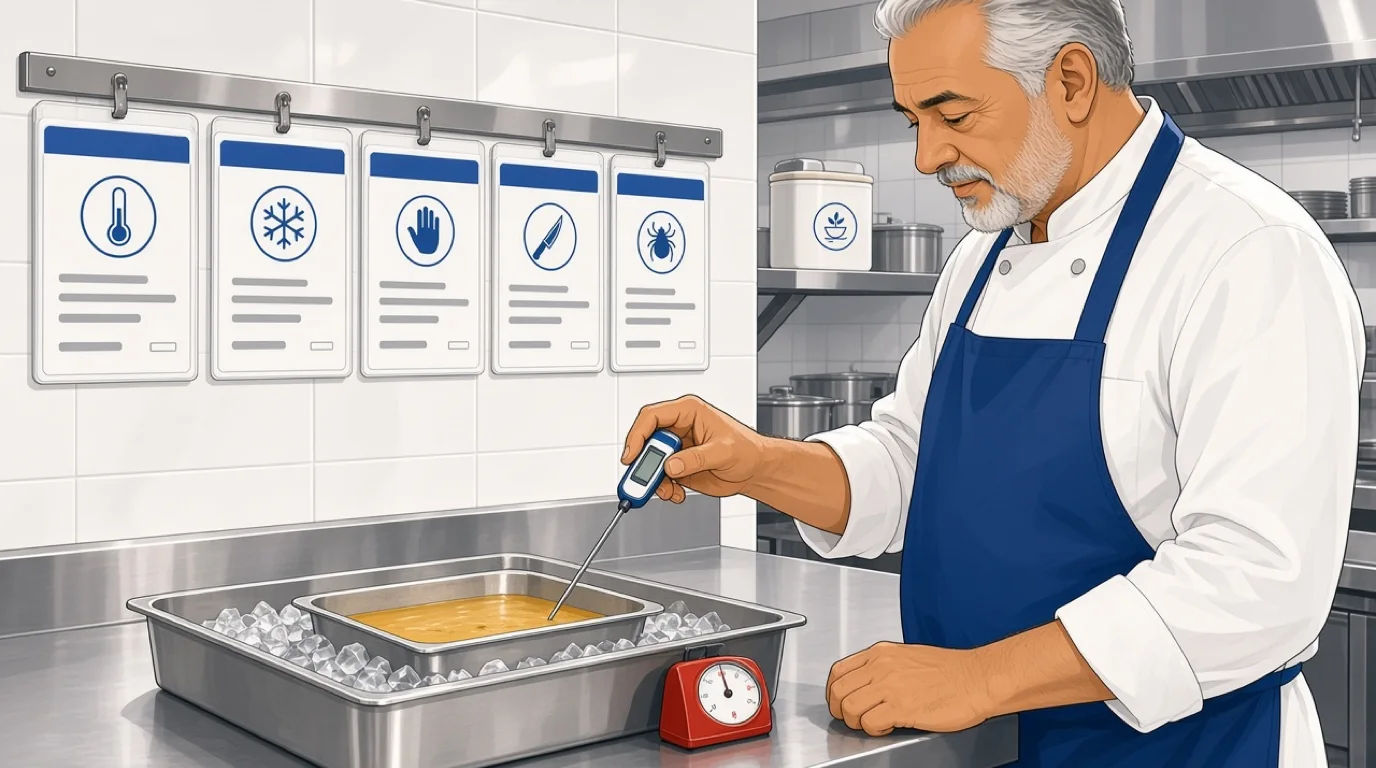
- Divide large batches into shallow trays, no more than about 5 cm deep.
- Place the trays in an ice bath or the blast chiller, uncovered, with space between them.
- Stir sauces and soups every 15 minutes.
- Probe at the two-hour mark and record it.
- Cover, label with the product and date, and move to the walk-in once at 41°F (5°C) or below.
Standard: from 135°F (57°C) to 70°F (21°C) within two hours, then to 41°F (5°C) or below within a further four. If something is wrong: if the food is still above 70°F at two hours, reheat it to 165°F and start again, or throw it away, and tell the head chef. Why it matters: the range in between is where bacteria multiply fastest.
Cooling sits inside a wider food safety plan. In the EU, Regulation 852/2004 requires food businesses to run procedures based on HACCP principles, and in England many small kitchens use the Food Standards Agency's Safer Food, Better Business pack to do it. The wider system is covered in HACCP and restaurant food safety.
F-01 Taking an allergy order
| Applies to | Servers, bartenders taking food orders, the chef on the pass |
|---|---|
| When | Every time a guest mentions an allergy or intolerance |
| Time needed | Two to three minutes |
| You need | The current allergen matrix, the till |
| Owner | Floor manager and head chef, reviewed October 2026 |
- Ask which allergen, and whether it is an allergy or a preference.
- Check the dish against the allergen matrix. Never guess and never rely on memory.
- Enter the order with the allergy modifier on every affected item, not as a note at the end.
- Tell the chef on the pass in person as well.
- The chef confirms the dish can be made safely, or offers an alternative.
- The plate goes to the table with the person who took the order, or with a manager, not with a runner who doesn't know.
Standard: the allergen appears on the kitchen ticket for every affected item, checked against all nine major US allergens (milk, eggs, fish, crustacean shellfish, tree nuts, peanuts, wheat, soy and sesame), or the 14 that the EU and UK list. If something is wrong: if you are not sure, say you can't guarantee the dish, and don't serve it. Why it matters: one mistake can put a guest in hospital, and the restaurant is liable. The matrix itself, and how to keep it right when the menu changes, is the subject of restaurant allergen management.
F-02 Handling a complaint at the table
| Applies to | Servers and the floor manager |
|---|---|
| When | Any time a guest is unhappy, at the table or at the door |
| Time needed | A few minutes, plus the fix |
| You need | The till, the shift handover log |
| Owner | Floor manager, reviewed October 2026 |
- Go to the table straight away and listen to the whole complaint without interrupting or explaining.
- Apologise once and mean it. Don't argue about whether the guest is right.
- Offer something specific, such as a remake, a different dish or taking it off the bill, or ask what would put it right.
- If the problem is the food, take the plate to the pass yourself and tell the chef.
- Tell the floor manager about anything beyond a simple remake.
- Record any void or comp on the till with the right reason.
- Go back to the table after the fix and check it is now right.
- Write the complaint and what you did in the handover log.
Standard: the guest is acknowledged within a minute and every complaint is logged, including the ones that were fixed. If something is wrong: if a guest reports illness, an injury or something found in the food, fetch the manager at once, keep the item, write down the details and offer help without admitting fault. Why it matters: a complaint handled well often brings the guest back, and the log shows which dishes and shifts keep causing them.
B-01 Checking ID and refusing service
| Applies to | Bartenders, and servers who serve alcohol |
|---|---|
| When | Every alcohol order from anyone who looks under 30, and any guest who appears drunk |
| Time needed | Under a minute |
| You need | A date-of-birth card at the till, the refusals log |
| Owner | Bar manager, reviewed October 2026 |
- Ask for ID from anyone who looks under 30, every time, including regulars you haven't checked before.
- Accept only a valid government-issued photo ID with a date of birth: passport, driving licence or national ID card.
- Take the ID in your hand. Check the photo against the face, the date of birth, the expiry date and any sign of tampering.
- Compare the date of birth with the card at the till, which shows the latest date a guest can be born on to be served today.
- If there is no acceptable ID, refuse politely and don't debate it.
- Also refuse anyone who appears drunk, and anyone buying for someone who is.
- Use the house line: "I'm sorry, I can't serve you another drink tonight. Can I get you some water or call you a taxi?"
- Tell the manager and write the refusal in the log: time, a short description and the reason.
Standard: no alcohol served under the legal age (21 in the US, 18 in the UK, where many venues use a Challenge 25 policy), and every refusal logged. If something is wrong: if the guest becomes aggressive, step back and let the manager handle it; never go round the bar to argue. Why it matters: serving a minor or a drunk guest can cost the venue its licence.
B-02 Pouring spirits and building cocktails
| Applies to | Bartenders |
|---|---|
| When | Every drink that contains a spirit |
| Time needed | Part of every drink |
| You need | Jiggers or measured pourers, the cocktail spec book, the wastage sheet |
| Owner | Bar manager, reviewed October 2026 |
- Pour every spirit with a jigger or a measured pourer. No free pouring.
- Fill the jigger to the line, held level over the glass or tin.
- Build cocktails from the spec book: same order, same glass, same ice, same garnish.
- Ring every drink on the till before or while you make it. No drink leaves the bar without a ticket.
- Write spills, wrong drinks and returns on the wastage sheet.
- Check the measured pourers every Monday by pouring into a jigger, and replace any that pour long.
Standard: the house pour is 1.5 oz (44 ml). In the UK, gin, rum, vodka and whisky must be sold in 25 ml or 35 ml measures or multiples of them, and the venue must display which it uses. If something is wrong: if a drink comes back, remake it to spec and log the first one as wastage. Why it matters: a little extra on every pour adds up to bottles a week, which is why bar pour cost is watched so closely.
B-03 Washing glasses and handling ice
| Applies to | Bartenders and barbacks |
|---|---|
| When | Throughout service and at close |
| Time needed | Two to three minutes per rack |
| You need | Glasswasher, detergent and rinse aid, racks, lint-free cloths, ice scoop, broken-glass bin |
| Owner | Bar manager, reviewed October 2026 |
- Before the first load, check the glasswasher is up to temperature and the detergent and rinse aid are not empty.
- Empty glasses into the bar sink and remove straws, fruit and lipstick before racking.
- Rack glasses upside down, by type, without overfilling and never one inside another.
- Run the full cycle and don't open the door mid-cycle.
- Let glasses air dry upside down. Polish only with a clean, dry, lint-free cloth.
- Check every glass and put anything chipped or cracked in the broken-glass bin.
- Fill glasses with ice using the scoop, never the glass itself, and keep the scoop in its holder, not in the ice.
- If a glass breaks in or near the ice well, stop using it, melt all the ice with hot water, clean the well and refill it.
Standard: glasses clear, dry, without smears or chips, washed at the temperature on the machine's data plate. If something is wrong: if glasses come out cloudy or greasy, check detergent, rinse aid and temperature, and call the service company if they are right. Why it matters: a shard of glass in the ice is invisible until a guest finds it.
Recipe cards are the SOP for the plate
Consistency is what guests notice first and what the P&L notices hardest. A recipe card that gives the weight of every component, the order of assembly, the plate, the garnish and a photo of the finished dish is the most valuable SOP you'll write. It keeps the dish the same whoever is on the pass, and it is the only way your food cost figure means anything.
The link to stock is direct. When the recipe in the system says 180 grams of salmon and each sale deducts 180 grams, your stock count tells you how far the line drifts from the card. Tableview maps ingredients to recipes, including sub-recipes like a sauce or a dough, and deducts them on every sale, so a gap between theoretical and actual usage shows up in the numbers rather than at the end of the month. Scales at each station and the methods behind them are in restaurant portion control.
Prep is the other half. A prep SOP lists what gets made, in what quantity, for which day, and how it is labelled and stored. The kitchen's habits around it, the station setup before service, are covered in mise en place.
Front-of-house SOPs
The floor runs on a different kind of procedure. Fewer temperatures, more judgement. Write the steps that protect the guest and the money, and leave room for personality in the rest.
The ones worth writing:
- Greeting and seating: how fast a guest is acknowledged, how tables are rotated between sections, what to say when there's a wait.
- Order entry conventions: seat numbers in a fixed order, courses held and fired, modifiers chosen from the list rather than typed as notes. This is the one SOP the whole kitchen depends on.
- Voids, comps and refunds: who can do each, the reason codes, and what gets logged.
- A complaint at the table: listen, apologise once, fix it or offer something specific, tell the manager, record it.
- Card payments and splitting: taking payment at the table, splitting the bill, what to do when a card is declined.
- Closing a section: resetting tables, handing over open checks, clearing the station.
Voids deserve care, because they're where money disappears. The pattern most restaurants settle on is that servers can void before the kitchen has started a dish, and anything after that, or any comp, needs a manager. The reasoning, and the reports that catch abuse, are in voids and comps.
Bar SOPs
Bars need fewer procedures than kitchens, but the ones they need carry legal weight. Pour measures, for a start: what every spirit is poured with, jigger or measured pourer, and how cocktails are built from the spec. Age checks and refusals: which ID is accepted, what to say when refusing, and who records it. Opening and closing tabs, including what happens to a tab left open at closing. And the end of night: stock the bar, lock the spirits, record the wastage.
The refusal SOP is the one to write first and train hardest. In many places the person who served the drink can be held responsible personally, not just the venue. A clear script ("I'm sorry, I can't serve you another drink tonight, can I get you some water or a taxi?") makes it far easier for a 21-year-old bartender to say no to someone twice their age.
Building the restaurant operations manual
Once you have more than a dozen SOPs, they need a home and an order. A restaurant operations manual doesn't have to be long or formal. It has to be findable.
Organise it the way people look for things, which is by where they work. A typical structure:
- K: kitchen, from receiving to closing.
- F: floor and host stand.
- B: bar.
- M: manager: cash, reports, incidents, opening and locking up.
- S: safety and emergencies: fire, first aid, power cuts, a guest taken ill.
Number each SOP within its section (K-01, K-02) and keep a one-page index at the front. Print the station's SOPs where the work happens, in a sleeve at the pass or behind the bar, and keep the full set in a shared folder that everyone can open on a phone. Date every page. When you update one, replace the printed copy the same day and throw the old one away, because two versions of a procedure is worse than none.
Leave out what belongs elsewhere. Employment policy goes in the handbook. The training schedule goes in the training plan. Recipes can be referenced by name rather than copied in, as long as everyone knows where to find them.
Let the system enforce the SOP
The best procedure is one that people can't skip. A surprising number of front-of-house and kitchen SOPs can be built into how the till and the screens are set up, which means they get followed on the busiest night as well as the quietest.
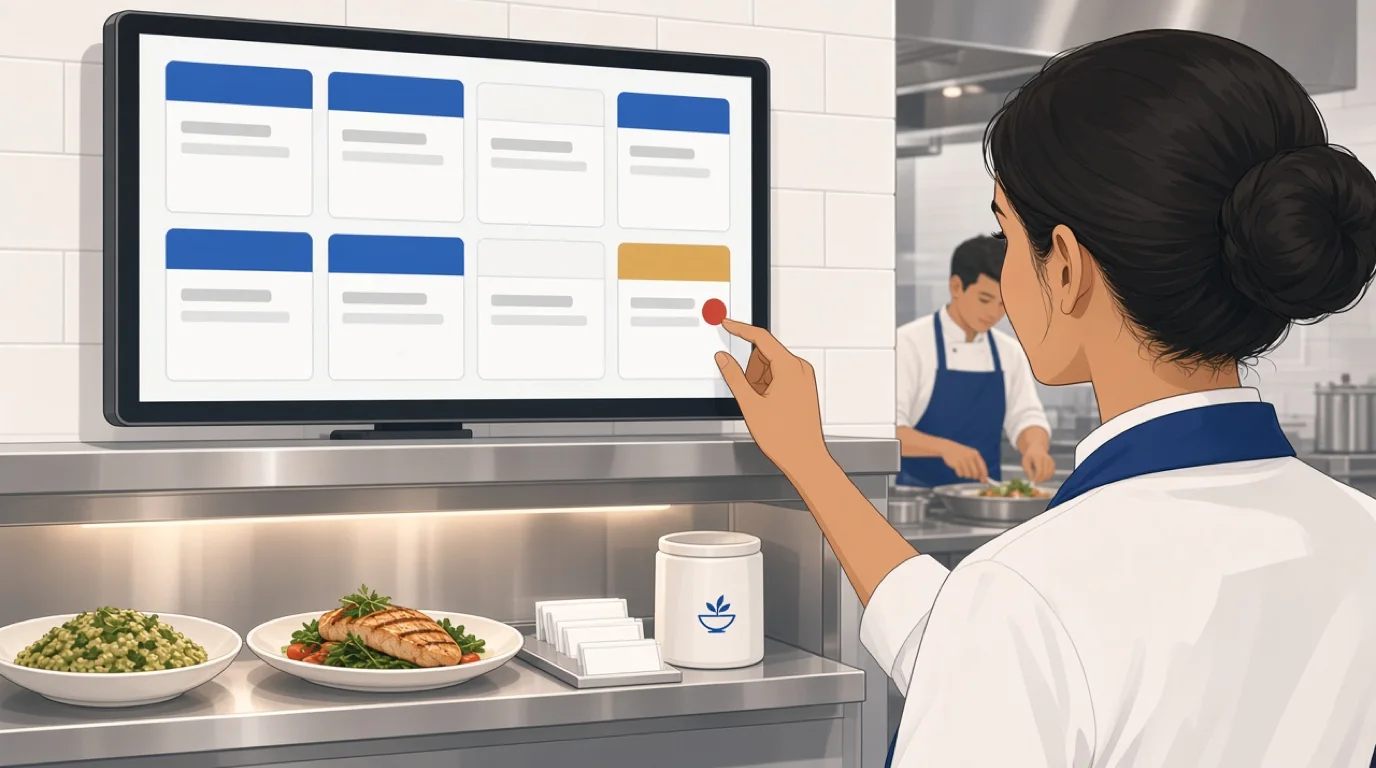
- Modifiers from a list. When the steak temperature is a button rather than a typed note, it gets asked for and the kitchen reads it the same way every time. Tableview supports modifiers and combos with automatic pricing, so options are picked from the menu instead of written in.
- Station routing. Each item goes to the screen of the station that cooks it. Grill sees grill, cold prep sees cold prep, and nobody shouts tickets across the kitchen.
- Allergen flags on the ticket. On a kitchen display system, allergen and dietary flags appear on every affected item, and timers per station show when a dish is running late.
- Permissions. Tableview's role-based access limits what each login can see, and staff permissions are managed centrally. Set the roles up to match your void and refund SOP, so the till reflects who is allowed to do what.
- Menu changes in one place. When a dish changes, the menu is edited once and goes live on every terminal, so the floor isn't selling last week's version.
What a system can't do is the judgement: whether the fish smells right, how to calm an angry table, when to refuse a drink. That's what the written SOPs are for. Tableview doesn't hold your SOP documents; it makes sure the parts of them that can be configured actually happen.
SOPs across multiple locations
With one restaurant, an SOP lives partly in the owner's presence. With three, the owner can't be everywhere, and the manual becomes the thing that keeps the second site cooking the same food as the first.
Most groups end up with a single master set written centrally, plus a short local addendum for each site covering what really is different: the equipment, the layout, the delivery days, local licensing conditions. The rule is that a site can add to the master but can't contradict it without head office agreeing. Changes go out to every site at once, with a date, and site managers confirm they've replaced the old copies.
The system side has to match. If recipes and menus are managed centrally and pushed to every site, a recipe card change and a menu change happen on the same day everywhere. Tableview lets you manage menus and pricing centrally and push them to all locations or customise them per site, with consolidated reporting and role-based access so each manager sees only the sites they run. The broader operating model is set out in managing multiple restaurant locations.
If you franchise, the operations manual becomes a contractual document. In the United States, the FTC's Franchise Rule requires the disclosure document to include the table of contents of the operations manual, or to let prospective franchisees see the manual itself. The relationship between the manual and the franchise agreement is part of franchising a restaurant.
Training with SOPs, and checking they're followed
An SOP no one has been shown is a document, not a procedure. Use them as the backbone of training: a new cook reads K-04, watches it done, does it with someone watching, then does it alone and signs that they've been trained on it. The same goes for a server and the allergy SOP. That signature is also what you'll want if an inspector or a lawyer ever asks how staff were trained. How that fits into the first month is in restaurant staff training.
Then check. Not with a clipboard every day, but with short spot checks: pick two SOPs a week, watch them done during service, and fix what drifts. Rotate through the manual over a quarter. Numbers help too. Ticket times by station, voids by server, the gap between theoretical and actual stock and the cash variance by till all show where a procedure has stopped being followed, often before anyone says so.
When an SOP is ignored, ask why before you blame the person. Usually it's one of three things: it's out of date, it's slower than the shortcut everyone uses, or nobody was shown it. All three are fixes to the SOP, not the staff.
Keeping restaurant standard operating procedures current
Restaurant standard operating procedures go stale quickly. The menu changes, a new oven arrives, the supplier changes delivery days, a regulation is updated. An SOP that describes how things worked last year is worse than useless, because people learn to distrust the whole manual.
Give every SOP an owner, usually the person who runs that area, and review on two triggers. A calendar one, every six months or with each menu change. And an event one: any incident, near miss or complaint that involved the task means the SOP gets reread that week. Keep the old versions in a folder with the dates, rather than deleting them. If something goes wrong, you'll want to know which version was in force.
Five ways restaurant SOPs fail
- They're written by someone who doesn't do the job, so the steps don't match reality.
- They're too long. Background and policy belong elsewhere.
- Nobody owns them, so they're never updated.
- They live in an office binder, not where the work happens.
- They're launched all at once, in a meeting, and never mentioned again.
The fix for all five is the same: write a few, write them from the floor, put them where they're used, and keep talking about them.
Where to start this week
Pick the three tasks from the list above that worry you most. Watch your best person do each one, write it on a single page with the template, and test it on your newest starter. Put the pages where the work happens. Then look at your till and kitchen screens and ask which steps they could enforce for you, and set those up. Next week, do three more. In a month you'll have the core of a restaurant operations manual that your team actually uses.
Read next: the restaurant shift handover for passing information between shifts, preventing restaurant employee theft for the controls behind cash and voids, and the kitchen brigade system for who owns which station.